







Last Updated: 4 months ago
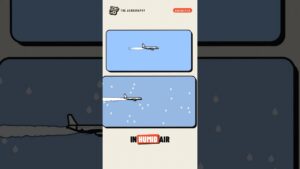
What happens when a bird slams into an airplane? Imagine flying a massive commercial jet at 400 miles per hour. Suddenly, a bird strikes the glass right in front of your face. Can a single bird completely shatter a Boeing 737 windshield?
On March 9, 2026, United Airlines Flight 1207 faced this exact terrifying nightmare. A bird strike severely cracked the glass of their Boeing 737 MAX 8. The pilots declared an immediate emergency and landed safely. But why did the glass survive the massive impact? Why did it not completely shatter and suck the pilots out into the freezing sky?
The answer lies in the incredible engineering of aerospace glass.
The Physics of a High-Speed Bird Strike
A bird seems small and fragile on the ground. However, kinetic energy completely changes the equation in the air. The speed of the aircraft drastically multiplies the force of the impact. A small bird hitting a jet at 400 mph carries immense destructive energy.
The impact feels like a cannonball striking the aircraft. A normal car window would instantly explode into thousands of deadly pieces. A Boeing 737 windshield must survive this exact brutal scenario without failing.
The Anatomy of a Boeing 737 Windshield
Aerospace engineers do not use standard glass for commercial jets. They design multi-layered, chemically strengthened cockpit windows. A Boeing 737 windshield acts as a critical structural component of the aircraft. It must withstand freezing temperatures, massive cabin pressure, and high-speed impacts.
Manufacturers build these windows using three primary layers. The outer layer consists of specially tempered glass. This outer shield handles scratch resistance and external weather conditions. A thick layer of soft, flexible polyurethane sits behind the outer glass. Finally, a thick inner pane of structural acrylic or polycarbonate faces the pilots.
Flexing Under Pressure: How the Glass Survives
This multi-layered design creates an invincible aerospace marvel. When a bird strikes the plane, the outer glass layer often shatters. This is exactly what happened on United Airlines Flight 1207. The shattering actually absorbs a massive amount of the deadly kinetic energy.
However, the soft polyurethane middle layer stretches and flexes. It acts like a high-tech glue. It traps the broken glass pieces and stops them from flying inward. Most importantly, the thick inner layer remains completely intact. This inner layer easily holds the pressurized cabin air inside the aircraft. Therefore, a bird can crack the outer glass, but it cannot shatter a Boeing 737 windshield completely.
The Famous Chicken Gun Test
Aviation authorities require rigorous testing for all new aircraft parts. Engineers must prove that their designs can survive severe bird strikes. To do this, they use a device called a chicken gun. This powerful air cannon fires a standard-sized, dead bird directly at the cockpit window.
They simulate the exact speeds of a jet taking off or cruising. The window must survive the impact without breaking the inner pressure seal. If the inner layer fails, the manufacturer must redesign the entire window. This strict testing ensures maximum safety.
Engineering That Saves Lives
Pilots know they can trust this bulletproof science. When nature collides with a 40-ton flying machine, engineering is the only defense. The broken glass on Flight 1207 looked incredibly scary. Yet, the aircraft performed exactly as engineers designed it to perform.
The next time you board a commercial flight, look at the cockpit windows. You are looking at a masterclass in aerospace engineering. These invisible shields stand between absolute safety and total disaster. They save lives every single day in the skies above us.
✈️ TheAeroGraphyOfficial — aviation engineering, crash investigations, and safety secrets.
Frequently Asked Questions (FAQ)
Can a bird strike completely break a Boeing 737 windshield? While a high-speed bird strike can severely crack the outer glass layer, it cannot completely shatter a Boeing 737 windshield. The window is engineered with multiple chemical layers, including a flexible polyurethane core and a thick acrylic inner layer, ensuring the pressurized cabin remains 100% secure even after a massive impact.
How thick is a standard Boeing 737 windshield? A typical Boeing 737 windshield is over two inches (about 5 centimeters) thick. It is not made of standard glass, but rather a complex, multi-layered composite of chemically tempered glass, soft polyurethane, and heavy-duty structural polycarbonate designed to withstand high-altitude pressure and kinetic impacts.
Do Boeing 737 windshields have heating systems? Yes, every Boeing 737 windshield features an advanced electrical anti-ice heating system built directly into the glass layers. This critical system prevents ice from forming at cruising altitudes of 35,000 feet and keeps the flexible layers warm so they can absorb the shock of a bird strike without shattering.
Did you knowAviationStream.com has a YouTube channel? Check out TheAeroGraphyOfficial and subscribe to watch fun, highly engaging aviation Shorts!