








Last Updated: 4 months ago
← Back to Aircraft Database| General Characteristics | |
| Type | Cargo Aircraft, Civil and Commercial Aircraft, Wide-body jet airliner |
|---|---|
| National Origin | Multi-national |
| Manufacturer | Airbus |
| Variants | A300B4-300R, A300-600R |
| Status | In limited passenger service, in cargo service |
| First Flight | 1993–1994 |
| Introduction | January 1996 |
| Primary Users | FedEx Express, UPS Airlines, European Air Transport Leipzig, Iran Air |
| Number Built | 561 |
| Developed From | Airbus A300-600 |
| Capacity & Dimensions | |
| Cockpit Crew | Two |
| Typical Seating | N/A (Main Deck is for Cargo: 540 m3) |
| Max Seating | N/A |
| Overall Length | 54.08 m |
| Wing Span | 44.84 m |
| Wing Sweep | 25 degrees |
| Wing Area | 260 m2 |
| Overall Height | 16.66 m |
| Weights, Powerplant & Performance | |
| MTOW | 170,500 kg |
| OEW | 81,707 kg |
| Fuel Capacity | 53,505 kg |
| Engines | GE CF6-80C2 or PW4158 |
| Max. Thrust | 249–270 kN |
| Typical Cruise Speed | 833 km/h |
| Max. Speed | Mach 0.82 |
| Range | 7,500 km |
| Takeoff Distance | 2,400 m |
| Service Ceiling | 35,000 ft |
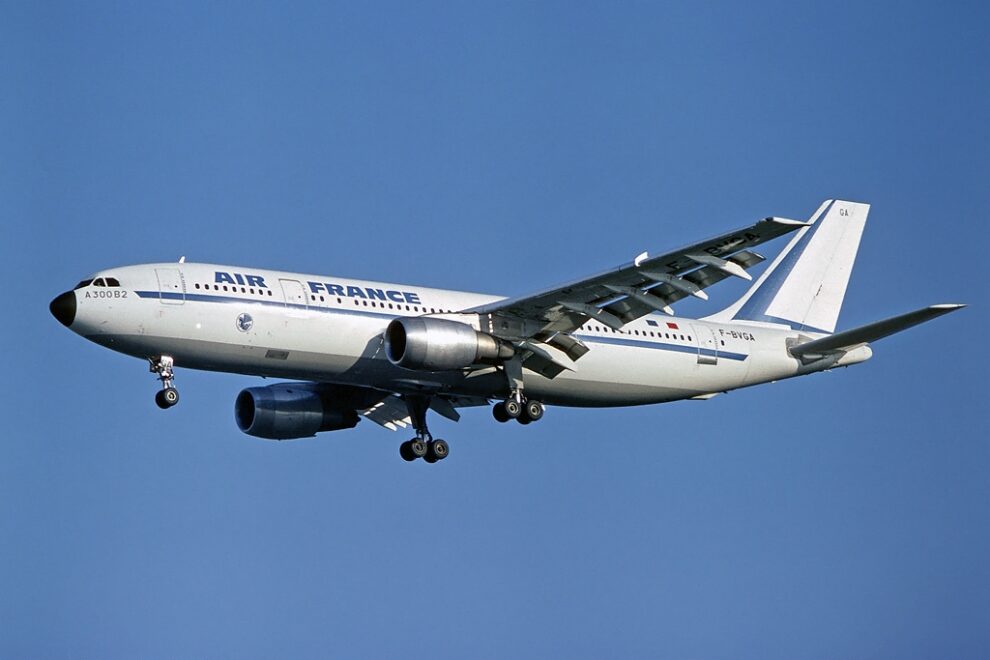
The Airbus A300-600F is a wide-body twin-engine freighter developed from the Airbus A300-600 family. It carries the basic structure, cockpit philosophy and efficient twinjet layout of the A300 series, yet it focuses on cargo rather than passenger service. As a result, the aircraft became an important medium-haul freighter for express carriers and cargo operators.
The A300 family holds a special place in aviation history because it introduced the world’s first twin-engine wide-body airliner. Later, the A300-600 improved the design with updated systems, better efficiency and a two-crew cockpit. Therefore, the freighter version gave cargo airlines a practical aircraft with wide-body volume and lower operating complexity than older three- or four-engine freighters.
The Airbus A300-600F works especially well on routes that require strong payload capacity but do not always need the size of a Boeing 747 or larger long-haul freighter. It can carry containerized cargo on the main deck and additional freight in lower compartments. Consequently, it became popular with express freight networks that depend on fast loading, predictable schedules and high aircraft utilization.
Airbus A300-600F General Characteristics
| Feature | Specification |
|---|---|
| Aircraft Type | Wide-body twin-engine freighter aircraft |
| Main Category | Civil and Commercial Aircraft |
| Additional Category | Wide-body jet airliner |
| Additional Category | Special-Purpose Aircraft |
| Manufacturer | Airbus |
| National Origin | Multi-national |
| Aircraft Family | Airbus A300-600 |
| Variant | Airbus A300-600F / A300C4-600 Freighter |
| ICAO Code | A306 |
| Primary Role | Medium-haul cargo transport |
| Crew | Two pilots |
| Status | Out of production, still used by selected cargo operators |
The Airbus A300-600F shares its basic airframe with the A300-600 family. However, the freighter configuration removes the passenger cabin role and prioritizes cargo loading, pallet handling and freight volume. In addition, the large main-deck cargo door allows operators to load pallets and containers efficiently.
A300-600F Cargo Role
The A300-600F was designed for cargo networks that need wide-body volume on medium-haul routes. Express freight operators often fly many sectors overnight, so they need aircraft that can load quickly, fly reliably and unload efficiently. Therefore, the Airbus A300-600F fits package networks, regional cargo hubs and trunk freight services.
The aircraft can carry palletized and containerized freight on the main deck. It also uses lower cargo compartments for additional cargo volume. This combination gives operators a flexible layout for parcels, freight containers and mixed cargo loads.
Unlike a converted passenger aircraft, a production freighter can offer structural and operational features tailored to cargo work. However, many A300 aircraft also became freighters through conversion programs. Because of this, the A300-600 freighter family includes both factory-built freighters and converted cargo aircraft in service history.
Airbus A300-600F Dimensions
| Feature | Specification |
|---|---|
| Overall Length | About 54.08 m / 177 ft 5 in |
| Wingspan | About 44.84 m / 147 ft 1 in |
| Overall Height | About 16.53 m / 54 ft 3 in |
| Fuselage Type | Wide-body fuselage |
| Wing Layout | Low-wing swept configuration |
| Engine Layout | Two underwing turbofan engines |
| Main Deck Role | Pallet and container cargo loading |
The A300-600F has the broad fuselage shape expected from a wide-body aircraft. Because of this, it offers more internal cargo volume than narrow-body freighters. In addition, its twin-engine layout helps reduce operating complexity compared with older cargo aircraft that use three or four engines.
The aircraft’s size also makes it useful for airports and cargo hubs that need wide-body capacity without using the largest freighters. As a result, the Airbus A300-600F became an efficient middle option in many cargo fleets.
Airbus A300-600F Engines and Performance
The A300-600 family used powerful high-bypass turbofan engines. Depending on variant and operator, the aircraft may use General Electric CF6-80C2 or Pratt & Whitney engine options. These engines gave the aircraft reliable medium-haul performance and enough power for heavy cargo missions.
| Feature | Specification |
|---|---|
| Engine Options | General Electric CF6-80C2 or Pratt & Whitney engine options |
| Engine Type | High-bypass turbofan |
| Maximum Takeoff Weight | About 165,000 kg / 363,760 lb |
| Maximum Landing Weight | About 138,000 kg / 304,230 lb |
| Maximum Zero Fuel Weight | About 130,000 kg / 286,600 lb |
| Usable Fuel Capacity | About 62,000 litres / 16,380 US gallons |
| Cruise Speed | About 850 km/h / 528 mph |
| Typical Cargo Role | Medium-haul freight operations |
The Airbus A300-600F does not try to compete with the largest intercontinental freighters. Instead, it provides strong payload and volume for medium-haul cargo sectors. Moreover, its two-crew cockpit and twin-engine design helped make it attractive for operators that wanted efficient wide-body cargo lift.
Payload and Cargo Capacity
| Feature | Specification |
|---|---|
| Estimated Maximum Payload | Up to about 46,653 kg / 102,852 lb |
| Usable Lower Cargo Compartment Volume | 158.54 m³ / 5,602 ft³ |
| Forward Cargo Compartment | 76.51 m³ / 2,702 ft³ |
| Aft Cargo Compartment | 61.03 m³ / 2,155 ft³ |
| Bulk Cargo Compartment | 21 m³ / 742 ft³ |
| Main Deck | Configured for cargo pallets and containers |
| Typical Use | Express freight, parcels and medium-haul cargo |
Cargo capacity is the main reason operators value the aircraft. The A300-600F can move large volumes of freight while remaining smaller and more economical than larger wide-body freighters. Therefore, it works well for dense regional cargo flows.
Its main-deck cargo door and wide fuselage help cargo teams load freight efficiently. In addition, the lower cargo holds add useful volume for bulk freight and containers. Consequently, the aircraft can support different types of cargo missions within the same network.
Why Cargo Airlines Chose the A300-600F
Cargo airlines chose the Airbus A300-600F because it offered a strong balance of payload, volume and operating efficiency. Many freight networks need aircraft that can fly medium sectors every night with high reliability. The A300-600F answered that requirement with wide-body capacity and practical economics.
In addition, the aircraft gave operators a useful step between narrow-body freighters and larger wide-body freighters. A narrow-body cargo aircraft may not provide enough volume for some routes. On the other hand, a larger freighter may carry too much capacity or cost too much to operate. Therefore, the A300-600F filled an important middle position.
FedEx became one of the most important operators of the type. Express cargo companies valued the aircraft because it could carry large parcel volumes between hub airports and regional markets. As a result, the aircraft became strongly associated with overnight freight and package networks.
Operational Role
The Airbus A300-600F mainly serves medium-haul cargo operations. It can connect major cargo hubs, feed regional networks and support high-volume express routes. Because it offers wide-body cargo space, operators can move more freight than they could with smaller aircraft.
The aircraft also supports predictable overnight schedules. Cargo operators often need aircraft to depart late, arrive early and turn around quickly. Therefore, reliability and loading efficiency matter as much as raw range or speed.
Although Airbus no longer produces the A300 family, the A300-600F remains important in cargo history. Many aircraft continued operating long after passenger A300 services declined. This shows how useful the design became in freight operations.
Comparison with Passenger A300-600
The passenger A300-600 carried travelers in a wide-body cabin, while the Airbus A300-600F focuses on cargo. Both aircraft share the same family roots, but their missions differ significantly.
The freighter version replaces passenger service features with cargo systems, reinforced loading capability and freight handling equipment. As a result, it can serve cargo operators more effectively than a standard passenger configuration.
The A300-600F also differs from narrow-body freighters because it offers much more volume. However, it remains smaller than the largest wide-body cargo aircraft. This makes it a practical aircraft for cargo routes that need capacity without excessive operating cost.
Frequently Asked Questions
What is the Airbus A300-600F used for?
The aircraft is used for medium-haul cargo transport, express freight, parcel networks and containerized cargo operations.
Is the A300-600F a passenger aircraft?
No. The Airbus A300-600F is a freighter version of the A300-600 family and is configured for cargo operations.
How much payload can the A300-600F carry?
The freighter version can carry up to about 46,653 kg of estimated maximum payload, depending on configuration and operating conditions.
What engines does the Airbus A300-600F use?
The aircraft may use General Electric CF6-80C2 or Pratt & Whitney engine options, depending on the specific aircraft.
Is the Airbus A300-600F still in production?
No. Airbus ended A300/A310 final assembly after delivering the last A300 Freighter in 2007, but selected aircraft remain in cargo service.
Airbus A300-600F Summary
The Airbus A300-600F is a twin-engine wide-body freighter designed for efficient medium-haul cargo operations. With its wide fuselage, main-deck cargo capability, useful lower hold volume, strong payload and reliable A300-600 family design, it became an important aircraft for express freight and cargo airlines. Although production has ended, the A300-600F remains a significant aircraft in the history of Airbus cargo operations.
The A300-600F first flew in the mid-1980s as a cargo derivative of the passenger A300-600. It features a reinforced main deck floor and large cargo door. The aircraft retains the widebody twin-engine configuration of the A300 family.
Powered by two General Electric CF6 or Pratt & Whitney PW4000 turbofan engines producing approximately 60,000 pounds of thrust (267 kN) each, the A300-600F cruises at around 470 knots (870 km/h). Maximum takeoff weight exceeds 375,000 pounds (170,100 kg). It offers significant palletized cargo capacity.
The A300-600F became widely used by global freight carriers. Its payload and range suited regional and transcontinental routes. Many aircraft remain in cargo service today.
A range of integrators and scheduled cargo carriers adopted the type as part of mixed fleets. Airlines used the A300-600F to balance capacity demands, often pairing it with smaller narrowbody freighters for feeder work and larger widebodies for ultra-long sectors. Crew training programs emphasized transition commonality within operators that flew multiple A300 family variants.
Maintenance practices tended to centralize heavy checks at well-equipped bases with experience on Airbus widebodies. Operators placed importance on local support for avionics and structural components due to the type’s unique cargo door and floor systems. Roaming maintenance partnerships and component pool agreements helped sustain aging fleets in commercial operation.
The aircraft participated in global cargo networks, frequently concentrated at major logistics hubs where apron space and loading infrastructure supported high daily movements. Commercial scheduling favored block-hour utilization patterns that maximized revenue-generating flights while accommodating mandatory maintenance and regulatory rest requirements.
Source: aerocorner
Did you knowAviationStream.com has a YouTube channel? Check out TheAeroGraphyOfficial and subscribe to watch fun, highly engaging aviation Shorts!