






Last Updated: 3 days ago
Aviation has always been shaped by technological breakthroughs; however, few innovations have had as profound an impact as aviation superchargers. By enabling aircraft engines to maintain performance at high altitudes, aviation superchargers transformed both civilian and military aviation—especially during World War II.
The Problem of High-Altitude Flight
Initially, as aircraft climb, air density decreases. This creates a major challenge for piston engines because they rely on oxygen for combustion. At higher altitudes, less oxygen means less power, thereby reducing engine efficiency and aircraft performance.
Early aircraft struggled significantly above a few thousand meters. Consequently, pilots had to choose between flying high for safety and visibility or staying low to maintain engine power. Ultimately, this limitation became a critical issue as air combat and long-range missions evolved.
What Are Aviation Superchargers?
Simply put, an aviation supercharger is a device that compresses incoming air before it enters the engine. By increasing the air pressure, it allows more oxygen to enter the combustion chamber, resulting in more efficient fuel burning and greater power output.
Unlike turbochargers, which are powered by exhaust gases, aviation superchargers are mechanically driven by the engine itself. This means they provide immediate power but also consume some of the engine’s overall output.
The WWII Engine Breakthrough
Undeniably, aviation superchargers became especially important during World War II. Aircraft needed to fly higher to avoid anti-aircraft fire, gain a tactical advantage, and escort bombers over long distances.
One of the most famous examples is the Rolls-Royce Merlin engine, which powered aircraft like the Supermarine Spitfire and the P-51 Mustang. Its advanced two-stage, two-speed supercharger allowed these aircraft to perform exceptionally well at high altitudes. As a result, this gave Allied pilots a decisive edge, particularly in bomber escort missions over Europe, where altitude performance was critical.
Single-Stage vs. Multi-Stage Designs
Of course, not all aviation superchargers were exactly the same. Early designs were single-stage, meaning they compressed air once before entering the engine. While effective at moderate altitudes, their performance dropped off significantly at higher levels.
Later on, engineers developed multi-stage aviation superchargers, which compressed air in multiple steps. Furthermore, this significantly improved high-altitude flight technology and allowed aircraft to maintain power even in very thin air. Ultimately, these advancements turned high-altitude flight from a severe limitation into a strategic advantage.
Tactical Advantages of Supercharged Piston Engines
Moreover, aviation superchargers didn’t just improve engine performance—they fundamentally changed air combat tactics. Aircraft equipped with advanced supercharged piston engines could climb faster, fly higher, and maintain speed where others could not.
Therefore, this allowed pilots to:
- Control engagements from above.
- Use energy fighting tactics more effectively.
- Intercept enemy bombers at higher altitudes.
Conversely, aircraft without effective supercharging systems were often forced into lower altitudes, making them significantly more vulnerable to attacks.
The Impact of Aviation Superchargers on Civil Flight
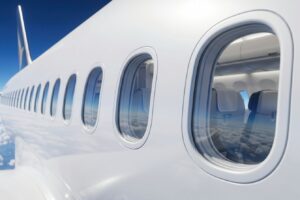
While aviation superchargers are often associated primarily with military aviation, their influence naturally extended to civilian aircraft as well. High-altitude flight became much more practical, enabling longer routes, improved fuel efficiency, and smoother flights above rough weather systems.
Consequently, this laid the vital groundwork for modern commercial aviation, where high-altitude cruising is now an industry standard.
The Transition to Turbocharging
Over time, turbochargers began to gradually replace aviation superchargers in many modern applications. Because they use exhaust gases instead of direct engine power, they are generally more efficient at higher altitudes.
However, during WWII, both systems were used extensively. In fact, some aircraft even combined both technologies to maximize engine performance across completely different altitude ranges. (For more information on this topic, you can explore NASA’s history of aircraft engine technology.)
The Lasting Legacy of Flight Technology
In summary, the introduction of aviation superchargers marked a clear turning point in aviation history. They enabled aircraft to finally break through previous altitude limitations and opened entirely new possibilities for both combat and transportation.
Even today, the core principles behind supercharging remain relevant in both aviation and automotive engineering. Although the technology may have evolved, its massive historical impact is still clearly visible.
Conclusion
To conclude, aviation superchargers didn’t just improve engines—they fundamentally changed how aircraft were designed, flown, and used in both war and peace. By completely solving the persistent problem of high-altitude performance, they gave pilots new tactical options and helped significantly shape the future of aviation.
Ultimately, understanding this innovation provides valuable insight into exactly how a single technological advancement can redefine an entire industry.
Did you knowAviationStream.com has a YouTube channel? Check out TheAeroGraphyOfficial and subscribe to watch fun, highly engaging aviation Shorts!