







Last Updated: 4 months ago
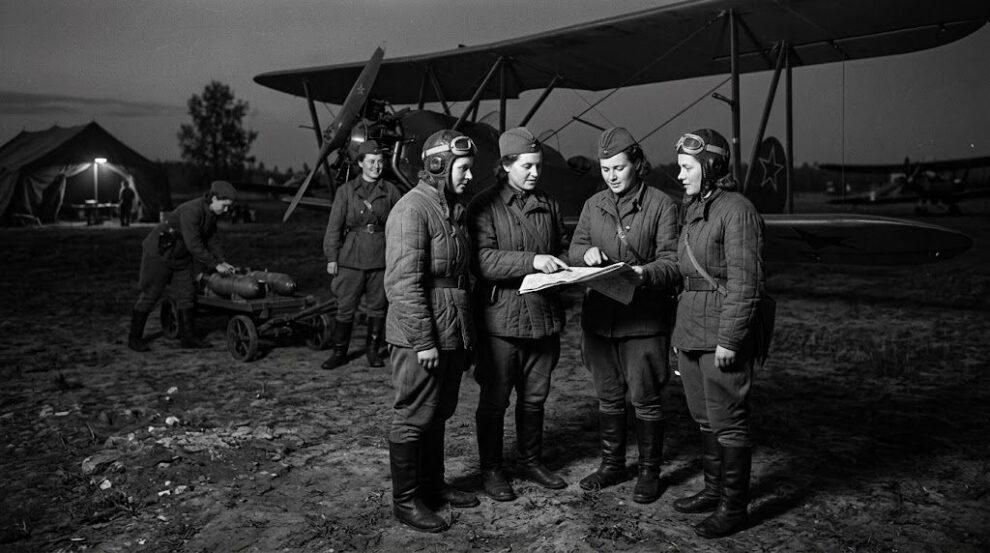
The Night Witches of World War II are widely regarded as one of the most remarkable and unconventional units in military aviation history. Officially known as the 588th Night Bomber Regiment, they represented a unique all-female combat aviation unit within the Soviet Air Force. As Nazi Germany pushed deep into Soviet territory, these women were assigned a critical role in defending the Eastern Front.
Despite flying outdated aircraft with minimal equipment, the Night Witches became one of the most effective harassment bombing units of the war. Their success was not based on advanced technology but on discipline, ingenuity, and a deep understanding of the limitations and strengths of their aircraft.
This article explores the engineering principles behind the Polikarpov Po-2, the tactical innovations developed by the regiment, and the operational strategies that transformed a simple training aircraft into a feared weapon of war.
Quick Facts: Night Witches at a Glance
| Category | Details |
|---|---|
| Official Unit Name | 588th Night Bomber Regiment |
| Later Designation | 46th Taman Guards Night Bomber Aviation Regiment |
| Country | Soviet Union |
| Founded | October 1941 |
| Founder | Marina Raskova |
| Aircraft | Polikarpov Po-2 |
| Crew | Pilot and Navigator |
| Total Sorties | Approximately 24,000–30,000 |
| Bombs Dropped | More than 3,000 tons |
| Incendiary Munitions | Approximately 26,000 |
| Duration of Combat Service | More than 1,100 days |
| Hero of the Soviet Union Awards | 23 |
| Combat Fatalities | 32 |
Who Were the Night Witches?
The Night Witches were established in October 1941 through the efforts of famed Soviet aviator Marina Raskova. Following the German invasion of the Soviet Union, the Red Air Force suffered significant losses and urgently needed additional personnel.
Raskova appealed directly to Soviet leadership for the creation of female combat aviation units. Her proposal was approved, and thousands of young women volunteered for military aviation service.
These recruits would eventually form one of the most decorated female combat units in history.
Women in Aviation and the Formation of the 588th Regiment
Selected volunteers underwent intensive training as pilots, navigators, mechanics, and ground crew personnel. Under the leadership of Yevdokiya Bershanskaya, the 588th Night Bomber Regiment became a fully operational combat unit.
Initially, many male officers and commanders doubted the effectiveness of an all-female regiment. However, the women quickly proved themselves through discipline, professionalism, and exceptional operational performance.
Training programs that normally required years to complete were compressed into months. The women regularly endured fourteen-hour training days while learning navigation, bombing techniques, aircraft maintenance, and night operations.
Training and Operational Preparation
Logistical shortages forced many recruits to adapt oversized male uniforms and equipment for combat use. Specialized flight gear designed for women simply did not exist within the Soviet supply chain.
Despite these obstacles, the regiment completed its training and was rapidly deployed to the front lines. Operating without modern radios, advanced navigation systems, or sophisticated targeting equipment, the Night Witches relied on skill and determination to accomplish their missions.
Marina Raskova: The Woman Behind the Night Witches
One of the most important figures in the creation of the Night Witches was Soviet aviator and navigator Marina Raskova.
Already famous throughout the Soviet Union before the war, Raskova became a powerful advocate for women’s participation in combat aviation. Through her efforts, three all-female aviation regiments were formed during World War II.
One of these units became the 588th Night Bomber Regiment, later known worldwide as the Night Witches.
Raskova played a key role in recruiting personnel, organizing training programs, and convincing Soviet military leaders that women could perform combat aviation duties at the highest level. Her influence helped reshape the role of women in Soviet military aviation and left a lasting mark on aviation history.
The Polikarpov Po-2: Engineering Analysis of an Unlikely Combat Aircraft
Throughout their combat operations, the Night Witches flew the Polikarpov Po-2, a two-seat biplane originally designed in 1928 by aviation engineer Nikolai Polikarpov.
The aircraft was never intended to serve as a frontline bomber. Instead, it was developed primarily as a trainer and agricultural aircraft. Yet wartime necessity transformed the humble Po-2 into one of the most recognizable aircraft of the Eastern Front.
Approximately 30,000 examples were produced, making it one of the most widely manufactured aircraft in aviation history.
The Stealth Advantage of Wood-and-Fabric Construction
The Po-2 featured an extremely simple design built around a wooden frame covered with fabric.
While rudimentary by modern standards, this construction method offered significant operational advantages. Compared to conventional all-metal aircraft, the Po-2 was more difficult to detect, particularly during low-altitude night operations.
Its small size, slow speed, and minimal visual signature made interception challenging.
Power came from a Shvetsov M-11 five-cylinder air-cooled radial engine producing between 100 and 125 horsepower. The modest engine generated relatively little noise compared with larger military aircraft, further enhancing the aircraft’s effectiveness during nighttime missions.
Aerodynamic Performance and Flight Characteristics
By conventional military standards, the Po-2 was slow and vulnerable.
Its maximum speed was only about 152 km/h (94 mph), making it dramatically slower than contemporary German fighters such as the Messerschmitt Bf 109 and Focke-Wulf Fw 190.
Ironically, this weakness became one of its greatest strengths.
German fighters attempting to intercept a Po-2 often had difficulty maintaining a stable attack position at such low speeds. The biplane’s high-lift wing configuration allowed it to remain controllable at airspeeds that challenged faster interceptor aircraft.
This unusual aerodynamic advantage contributed significantly to the survival of many Night Witch crews.
Industrial Production, Engineering Efficiency, and Combat Tactics
Industrial Production and Standardization of the Polikarpov Po-2
During World War II, the Soviet aviation industry operated at maximum capacity to meet the enormous demands of the Eastern Front. The Polikarpov Po-2 proved exceptionally valuable because of its simple mechanical design and highly efficient manufacturing process.
Its straightforward construction allowed production facilities to assemble aircraft rapidly, even when experienced labor was in short supply. In many factories, workers with limited aviation experience could participate in the final assembly process with minimal training.
The aircraft’s empty weight was approximately 770 kg (1,698 lbs), making it lightweight, economical, and easy to maintain under wartime conditions.
Polikarpov Po-2 Technical Specifications
| Specification | Details |
|---|---|
| Manufacturer | Polikarpov Design Bureau |
| First Flight | 1928 |
| Role | Trainer, Reconnaissance, Night Bomber |
| Crew | 2 (Pilot and Navigator) |
| Engine | Shvetsov M-11D Five-Cylinder Radial Engine |
| Power Output | Approximately 125 hp |
| Empty Weight | Approximately 770 kg (1,698 lbs) |
| Maximum Takeoff Weight | Approximately 1,250 kg (2,756 lbs) |
| Maximum Speed | Approximately 150 km/h (93 mph) |
| Cruise Speed | Approximately 110–120 km/h (68–75 mph) |
| Service Ceiling | Approximately 3,000 m (9,840 ft) |
| Range | Approximately 630 km (391 miles) |
| Construction Materials | Wooden Frame with Fabric Covering |
| Bomb Capacity | Typically 100–300 kg |
Logistics and Ease of Repair
Engineers intentionally minimized the use of strategic materials such as aluminum and steel in the Po-2’s construction. This allowed the Soviet Union to reserve critical resources for more advanced combat aircraft, including the heavily armored Il-2 Sturmovik.
The aircraft’s standardized components and wood-and-fabric structure made field repairs remarkably simple. Damaged aircraft could often be repaired using basic tools and locally available materials, even under frontline conditions.
This repairability became a major operational advantage for the Night Witches. Ground crews could return damaged aircraft to service quickly, reducing downtime and increasing sortie rates.
Because many components were interchangeable, mechanics could replace a damaged engine in only a few hours, ensuring that aircraft remained available for combat operations.
Tactical Operations and Military Aviation Strategy
The Night Witches developed a highly effective operational doctrine that transformed an outdated aircraft into a formidable weapon.
Their Po-2s lacked armor protection, onboard radios, advanced navigation systems, and modern bombsights. By conventional military standards, they were technologically obsolete.
Yet through innovation, discipline, and exceptional flying skill, the women of the regiment turned these limitations into strengths.
The Silent Glide Attack
One of the Night Witches’ most famous tactics involved reducing engine power while approaching a target.
As they neared German positions, pilots would throttle back to minimum power and transition into a quiet glide. In some cases, crews even shut down the engine entirely during the final approach.
The result was a nearly silent attack profile.
German soldiers often reported hearing nothing but the faint whistling of air passing through the aircraft’s wing bracing wires moments before bombs began to fall.
This eerie sound became one of the defining characteristics of Night Witch operations and contributed directly to the nickname “Nachthexen,” or “Night Witches,” given to them by German troops.
Payload Capacity and Sortie Rates
The Po-2 possessed only a modest payload capacity compared to conventional bombers.
Most aircraft carried between two and six FAB-50 bombs mounted beneath the wings. Total payload rarely exceeded 300 kg (661 lbs).
Because they could not deliver large bomb loads in a single mission, Night Witch crews compensated through frequency rather than volume.
A typical pilot and navigator team often flew between fifteen and eighteen combat sorties in a single night.
After each mission, female ground crews worked at extraordinary speed. In many cases, aircraft were refueled, rearmed, and prepared for another mission within five minutes.
This relentless operational tempo allowed the regiment to maintain continuous pressure on German forces throughout the night.
Why the Po-2’s Low Stall Speed Was an Advantage
One of the most unusual characteristics of the Po-2 was its exceptionally low stall speed.
The aircraft could remain controllable at airspeeds far below those of modern fighter aircraft. While this performance limitation reduced overall speed, it unexpectedly provided a defensive advantage during nighttime operations.
German fighters such as the Messerschmitt Bf 109 and Focke-Wulf Fw 190 were optimized for speed and combat maneuverability. Intercepting a slow-moving Po-2 often forced German pilots to operate near the lower limits of their own safe flight envelopes.
Maintaining an effective firing position against such a slow target could be surprisingly difficult.
As a result, the Po-2’s seemingly outdated flight characteristics occasionally complicated interception attempts and improved the survivability of Night Witch crews.
Comparison: Polikarpov Po-2 vs German Fighter Aircraft
| Feature | Polikarpov Po-2 | Messerschmitt Bf 109 G | Focke-Wulf Fw 190 A |
|---|---|---|---|
| Maximum Speed | ~150 km/h | ~640 km/h | ~650 km/h |
| Crew | 2 | 1 | 1 |
| Primary Role | Night Bomber | Fighter | Fighter |
| Construction | Wood and Fabric | All-Metal | All-Metal |
| Bomb Capacity | 100–300 kg | Limited | Limited |
| Stall Speed | Very Low | Higher | Higher |
| Night Operations Advantage | High | Moderate | Moderate |
Navigation Challenges and Target Acquisition
Modern bomber forces rely on sophisticated navigation systems, radar guidance, and digital targeting equipment.
The Night Witches had none of these advantages.
Instead, crews navigated using only a magnetic compass, paper maps, stopwatches, and visual reference points on the ground.
Navigators frequently relied on stars, rivers, roads, and terrain features to maintain orientation during nighttime operations.
Their success depended not on technology but on training, experience, and exceptional situational awareness.
Manual Bombing Techniques
Operating from open cockpits in freezing temperatures, navigators manually identified targets and calculated release points.
Once over the target area, bombs were typically released using simple mechanical release systems rather than sophisticated bombsights.
Despite these basic methods, the regiment achieved notable operational success through repeated low-altitude attacks and carefully coordinated mission planning.
The Po-2’s small size, low altitude profile, and nighttime operating environment made detection and interception significantly more difficult than many German commanders expected.
These factors combined to create one of the most effective harassment bombing forces of World War II.
Combat Impact, Operational Legacy, and Historical Significance
The Impact of the Night Witches on the Eastern Front
The strategic targets of the Night Witches included troop encampments, supply depots, fuel storage facilities, bridges, rail junctions, and ammunition stockpiles.
While each individual bombing run delivered only a modest payload, the cumulative effect of thousands of attacks proved highly disruptive to German operations.
Their missions rarely aimed to destroy major targets outright. Instead, they focused on exhausting enemy forces through constant harassment.
German soldiers often endured repeated bombing attacks throughout the night, preventing sleep and reducing combat effectiveness. Even when physical damage was limited, the psychological impact of these operations was considerable.
The Night Witches demonstrated that persistence and tactical innovation could compensate for technological limitations.
Major Campaigns: Caucasus, Kuban, Crimea, and Belarus
The regiment participated in some of the most important operations on the Eastern Front.
According to official military records, the unit flew approximately 2,920 sorties during the Battle of the Caucasus. During operations in the Kuban and Novorossiysk regions, the regiment completed roughly 4,623 missions in support of Soviet ground forces.
Their most intensive period of activity occurred during the Crimean Offensive, where they flew approximately 6,140 sorties.
Later, the regiment participated in operations connected to the Belarus Offensive, contributing to the westward advance of Soviet forces as Germany’s military position deteriorated.
These campaigns established the Night Witches as one of the most active night bombing units of the war.
Night Witches Operational Statistics
| Category | Statistic |
|---|---|
| Official Unit Name | 588th Night Bomber Regiment |
| Later Designation | 46th Taman Guards Night Bomber Aviation Regiment |
| Year Established | 1941 |
| Active Combat Service | Approximately 1,100 Days |
| Total Sorties | Approximately 24,000–30,000 |
| Bombs Dropped | More Than 3,000 Tons |
| Incendiary Munitions Delivered | Approximately 26,000 |
| Caucasus Sorties | 2,920 |
| Kuban and Novorossiysk Sorties | 4,623 |
| Crimean Sorties | 6,140 |
| Combat Fatalities | 32 |
| Hero of the Soviet Union Awards | 23 |
Psychological Warfare and German Reactions
The Night Witches’ operational effectiveness extended beyond physical destruction.
Their continuous hit-and-run attacks created a climate of fear and uncertainty among German troops. The inability to predict when the next bombing run would occur placed enormous psychological pressure on frontline soldiers.
Many historical accounts suggest that German pilots who successfully shot down a Night Witch aircraft could receive special recognition, including recommendations for prestigious awards such as the Iron Cross. While historians continue to debate the specifics of these claims, there is little doubt that German forces viewed the regiment as a serious threat.
The Night Witches frequently used illumination flares to identify targets during nighttime operations. Missions were often flown in groups of three aircraft. Two aircraft would draw the attention of anti-aircraft defenses while the third silently approached the target area before releasing its bombs.
This simple but effective tactic increased survivability and maximized the psychological impact of each mission.
Operational Challenges and Sacrifice
The Night Witches endured more than 1,100 days of continuous combat operations.
Throughout the war, the regiment flew approximately 24,000 to 30,000 combat sorties and delivered more than 3,000 tons of bombs along with approximately 26,000 incendiary devices.
Their attacks damaged railways, bridges, supply routes, fuel depots, and numerous military installations across the Eastern Front.
Yet these achievements came at a significant cost.
The women frequently flew in freezing winter conditions while exposed to the elements in open cockpits. To maximize payload capacity, many crews flew without parachutes, accepting the risks associated with every mission.
By the end of the war, 32 members of the regiment had been killed during active operations.
Despite these losses, their extraordinary service earned widespread recognition. Twenty-three members of the regiment received the title Hero of the Soviet Union, the nation’s highest military honor.
In recognition of its combat record, the unit was redesignated as the 46th Taman Guards Night Bomber Aviation Regiment, a distinction reserved for elite Soviet military formations.
Night Witches Timeline
| Year | Event |
|---|---|
| 1928 | First flight of the Polikarpov Po-2 |
| October 1941 | Marina Raskova establishes the 588th Night Bomber Regiment |
| 1942 | The regiment begins combat operations on the Eastern Front |
| 1943 | The unit receives Guards status and becomes the 46th Taman Guards Night Bomber Aviation Regiment |
| 1943–1944 | Major participation in the Caucasus, Kuban, and Crimean campaigns |
| 1944 | Participation in operations supporting the Belarus Offensive |
| May 1945 | End of World War II in Europe |
| Post-War | The Night Witches become one of the most celebrated aviation units in military history |
Legacy of the Night Witches
The Night Witches occupy a unique place in both military history and aviation history.
Their achievements challenged conventional assumptions about women in combat and demonstrated that effective military operations depend as much on innovation, determination, and teamwork as they do on technology.
Using an aircraft originally designed for training and agricultural work, they developed tactics that exploited the strengths of their equipment while minimizing its weaknesses.
Today, the Night Witches remain a symbol of resilience, ingenuity, and courage. Their story continues to inspire historians, military professionals, aviators, and aviation enthusiasts around the world.
Frequently Asked Questions (FAQ)
Why were the Night Witches called the Night Witches?
German soldiers gave the regiment the nickname “Nachthexen” (Night Witches) because of the eerie whistling sound produced by the Po-2’s wing bracing wires during silent nighttime glide attacks.
What aircraft did the Night Witches fly?
The regiment primarily operated the Polikarpov Po-2, a two-seat biplane originally designed as a trainer and agricultural aircraft.
How many sorties did the Night Witches fly?
Historical records indicate that the regiment flew between approximately 24,000 and 30,000 combat sorties during World War II.
Did the Night Witches carry parachutes?
Many crews often flew without parachutes to reduce weight and increase bomb-carrying capacity, although practices varied depending on mission requirements and operational circumstances.
Who founded the Night Witches?
The regiment was created in 1941 through the efforts of Marina Raskova, one of the Soviet Union’s most famous female aviators.
How effective were the Night Witches?
Although they carried relatively small bomb loads, their relentless night bombing operations disrupted German logistics, damaged military infrastructure, and created significant psychological pressure on enemy forces.
Conclusion
The Night Witches proved that technological superiority alone does not guarantee victory.
Armed with little more than determination, discipline, and a fleet of obsolete biplanes, they developed one of the most effective night harassment bombing campaigns of World War II.
Their story is far more than a wartime curiosity. It is a powerful example of how engineering, tactical innovation, and human resilience can combine to achieve extraordinary results under the most difficult circumstances.
More than eighty years later, the legacy of the Night Witches continues to stand as one of the most remarkable chapters in the history of military aviation.