





About This Video
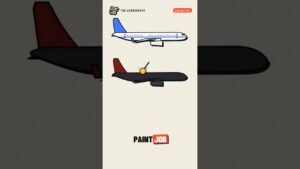
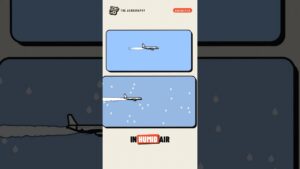
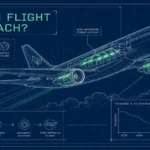
The popular "equal transit time" explanation of lift says air over the top must travel farther to meet the air below at the trailing edge. Wind-tunnel tests show that's not true: the air over the top arrives first. What actually happens: the tilted, curved wing turns the passing air downward. Push air down, and the air pushes the wing up — which also means lower pressure above the wing and higher pressure below. At a 777-300ER's maximum takeoff weight of 775,000 lb spread over 4,702 sq ft of wing, that's about 165 lb per square foot — roughly one pound per square inch.
Notes: The wind-tunnel section is computed with ideal 2D potential flow (Joukowski airfoil at 6°, with the Kutta condition) — a representative profile, not the 777's exact wing section. The psi figure is an average at maximum weight, ignoring lift from the body and the tail.
Sources:
– University of Cambridge, "How wings really work":
– On the equal transit time fallacy (arXiv):
– Theories of lift (quotes NASA Glenn):
– Boeing, 777-300ER max takeoff weight 775,000 lb:
– Boeing 777 specifications (wing area):
✈️ Subscribe to AviationStream on YouTube for the latest aviation videos.