






Last Updated: 3 days ago
When looking at the history of air combat, WW2 high-altitude fighters stand out as great piston-engine planes. In the deadly skies of World War II, flying higher was often the only way to gain an advantage. However, above 30,000 feet, the rules of flight changed completely. The air became thin, engines struggled to breathe, and keeping the plane steady was very hard. Therefore, not every plane could fight there.
Before we rank the planes that conquered the high skies, we need to understand the science that made them so special.
What Defines WW2 High-Altitude Fighters?
WW2 high-altitude fighters are not just planes that can fly high. Instead, they must fight well and turn sharply in freezing, thin air.
Specifically, key needs for these aircraft included:
- Forced induction systems (turbos or superchargers).
- Power retention at critical heights.
- Smooth aerodynamics to prevent falling out of the sky.
👉 Learn more about the physics here: High-Altitude Aerodynamics & Atmosphere
Why WW2 High-Altitude Fighters Were Critical
Strategic bombing missions over Europe and the Pacific often flew above 25,000 feet to dodge heavy ground fire. As a result, fighter planes had to adapt quickly.
Consequently, WW2 high-altitude fighters became strictly needed for three main jobs:
- Bomber escort: Guarding heavy bombers deep inside enemy lands.
- High interception: Climbing fast to stop enemy bombers.
- Reconnaissance hunting: Catching fast scout planes flying very high.
👉 Explore more on our site: 🔗 Understanding WW2 Air Combat Tactics 🔗 How Superchargers Changed Aviation
Engine Technology in WW2 High-Altitude Fighters
First and foremost, the main factor for WW2 high-altitude fighters was their engine boosting technology. Because air gets thin, normal engines fail. To fix this, engineers used advanced systems:
- Turbo-superchargers: These used exhaust gas to spin a turbine.
- Used in: P-47 Thunderbolt, P-38 Lightning.
- Advantage: They kept massive power at the very top of the sky.
- Two-stage superchargers: These were driven by the engine itself.
- Used in: Spitfire, P-51 Mustang.
- Advantage: They gave great high-altitude speed and smooth flight.
Without these crucial parts, normal planes lost speed quickly above 20,000 feet. Now, let’s begin our climb.
Ranking the Top 10 WW2 High-Altitude Fighters
| Rank | Aircraft | Engine System | Service Ceiling | Category |
| 10 | Dewoitine D.520 | Single-stage supercharger | ~32,800 ft | ⚠ Limited |
| 9 | Hawker Hurricane Mk I | Single-stage supercharger | ~36,000 ft | ⚠ Limited |
| 8 | Macchi C.205 Veltro | Mechanical supercharger | ~37,400 ft | ✔ Capable |
| 7 | Focke-Wulf Fw 190 D | Mechanical supercharger | ~39,000 ft | ✔ Capable |
| 6 | Mikoyan-Gurevich MiG-3 | Centrifugal supercharger | ~39,000 ft | ✔ Optimized |
| 5 | Messerschmitt Bf 109 G | Mechanical supercharger | ~39,000–41,000 ft | ✔ Capable |
| 4 | Lockheed P-38 Lightning | Turbo-supercharged | ~44,000 ft | ✔ Optimized |
| 3 | North American P-51D Mustang | Two-stage supercharger | ~41,900 ft | ✔ Optimized |
| 2 | Republic P-47 Thunderbolt | Turbo-supercharged | ~43,000+ ft | ✔ Optimized |
| 1 | Supermarine Spitfire Mk IX | Two-stage supercharger | ~43,000 ft | ✔ Optimized |
10. Dewoitine D.520 — The Transitional Design
Service Ceiling: ~32,800 ft Category: ⚠ Limited high-altitude capability

Our climb begins with France. Initially, the D.520 was a very smooth and solid design. However, it lacked advanced supercharging. As a result, it gasped for air where others flew well. Although it turned nicely down low, its power dropped fast once it pushed past 30,000 feet.
9. Hawker Hurricane Mk I — The Capable Workhorse
Service Ceiling: ~36,000 ft Category: ⚠ Limited high-altitude performance

Next, we look at the Hawker Hurricane. Undeniably, it was the tough backbone of the RAF. Yet, it was not built to be one of the best WW2 high-altitude fighters. While it worked well at medium heights, its thick wings caused too much drag higher up. Consequently, this thick shape capped its ultimate ceiling.
8. Macchi C.205 Veltro — The Aerodynamic Contender
Service Ceiling: ~37,400 ft Category: ✔ High-altitude capable
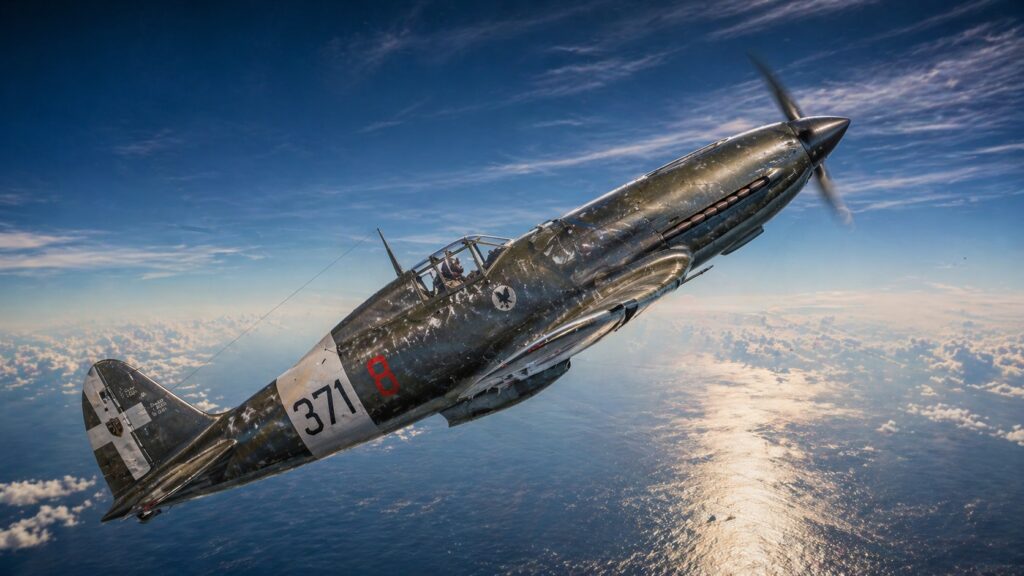
Climbing higher, we meet the Italian C.205. Interestingly, it didn’t need heavy turbos to compete. Instead, it relied on a very sleek body. Furthermore, it mixed a strong German DB 605 engine with a smooth frame. Because of this, it climbed fast and fought well against heavier Allied planes.
7. Focke-Wulf Fw 190 D — The High-Altitude Evolution
Service Ceiling: ~39,000 ft Category: ✔ High-altitude capable

Meanwhile, the early Fw 190s were great down low but failed up high. Fortunately, the “Dora” changed that. By adding an inline engine and a longer body, they fixed those limits. Therefore, the plane became a very capable threat in the upper skies.
6. Mikoyan-Gurevich MiG-3 — The Specialized Interceptor
Service Ceiling: ~39,000 ft Category: ✔ Optimized for high altitude
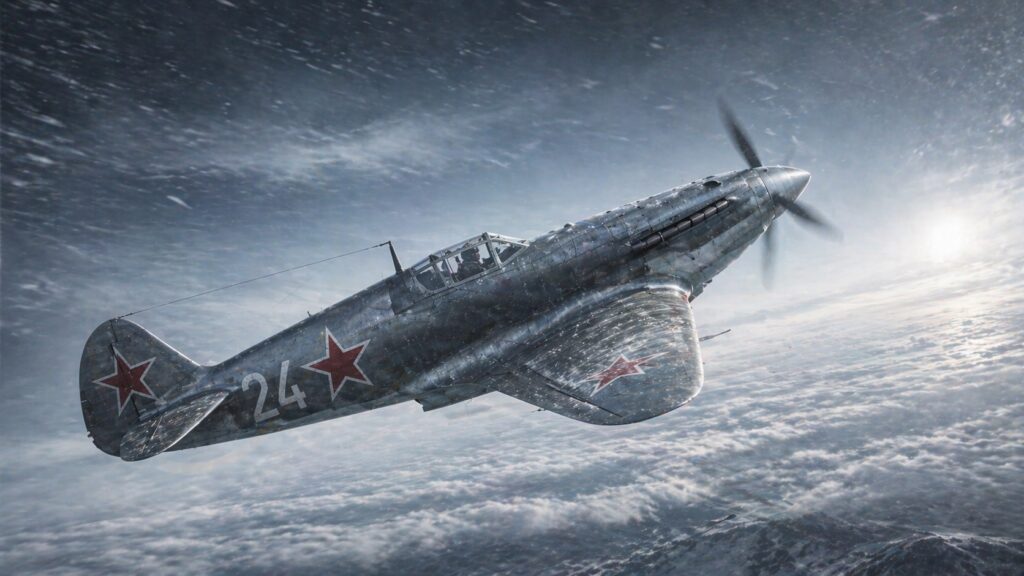
On the other hand, the Soviet MiG-3 was a pure sniper. Although it was slow down low, it woke up above 25,000 feet. Specifically, its huge engine made it one of the rare, true WW2 high-altitude fighters on the Eastern Front. Thus, it was perfect for hunting scout planes.
5. Messerschmitt Bf 109 G — The Combat Veteran Interceptor
Service Ceiling: ~39,000–41,000 ft Category: ✔ High-altitude capable
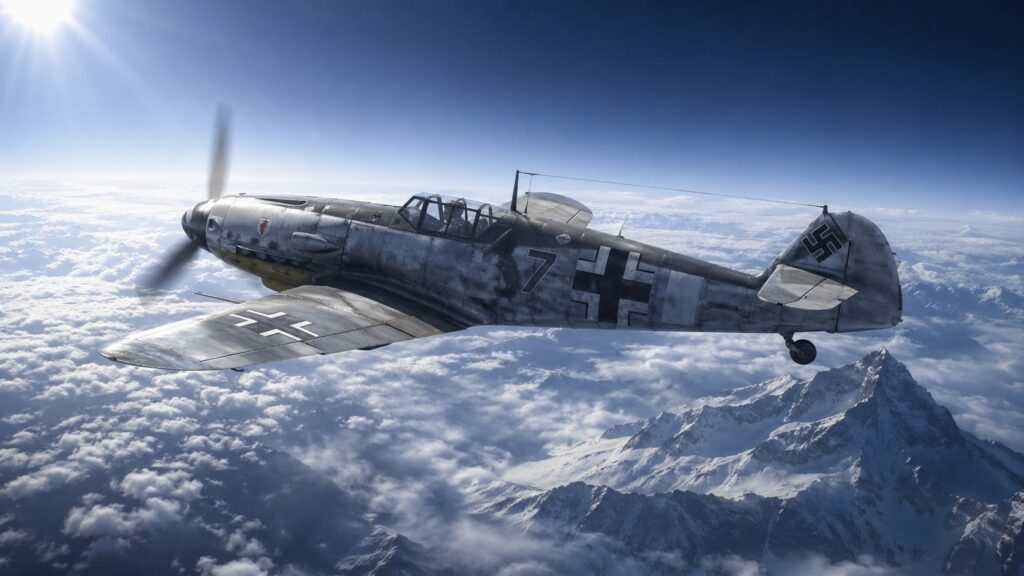
The Bf 109 G “Gustav” was a top German fighter. First, it was small and climbed very fast. Moreover, its engine kept running smoothly up high. In addition, direct fuel injection meant it wouldn’t stall during intense dives. As a result, it stayed a deadly threat.
4. Lockheed P-38 Lightning — The Twin-Engine Fighter
Service Ceiling: ~44,000 ft Category: ✔ Optimized for high altitude
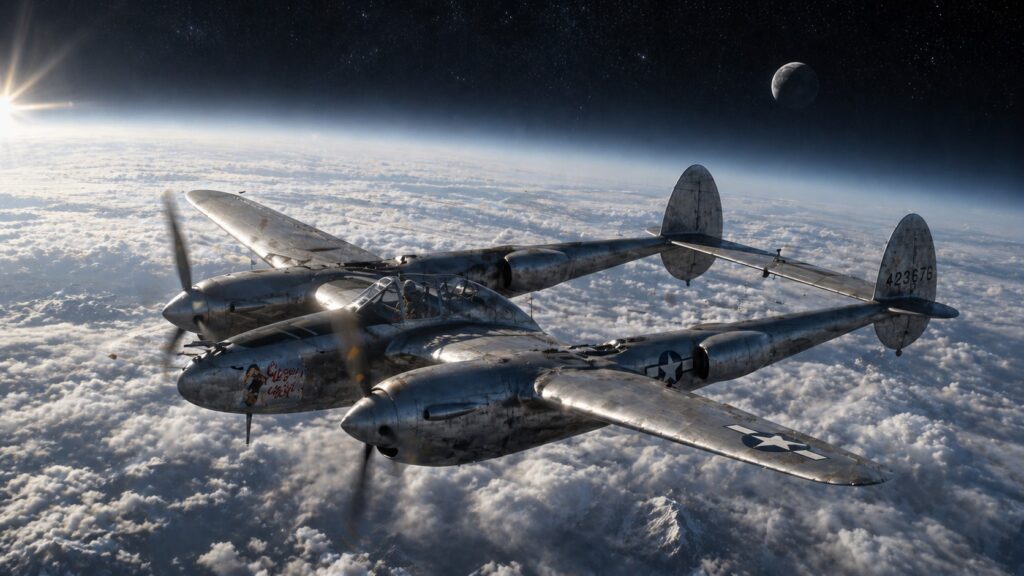
Now, we enter the top group. Notably, the P-38 Lightning was one of the first WW2 high-altitude fighters to use turbos well. Because of this, it kept massive power near the edge of space. Consequently, it became a premier fighter in the Pacific war.
3. North American P-51D Mustang — The Long-Range Dominator
Service Ceiling: ~41,900 ft Category: ✔ Optimized for high altitude
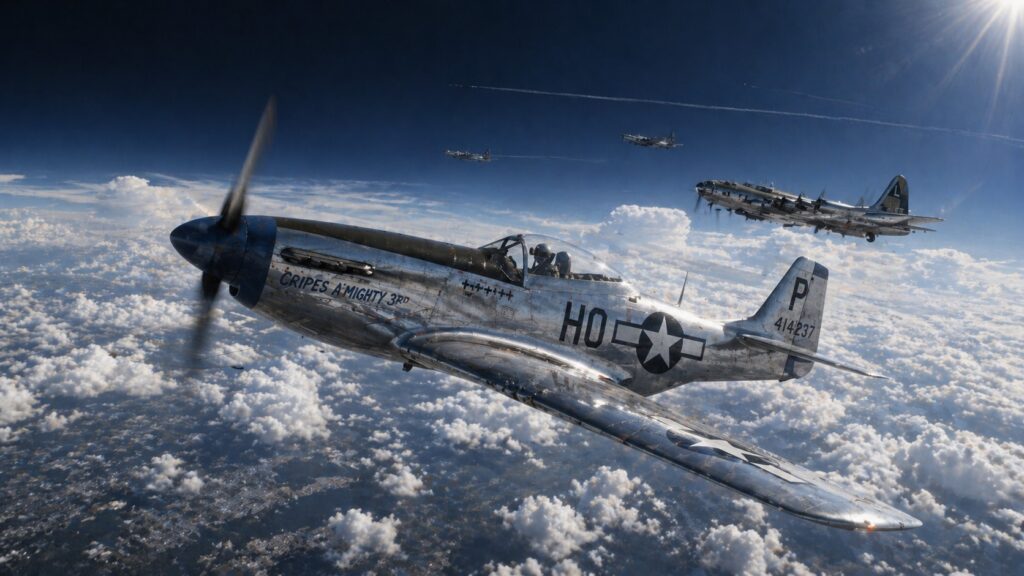
The Mustang won through a smart mix of power and design. Specifically, it paired a two-stage engine with slick wings. As a result, it cut through the air easily and flew huge distances. Ultimately, it allowed deep bomber escorts that changed the war.
2. Republic P-47 Thunderbolt — The Turbocharged Powerhouse
Service Ceiling: ~43,000+ ft Category: ✔ Optimized for extreme altitude
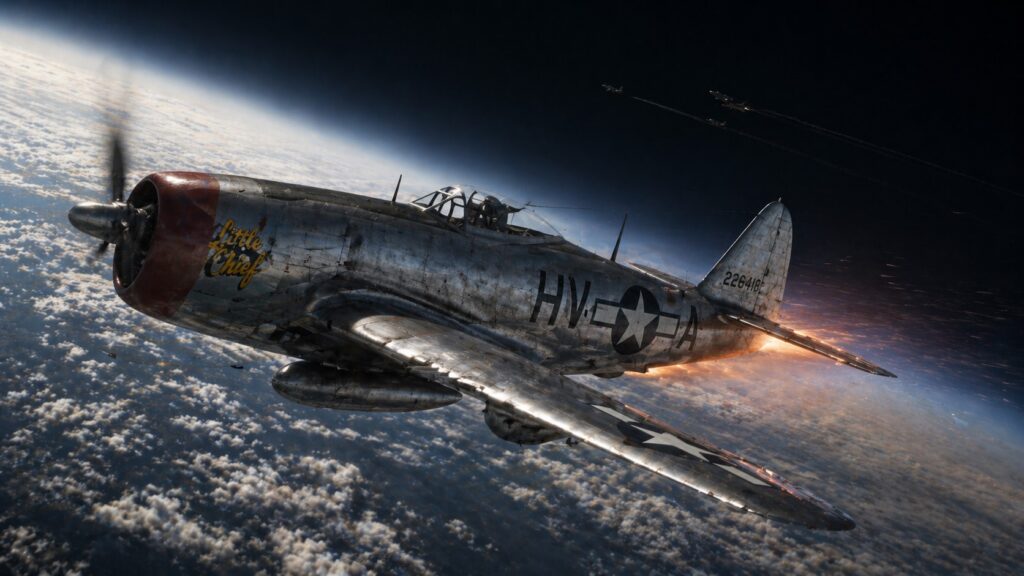
The huge P-47 Thunderbolt used pure force. Inside its big body was a complex turbo system. Unlike normal engines, the turbo let the P-47 keep full power in very thin air. Therefore, it remains one of the most intense WW2 high-altitude fighters ever built.
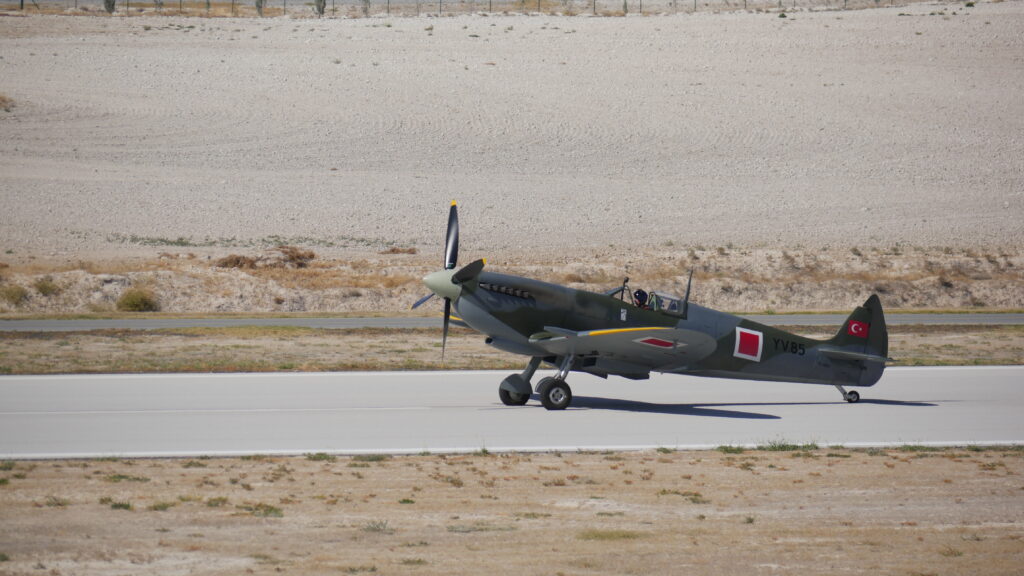
1. Supermarine Spitfire Mk IX — The High-Altitude Benchmark
Service Ceiling: ~43,000 ft Category: ✔ Optimized for high altitude
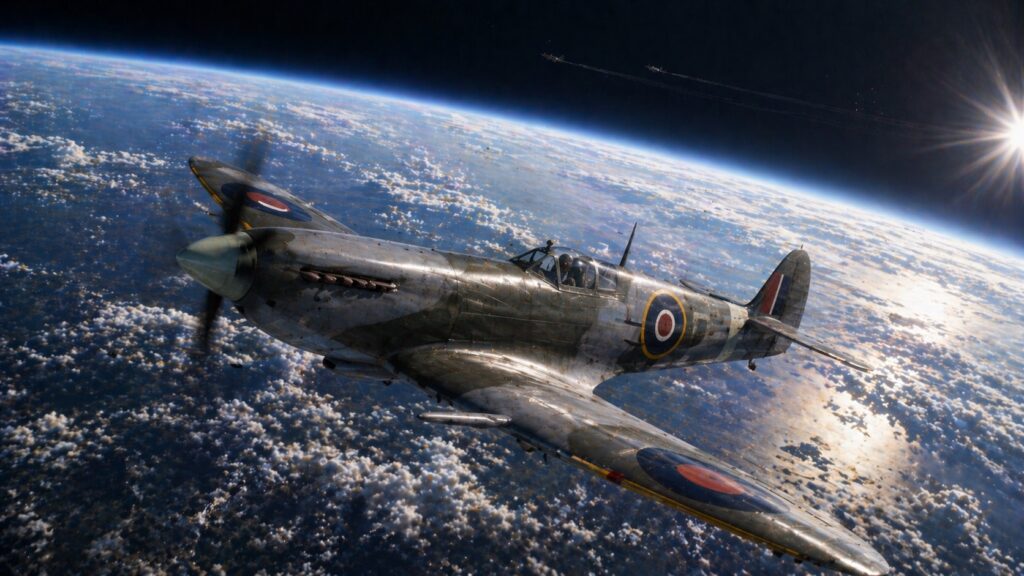
Finally, we reach the absolute top. Undoubtedly, the Spitfire Mk IX is the standard for WW2 high-altitude fighters. Not only did its engine work perfectly in the void, but its wings also cut drag brilliantly. As a result, it could turn and fight where other planes simply fell from the sky.
The Legacy of WW2 High-Altitude Fighters
In conclusion, not all combat planes were made to touch space. However, the planes on this list show amazing human skill under pressure. From simple workhorses to perfect interceptors, these WW2 high-altitude fighters proved something important. Ultimately, they showed that smart design and smooth wings were just as important as the guns they carried.
Frequently Asked Questions (FAQ)
What was the highest flying fighter in World War II? While many planes pushed the limits, the Republic P-47 Thunderbolt and Supermarine Spitfire Mk IX were the top operational WW2 high-altitude fighters. Specifically, they could fight very well above 43,000 feet. Later on, some rare late-war planes like the German Ta 152 reached even higher, but they saw very little combat.
Why didn’t all WW2 planes fight at extreme altitudes? Simply put, flying high is very hard on an engine. Because the air is so thin, normal engines choke and lose power quickly. Additionally, planes need special, smooth wings to stay up in the void. Therefore, only specially built WW2 high-altitude fighters with turbos or superchargers could survive there.
Did Japan build any WW2 high-altitude fighters? Generally, Japanese forces struggled with high-altitude technology. Although they built amazing low-altitude fighters like the A6M Zero, they lacked advanced turbochargers. However, late in the war, they made planes like the Nakajima Ki-84 and Mitsubishi J2M to stop American bombers. Yet, they still had a very hard time reaching the extreme heights of the B-29 Superfortress.
Which engine type was best for the stratosphere? Overall, there were two main winners. First, exhaust-driven turbochargers, like the ones in the American P-47, were amazing at keeping full power. Second, mechanical two-stage superchargers, like the famous Rolls-Royce Merlin, were great for smooth power and speed. Ultimately, both systems defined the success of WW2 high-altitude fighters.