Boeing 777-200LR (Worldliner)
The Boeing 777-200LR Worldliner is the longest-range version of the original 777. It first flew in 2005, entered service with Pakistan International Airlines in 2006, and set a record for the longest non-stop flight by a passenger airliner.
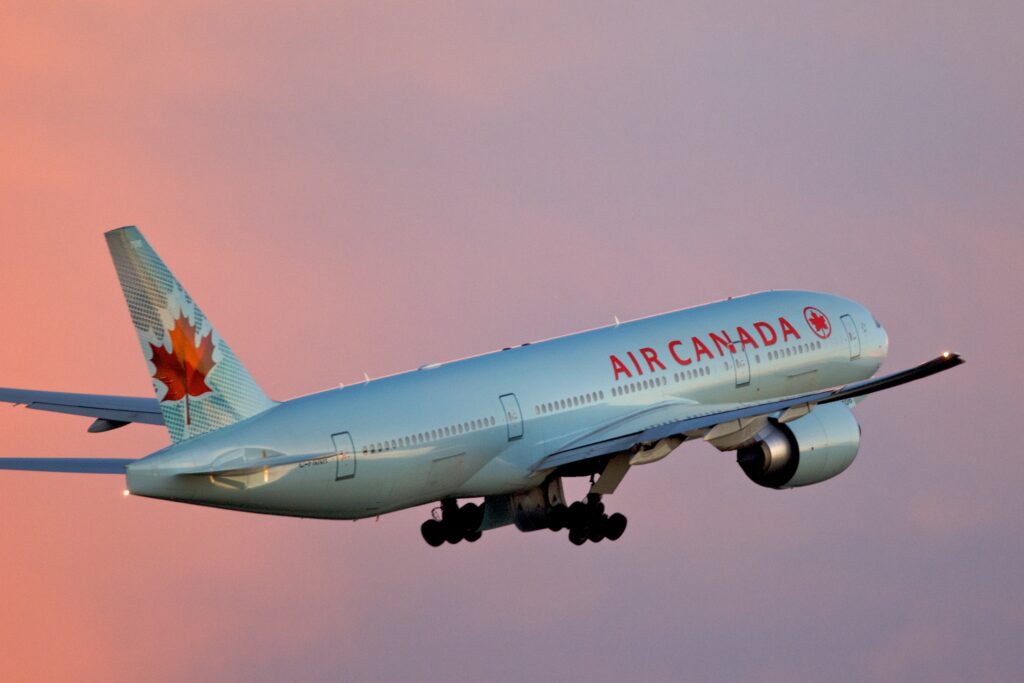
| General Characteristics | |
| Type | Wide-body jet airliner, Civil and Commercial Aircraft |
|---|---|
| National Origin | United States |
| Manufacturer | Boeing |
| Variants | 777-200LR, 777F (freighter derivative) |
| Status | In service; passenger version out of production |
| First Flight | 8 March 2005 |
| Introduction | February 2006 with Pakistan International Airlines |
| Primary Users | Emirates, Air Canada, Delta Air Lines, Qatar Airways |
| Number Built | 61 |
| Developed From | Boeing 777-200ER |
| Capacity & Dimensions | |
| Cockpit Crew | Two |
| Typical Seating | 301 (three-class); 317 (two-class) |
| Max Seating | 440 (exit limit) |
| Overall Length | 63.73 m (209 ft 1 in) |
| Wing Span | 64.80 m (212 ft 7 in) |
| Wing Sweep | 31.6° |
| Wing Area | 436.8 m² (4,702 sq ft) |
| Overall Height | 18.6 m (61 ft 1 in) |
| Weights, Powerplant & Performance | |
| MTOW | 347,452 kg (766,000 lb) |
| OEW | 145,150 kg (320,000 lb) |
| Fuel Capacity | 181,283 L (47,890 US gal) |
| Engines | 2 × General Electric GE90-110B1 or GE90-115B |
| Max. Thrust | 489–513 kN (110,000–115,300 lbf) each |
| Typical Cruise Speed | Mach 0.84 |
| Max. Speed | Mach 0.87–0.89 |
| Range | 15,843 km (8,555 nmi) |
| Takeoff Distance | 2,800 m (9,200 ft) |
| Service Ceiling | 13,140 m (43,100 ft) |
The Boeing 777-200LR (Long Range), which Boeing marketed as the Worldliner, is the longest-range version of the original Boeing 777. With a range of about 15,843 km (8,555 nmi), it can link almost any two cities in the world without a stop, which is where the name came from. It first flew on 8 March 2005, was certified by the FAA and EASA on 2 February 2006, and entered service with Pakistan International Airlines later that month. Boeing delivered 61 to twelve customers.
A Record-Breaking Airliner
On 10 November 2005, before it entered service, a 777-200LR flew non-stop eastwards from Hong Kong to London, a distance of 21,602 km (11,664 nmi), in 22 hours and 42 minutes. The flight went the long way round, across the Pacific, North America and the Atlantic, to show what the aircraft could do. It was recognised by Guinness World Records as the longest non-stop flight by a passenger airliner, and the record stood for many years.
How Boeing Stretched the Range
The -200LR has the same fuselage length as the 777-200 and 777-200ER, 63.73 m (209 ft 1 in), but almost everything else that affects range was changed. Boeing developed it alongside the 777-300ER, and the two share many parts:
- Raked wingtips extend the span by 3.90 m to 64.80 m (212 ft 7 in), which reduces drag on long flights.
- A higher maximum take-off weight of 347,452 kg (766,000 lb), with a strengthened structure and redesigned main landing gear.
- More fuel: 181,283 litres (47,890 US gal) in the standard tanks, plus space for up to three optional auxiliary tanks in the rear cargo hold for the longest routes.
- More powerful engines: General Electric GE90-110B1 or GE90-115B turbofans producing up to 513 kN (115,300 lbf) of thrust each, among the most powerful jet engines ever certified.
Cabin
In a typical layout the 777-200LR seats 301 passengers in three classes or 317 in two. Because it was built for flights of 16 hours or more, some airlines fitted crew rest areas above the cabin, reached by a staircase, so that relief pilots and cabin crew could sleep in proper bunks.
Ultra-Long-Haul Routes
The -200LR made a series of new non-stop routes possible. Emirates and Qatar Airways used it from the Gulf to the west coast of the United States and to South America; Delta Air Lines flew it from Atlanta to Johannesburg and from Los Angeles to Sydney; and Air Canada used it on long routes to Australia and Asia. For a time it was the only twin-engine airliner that could fly routes of this length with a full load of passengers.
Competition and Successors
The 777-200LR competed with the Airbus A340-500, a four-engine aircraft with a similar range but much higher fuel burn. Sales were modest, because the very long routes it was built for are few, and operating costs on shorter routes were higher than those of lighter aircraft. Its role has since passed largely to the Airbus A350-900ULR and the Boeing 787-9, which can fly similar distances while burning much less fuel. Boeing no longer offers the passenger -200LR.
The Freighter Connection
The -200LR’s greatest legacy may be the 777 Freighter, which uses its airframe, engines and wings with a strengthened floor and a main-deck cargo door. Cargo operators sometimes call the 777F the “777-200LRF” for that reason, and it has sold far better than the passenger aircraft it was based on.
Frequently Asked Questions
What is the range of the Boeing 777-200LR? About 15,843 km (8,555 nmi) with 317 passengers.
What does “Worldliner” mean? It was Boeing’s marketing name for the -200LR, because it can connect almost any two airports in the world non-stop.
How many 777-200LRs were built? 61, delivered to twelve customers.
Start the discussion
Commenting on this aircraft: Boeing 777-200LR (Worldliner)