






Last Updated: 4 months ago
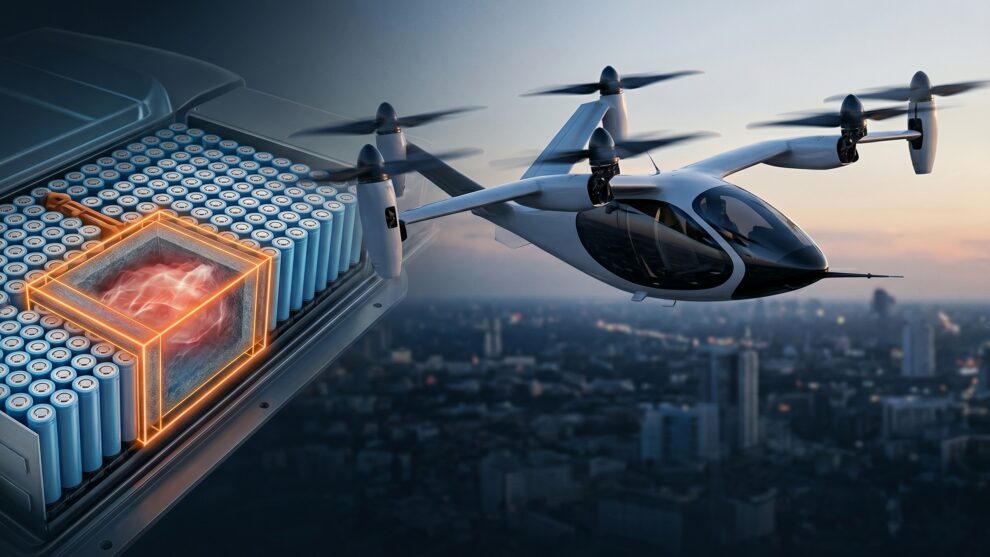
Aviation geeks, we stand on the edge of a new era. You probably watched the test flight videos of new multi-rotor aircraft. These machines promise to turn long highway commutes into a fast 15-minute sky ride. Electric Vertical Takeoff and Landing (eVTOL) aircraft are true engineering marvels. We are actively swapping old jet fuel for high-power lithium-ion packs.
Let us address the biggest question in the room. How do we prevent eVTOL battery fires at 3,000 feet?
In a ground-based electric car, a burning pack gives you time to pull over. Up in the sky, you lack that luxury. Because of this, stopping eVTOL battery fires requires aerospace-grade thermal management. Let’s open up the high-voltage heart of an electric aircraft and see exactly how aerospace engineers keep us safe.

The High-Voltage Heart of an Electric Aircraft
To understand the safety systems, you must grasp the sheer power of these machines. Modern aircraft from companies like Joby or Archer run on extreme 800V to 1,000V systems. High voltage is vital to reduce current. As a result, engineers can use thinner, lighter copper wiring across the wings.
Inside these packs, you will find thousands of cylindrical lithium-ion cells. Many builders rely on the trusted 21700 cell format. Meanwhile, other teams test larger 4680 cells (46mm wide, 80mm tall) for better energy storage. We see packs holding 100 to 200 kWh of energy, hitting weights around 200-250 Wh/kg.
Aviation battery architecture has evolved rapidly to meet strict safety limits.
| Feature | Early Electric Prototypes | Modern Commercial eVTOLs |
| Cell Format | Pouch cells (prone to swelling) | Cylindrical 21700 or 4680 (rigid) |
| Cooling Method | Air-cooled or passive | Active fluid or cold plates |
| Pack Voltage | 400V | 800V – 1000V |
| Thermal Defense | High pack-wide failure risk | Strict cell-to-cell isolation |
Stopping eVTOL Battery Fires During Vertical Flight
Taking off straight up puts massive strain on the power pack. Hovering demands a huge discharge of current. Sometimes, this hits a 3C or 4C rate. This means the system empties its full capacity at blazing speed.
During a hover, current ($I$) spikes high. Since power loss to heat equals $P = I^2R$, even a tiny internal resistance ($R$) inside the cell creates a huge heat load.
A normal fuel-burning plane loses hundreds of pounds of fuel weight during a trip. In contrast, an electric aircraft lands at the exact same weight it took off. Because of this, the vertical landing phase demands just as much power as takeoff. This adds a second intense heat load right at the end of the trip.
Thermal Runaway: The 1,000°C Threat
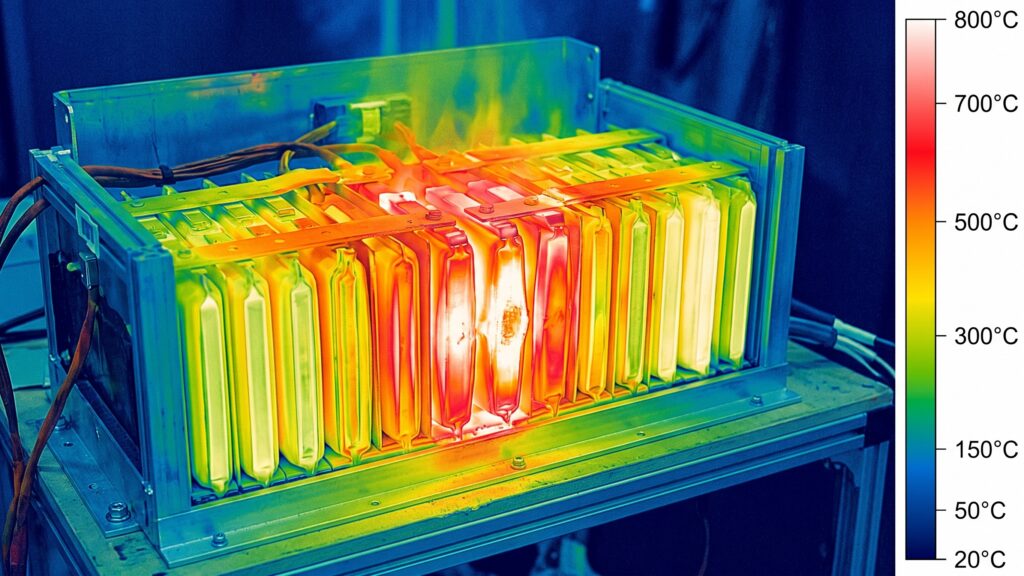
The worst-case event for any lithium-ion system is thermal runaway. If a single cell takes a hard hit, overcharges, or has a tiny factory flaw, its internal heat spikes.
Once a cell crosses about 150°C, the internal chemistry breaks down. The cell creates its own oxygen and heat. In just seconds, it shoots past 1,000°C. The real danger is not the single broken cell. Rather, the true risk is the extreme heat spreading to the next cell. This triggers an unstoppable chain reaction, which causes major eVTOL battery fires.
Key insight: A single blown cell is an easy maintenance fix. A chain reaction is a total disaster. The main goal of aerospace battery design is stopping the heat spread.
Engineering Firewalls Against eVTOL Battery Fires
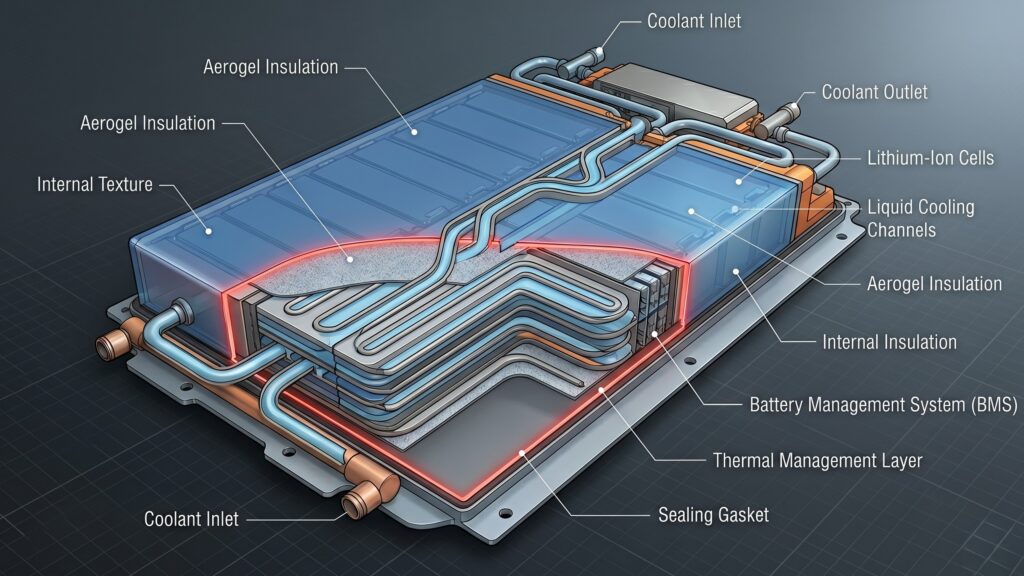
So, how do aerospace engineers guarantee that one bad cell won’t cause a disaster? They build an extreme thermal shield around every single energy unit. They use several key defense layers:
- Aerogel Barriers: Designers place advanced thermal barriers between every single unit. Engineers often use aerogel, which is an extremely light and effective insulator. If Cell A bursts into a 1,000°C blowtorch, the aerogel barrier protects Cell B. Thus, Cell B stays well below the danger zone.
- Phase Change Materials (PCMs): Around the cells, many designs use Phase Change Materials. These special compounds absorb massive amounts of heat by changing their physical state. They usually melt from solid to liquid when they hit extreme heat. A failing cell dumps its heat into the PCM, and the material “swallows” the thermal spike safely.
- Active Fluid Cooling: Liquid cooling is normal in high-end cars. For aviation, companies push the limits with special non-conductive liquids. The whole battery matrix sits in this fire-blocking fluid. It pulls away heat instantly during high-power phases like takeoff.
- Directional Vent Channels: When a cell fails, it shoots out violent gas. If this hot gas gets stuck inside a hard box, it creates an explosion. To prevent this, packs feature dedicated burst valves and safety tubes. These paths safely route the hot gas away from the cabin. Then, they shoot the gas outside the aircraft.
Distributed Redundancy: Surviving a Lost Pack
Let us assume the absolute worst. A whole module burns up, and you lose an entire section of the battery pack in mid-air. Will the aircraft fall out of the sky?
No.
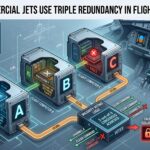
A traditional helicopter relies on one main rotor and one engine. A multi-rotor electric aircraft is different. It uses distributed electric propulsion. A plane might have six, eight, or twelve independent motors. The battery layout is also distributed. Instead of one massive central block, engineers split the power into four or more totally separate packs.
The Battery Management System (BMS) acts as a digital guard. It checks voltage and heat at microsecond speeds. If a pack fails, the BMS instantly shuts it down. In milliseconds, the flight computer shifts the power demand. It draws energy from the remaining healthy packs to power the vital rotors. The pilot might see a warning light on the glass cockpit, but they can still land safely.
Taking electric aviation from test models to certified passenger transport demands strict safety rules. By mastering heat control and stopping eVTOL battery fires, we unlock a cleaner and quieter future for human flight.
See you in the skies.
Frequently Asked Questions (FAQ)
What happens if lightning strikes an electric aircraft?
Modern carbon-fiber airframes feature embedded copper or aluminum mesh networks. These act as a Faraday cage. The lightning strike’s energy travels along the outer skin of the aircraft and exits back into the air. This process completely bypasses the internal high-voltage battery packs.
Do eVTOLs use the exact same batteries as electric cars?
They share similar core chemistries, but aviation-grade packs meet much stricter rules. They feature lower internal resistance, aerospace-grade insulation, and much faster cell-level safety software.
Can a pilot manually extinguish an eVTOL battery fire?
Pilots do not fight battery fires. The packs stay sealed and locked during flight. The aircraft relies entirely on automated, passive, and active safety layers to contain the heat while the pilot focuses on a safe landing.
Over to You, Aviation Geeks!
Are you ready to swap your traditional airline ticket for a seat powered by a 1,000V lithium-ion battery pack? Does the backup safety of distributed electric motors give you enough peace of mind to enjoy vertical flight? Drop your thoughts, technical questions, or healthy skepticism in the comments below. Let’s talk about the future of the skies!
Did you know AviationStream.com has a YouTube channel? Check out TheAeroGraphyOfficial and subscribe to watch fun, highly engaging aviation Shorts!