Air Canada Flight Attendants Strike Over Unpaid Ground Work
On 16 August 2025, more than 10,000 Air Canada and Air Canada Rouge flight attendants went on strike, the first in 40 years, mainly over unpaid work on the ground. The strike grounded the airline for four days and ended with paid ground time.
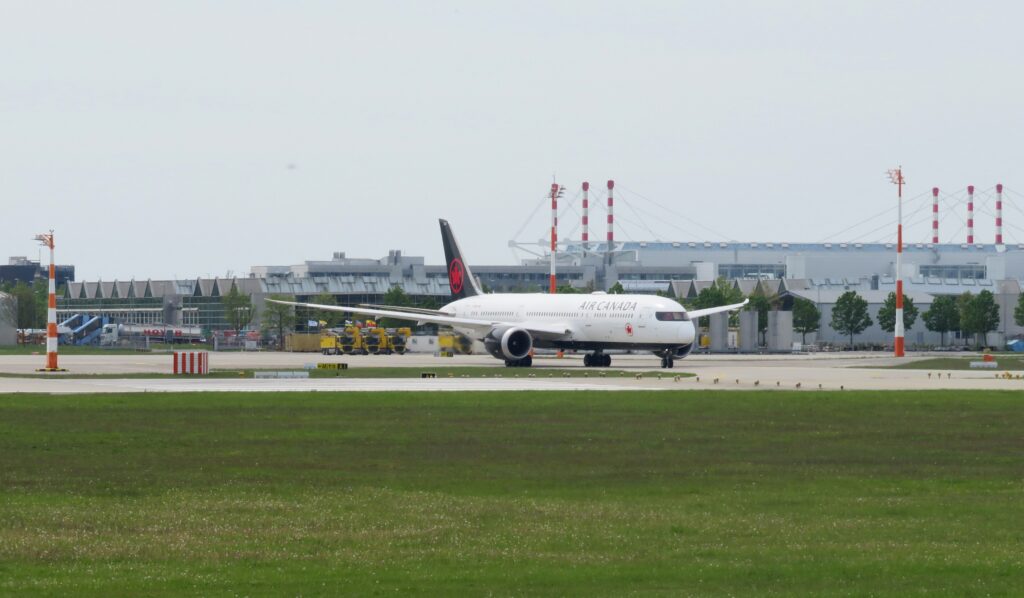
On 16 August 2025, more than 10,000 flight attendants at Air Canada and its leisure airline Air Canada Rouge walked off the job, the first strike by the airline’s cabin crew in about 40 years. Air Canada locked them out and cancelled nearly all of its own flights, stranding well over 100,000 passengers a day at the height of the summer season. The dispute became a national debate about one question in particular: why flight attendants are not paid for the work they do on the ground.
The strike at a glance
- Dates: 16–19 August 2025
- Who: About 10,000 flight attendants represented by the Canadian Union of Public Employees (CUPE), Air Canada Component
- Airlines affected: Air Canada and Air Canada Rouge; Air Canada Express flights run by partner airlines continued
- Main issues: wages after a ten-year contract and unpaid ground work such as boarding
- Outcome: tentative agreement on 19 August, including paid ground time
Unpaid work on the ground
Like many airlines in North America, Air Canada paid its flight attendants mainly for “block time”, from the moment the aircraft leaves the gate until it arrives. Time spent on safety checks, boarding passengers, helping with delays and disembarking was largely unpaid. Flight attendants said that this could add up to hours of unpaid work each week, and their campaign drew wide public support in Canada and from cabin crew unions abroad.
Four days of disruption
Air Canada began winding down its operations before the strike deadline and the strike started at about 1 a.m. Eastern time on 16 August. Within hours, the federal government used section 107 of the Canada Labour Code to ask the Canada Industrial Relations Board to impose binding arbitration and order the crew back to work. The board issued the order, but the union refused to comply and the strike continued, an unusual act of defiance that raised the stakes for both sides. After talks with a mediator, the airline and the union reached a tentative agreement early on 19 August, and flights restarted gradually that evening. Full schedules took about a week to recover.
The agreement and its outcome
The deal introduced pay for ground time for the first time: at least 60 minutes per flight at 50 per cent of the hourly rate at the start, rising over the contract. In September 2025, however, more than 99 per cent of members voted to reject the wage part of the deal. Under the agreement the wage question went to an arbitrator, who kept the mainline wage rates from the tentative deal and raised the first-year increase for Rouge crews. The ground-pay terms were final and were not part of the arbitration. The new four-year contract runs until March 2029.
Why it matters
The strike made unpaid ground work a public issue across the airline industry. For passengers, it showed how quickly a single labour dispute can ground a major network airline. See the aircraft in Air Canada’s long-haul fleet in our Boeing 787-9 profile, and read about another Canadian event of 2025, the Delta Connection Flight 4819 accident at Toronto Pearson.
Sources
- CBC News: Tentative Air Canada deal to include pay increases, at least 60 minutes ground pay, August 2025
- CTV News: Arbitrator settles flight attendant wages at Air Canada
- Runway Girl Network: Air Canada flight attendants bring issue of unpaid work into stark relief, August 2025
Related Airline Industry Events
More significant events from aviation history
Heathrow Airport Closed by the North Hyde Substation Fire (2025)
🗓 21 March, 2025 📍 London Heathrow Airport and the North Hyde substation, Hayes, west London, United Kingdom ★★★☆☆ Read full story →
Lufthansa Group Takes a 41% Stake in ITA Airways (2025)
🗓 17 January, 2025 📍 Rome, Italy, and Frankfurt, Germany ★★☆☆☆ Read full story →
FAA Lets Boeing Raise 737 MAX Production to 42 a Month (2025)
🗓 17 October, 2025 📍 Washington, D.C., and Renton, Washington, United States ★★☆☆☆ Read full story →
Paris Air Show 2025 at Le Bourget
🗓 16 June, 2025 📍 Paris–Le Bourget Airport, France ★★☆☆☆ Read full story →
Start the discussion
Commenting on this event: Air Canada Flight Attendants Strike Over Unpaid Ground Work