Hudson River Helicopter Crash: Bell 206L-4 Tour Flight (2025)
On 10 April 2025, a Bell 206L-4 tour helicopter broke apart in flight and fell into the Hudson River off Jersey City, killing the pilot and a family of five from Spain. Evidence released by the NTSB in July 2026 points to a bird strike; the final report is pending.
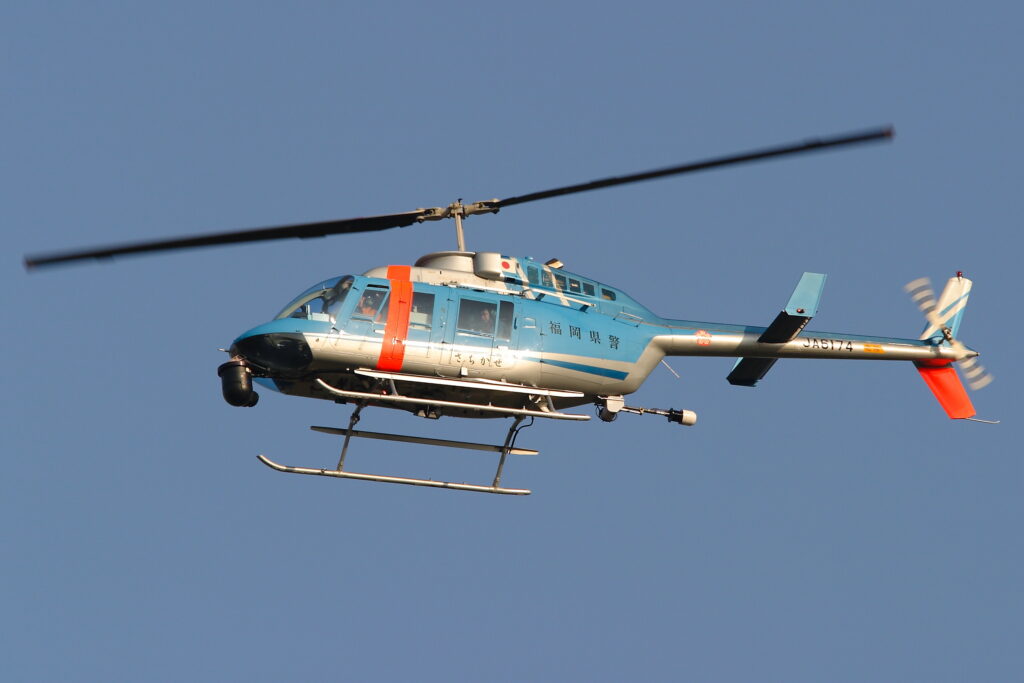
On the afternoon of 10 April 2025, a sightseeing helicopter broke apart in flight and fell into the Hudson River between Manhattan and Jersey City, New Jersey. The Hudson River helicopter crash killed all six people on board: the pilot and a family of five visiting New York from Spain, including three children. The National Transportation Safety Board (NTSB) is investigating, and evidence it released in July 2026 points to a collision with birds shortly before the helicopter came apart.
The accident at a glance
- Date: 10 April 2025, at about 15:15 local time
- Aircraft: Bell 206L-4 LongRanger, registration N216MH
- Operator: New York Helicopter Charters, on a sightseeing tour flight
- Route: Downtown Manhattan (Wall Street) Heliport, north along the Hudson River and back
- On board: 1 pilot and 5 passengers; no survivors
- Investigator: National Transportation Safety Board (NTSB), case ERA25MA171
The flight
The helicopter left the Downtown Manhattan Heliport at about 14:58 and flew north up the Hudson River, a route followed by many tour flights because it gives views of the Manhattan skyline and the Statue of Liberty. Near the George Washington Bridge it turned around and headed south along the New Jersey side of the river. As it approached the Holland Tunnel ventilation towers at about 15:15, flight data showed it suddenly climbing, to about 675 ft, before a rapid descent.
Witnesses reported hearing several loud bangs. The helicopter broke into three main pieces, the tail boom, the cabin, and the roof with the main rotor system, and they fell into the river. Emergency crews from New York and New Jersey reached the scene within minutes, but none of the occupants survived. The pilot was 36 years old and held a commercial pilot certificate with helicopter and instrument helicopter ratings.
The investigation
The NTSB published its preliminary report on 7 May 2025. It described the in-flight break-up and the witness reports, but, like all preliminary reports, it did not state a cause.
On 16 July 2026, the NTSB opened the public docket, the collection of factual evidence gathered by investigators. According to documents in the docket, bird remains were found on the fuselage, inside the cabin, on the main rotor blades, the vertical fin and the horizontal stabilisers. A severed bird wing and pieces of the foam core of a main rotor blade were found on the ground and on rooftops about 2,000 ft from where the wreckage was recovered, close to the point where the flight data showed the abrupt climb. Witnesses also described a large flock of geese taking off nearby at about the time of the accident. The Smithsonian Institution’s Feather Identification Lab identified remains of Canada geese, brant geese and great black-backed gulls.
The docket is factual evidence and does not contain conclusions. The NTSB’s final report, with its analysis and probable cause, has not yet been published. This entry will be updated when it is.
Aftermath
The accident led to renewed calls in New York to restrict or ban non-essential tour helicopter flights over the city, where residents have long complained about noise and safety. The FAA later suspended the operator’s certificate. It was one of two fatal aviation accidents in the New York and Washington areas within a few months, following the Potomac River mid-air collision in January 2025.
Why it matters
Bird strikes are usually associated with airliners and engines, but helicopters are also vulnerable, especially at the low altitudes where tour flights operate and many birds fly. A large bird can damage a main rotor blade or break through a windscreen, and the main rotor has no redundancy if a blade fails. Other low-altitude accidents in our 2025 calendar include the Ghana Air Force Z-9 helicopter crash.
Sources
- NTSB: Investigation ERA25MA171, Bell 206L-4, Jersey City, New Jersey (docket and preliminary report)
- NTSB: Investigative update on the Jersey City helicopter crash (press release), April 2025
- Vertical Mag: NTSB documents suggest bird strike in April 2025 fatal NY Helicopter Bell 206L4 crash, 16 July 2026
Related Historical Aviation Accidents Events
More significant events from aviation history
Assassination of Juvénal Habyarimana and Cyprien Ntaryamira: The 1994 Aircraft Shootdown in Rwanda
🗓 6 April, 1994 📍 Presidential Palace gardens, near Kigali International Airport, Kigali, Rwanda, 1°58′32″S 30°10′26″E / 1.9756°S 30.1739°E / -1.9756; 30.1739 ★★★★☆ Read full story →
1996 Charkhi Dadri Collision: The Deadliest Mid-Air Crash
🗓 12 November, 1996 📍 Charkhi Dadri, Haryana, India, 28°33′38″N 76°18′15″E / 28.56056°N 76.30417°E / 28.56056; 76.30417 ★★★★☆ Read full story →
United Airlines Flight 736: The Crash That Changed Aviation
🗓 21 April, 1958 📍 Clark County, Nevada, United States ★★★★☆ Read full story →
The Tragic Mystery of China Northern Airlines Flight 6136
🗓 7 May, 2002 📍 Bohai Bay, near Dalian Zhoushuizi International Airport, Dalian, Liaoning, China, 39°00′N 121°48′E / 39°N 121.8°E / 39; 121.8 ★★★☆☆ Read full story →


Start the discussion
Commenting on this event: Hudson River Helicopter Crash: Bell 206L-4 Tour Flight (2025)