Cargo Smoke Detection: How Airliners Protect the Hold From Fire
Cargo smoke detection is the system of smoke detectors in an aircraft's cargo holds that warns the flight crew of a fire. On most airliners it is paired with a built-in extinguishing system that floods the hold with halon.
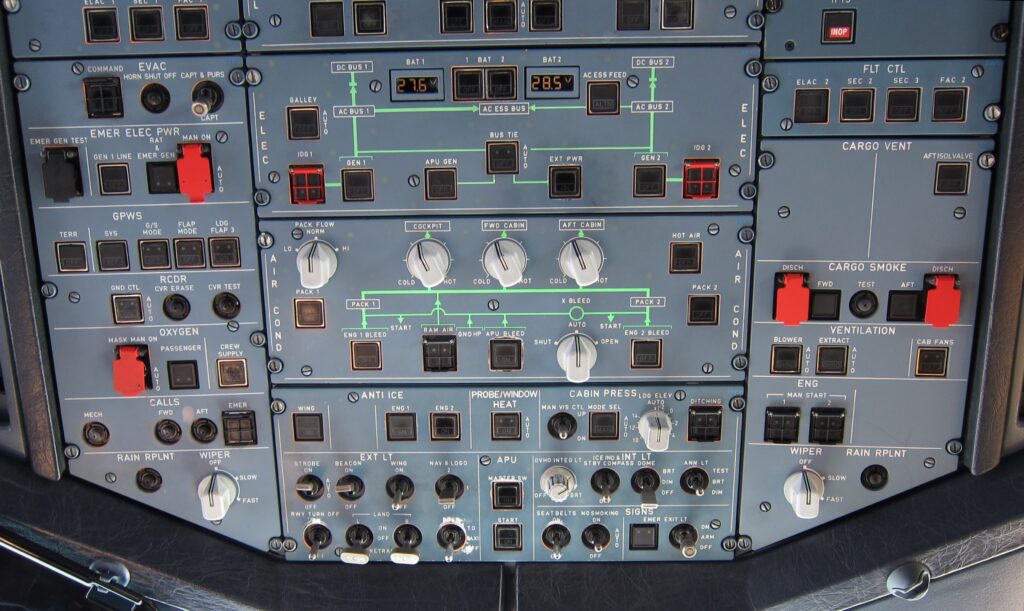
Cargo smoke detection is the system of smoke detectors in an aircraft’s cargo compartments that warns the flight crew of a possible fire. Because nobody can reach the lower holds of an airliner in flight, the system is usually paired with a built-in extinguishing system: when smoke is detected, the pilots discharge fire-suppressing agent into the affected hold from the flight deck.
How the detectors work
Air from the cargo compartment is sampled continuously, either by detectors mounted in the ceiling of the hold or by drawing air through tubes to detectors elsewhere. Most modern detectors are photoelectric: a light source and a sensor sit in a small chamber, and smoke particles scatter the light onto the sensor. Some older designs use ionisation chambers. To avoid false alarms from dust or humidity, many systems need two detectors in a zone to agree, or use detectors that check themselves.
Certification rules for large aeroplanes require the detection system to give a warning to the crew within one minute of a fire starting.
Cargo compartment classes
Rules for transport aircraft, 14 CFR 25.857, divide cargo compartments into classes:
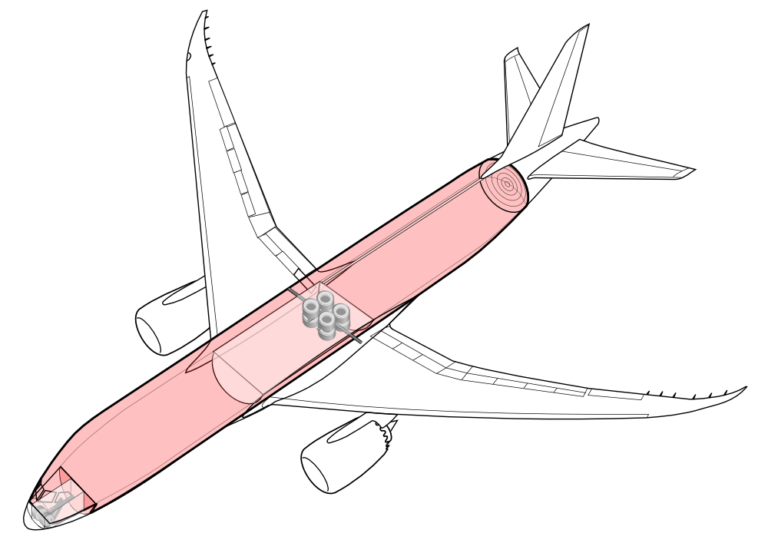
- Class C: typical lower deck holds of passenger airliners. They need smoke or fire detection, a built-in extinguishing or suppression system controlled from the cockpit, and a way to keep smoke and agent out of the cabin.
- Class E: the main deck of freighters. The crew must be warned of a fire and must be able to shut off the ventilation airflow; crews may also descend and depressurise to starve a fire of oxygen.
- Class B, A and F: compartments the crew can reach in flight, small compartments, and special cases.
Extinguishing after a warning
On a typical airliner, a smoke warning lights a cargo smoke indication on the overhead panel. The crew presses a discharge button: a first bottle quickly releases Halon 1301 to knock down the fire, and further agent is then metered in over time to keep the concentration high enough until the aircraft has landed. The ventilation and heating of that hold are shut off automatically. The crew then diverts to the nearest suitable airport.
Why it matters
Lower-deck fires are dangerous because they are hidden. After the 1996 crash of ValuJet Flight 592, caused by a fire in a hold that had no detection or extinguishing system, the FAA required airlines to upgrade such compartments with detection and suppression. Lithium batteries carried as cargo are a newer concern, because their fires can produce intense heat that halon cannot fully stop.
Frequently Asked Questions
How fast must a cargo fire be detected? Within one minute of the fire starting, according to the certification rules.
Can pilots see a cargo fire? No. They rely on the detectors, then discharge the extinguishing agent from the flight deck.
How long does the agent last? Long enough to reach a diversion airport; aircraft certified for long overwater flights carry more agent.
Related terms: fuselage and engine fire detection.
References
- 14 CFR 25.857, Cargo compartment classification
- 14 CFR 25.858, Cargo or baggage compartment smoke or fire detection systems
- FAA Aviation Maintenance Technician Handbook – Airframe (FAA-H-8083-31), chapter 17: Fire Protection Systems
Start the discussion
Commenting on this term: Cargo Smoke Detection: How Airliners Protect the Hold From Fire