Emergency Locator Transmitter (ELT): How Crashed Aircraft Are Found
An emergency locator transmitter (ELT) is a radio beacon that starts transmitting automatically after a crash. Its 406 MHz signal is picked up by search-and-rescue satellites, which tell rescuers who the aircraft is and where it is.
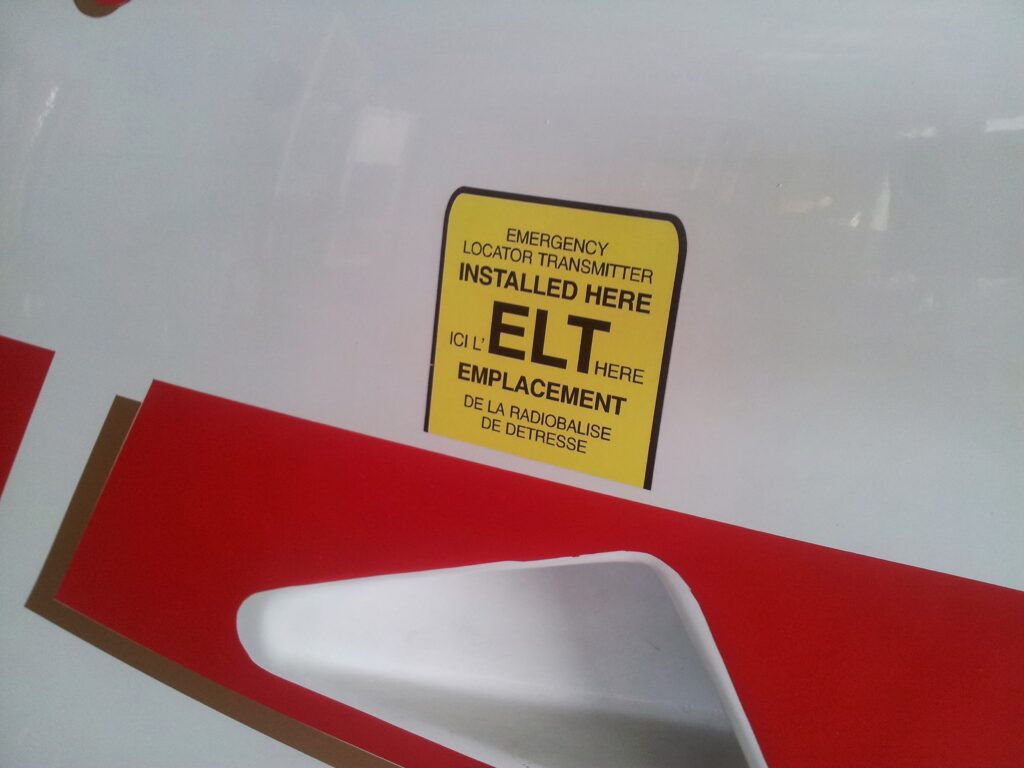
An emergency locator transmitter (ELT) is a radio beacon carried on an aircraft that starts transmitting a distress signal after a crash. It is switched on automatically by a sensor that detects a sudden, strong deceleration, and the crew can also turn it on by hand. Its signal helps search-and-rescue teams find the aircraft and its occupants quickly, which can make the difference between life and death after an accident in remote terrain or at sea.
How it works
Modern ELTs transmit on two frequencies:
- 406 MHz: a digital message picked up by the satellites of the international Cospas-Sarsat search-and-rescue system. The message identifies the beacon and therefore the aircraft, and many beacons also include a GPS position. The alert is passed to a rescue coordination centre within minutes.
- 121.5 MHz: a simple tone used by rescue aircraft and ground teams to home in on the beacon over the last few miles.
Older ELTs transmitted only on 121.5 MHz, which produced many false alarms and gave no identity. Satellites stopped processing 121.5 MHz signals in 2009, so these beacons can now only be heard by aircraft and ground stations nearby.
Types and installation
Most aircraft carry an automatic fixed ELT, mounted in the rear fuselage or tail with an external antenna and a label on the skin showing where it is. There are also automatic portable units, survival ELTs that are carried into a life raft, and automatically deployable ELTs that are thrown clear of the aircraft and float. ELTs have their own battery, which must be replaced at fixed intervals.
Rules
In the United States, 14 CFR 91.207 requires most civil aircraft to carry an ELT, to inspect it every 12 months and to replace or recharge its battery when it has been used for a total of one hour or reaches half of its useful life. ICAO standards require ELTs on international flights. After the disappearance of Malaysia Airlines Flight 370 in 2014, ICAO also added rules for tracking aircraft in distress while they are still flying, for new large aircraft.
Frequently Asked Questions
Does an ELT work under water? Its radio signal does not travel well through water, which is why airliners also carry underwater locator beacons on their flight recorders.
What happens if an ELT goes off by accident? Rescue centres check the registered owner, so pilots who activate one by mistake should report it to air traffic control or the rescue centre at once.
Is an ELT the same as a black box? No. The ELT helps find the aircraft; the flight recorders store data for investigators.
Related terms: emergency oxygen system and flight deck.
References
- 14 CFR 91.207, Emergency locator transmitters
- FAA Aeronautical Information Manual 6-2-4: Emergency Locator Transmitter (ELT)
- Cospas-Sarsat International Satellite System for Search and Rescue

Start the discussion
Commenting on this term: Emergency Locator Transmitter (ELT): How Crashed Aircraft Are Found