Aircraft Ice Protection: De-Icing Boots and Thermal Anti-Ice
Aircraft ice protection keeps ice off the wings, tail, engine intakes and propellers in flight. Anti-ice systems stop ice from forming, usually with heat; de-icing systems, such as rubber boots, remove ice after it has built up.
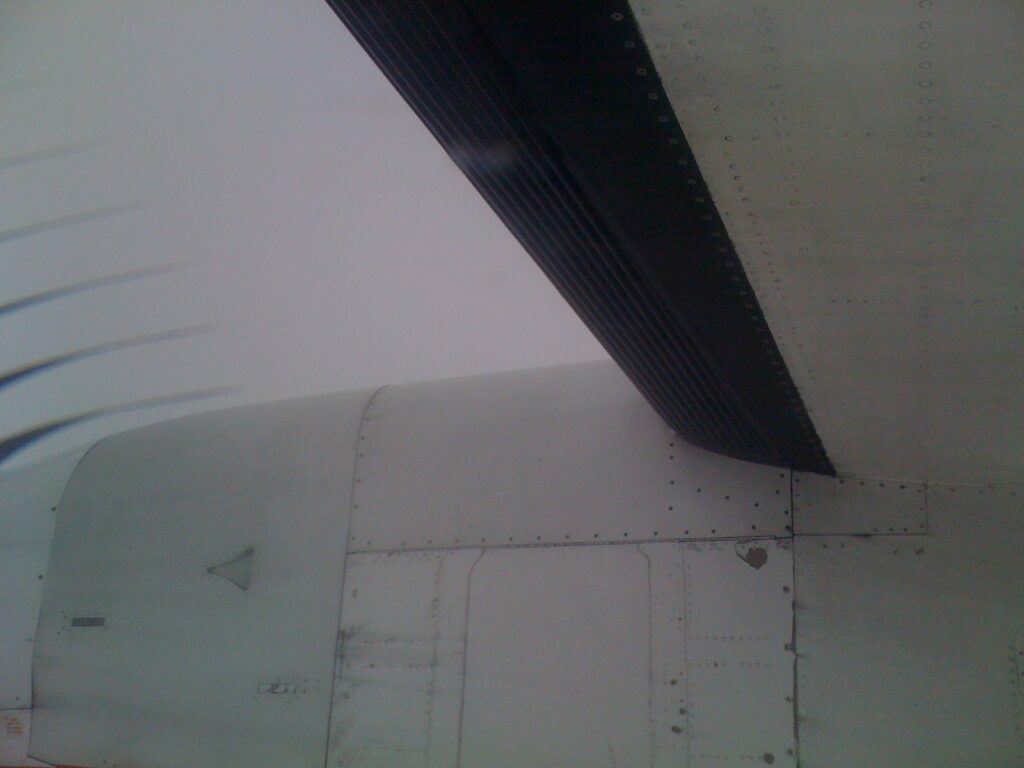
Aircraft ice protection is the group of systems that keeps ice off the parts of an aircraft where it would be dangerous: the wing and tail leading edges, engine intakes, propellers, windshields and sensors. Ice changes the shape of a wing, adds weight and drag, and can cause a stall at a much lower angle of attack than normal, so aircraft certified for flight in icing conditions must be able to deal with it.
Anti-ice and de-ice
The two terms mean different things:
- Anti-ice systems prevent ice from forming. They are switched on before or when the aircraft enters icing conditions and keep the surface warm or wet with fluid.
- De-ice systems remove ice after a thin layer has built up. They work in cycles.
Pneumatic de-icing boots
Many turboprops, such as the ATR 72 and the De Havilland Canada Dash 8, use de-icing boots: rubber sheets bonded to the leading edges. When the system is on, air pressure inflates tubes inside the boots in a timed sequence. The boots swell and crack the ice, which the airflow then carries away. Pilots traditionally waited for some ice to form before using them, but current FAA guidance for most modern boot systems is to switch them on at the first sign of ice.
Thermal anti-ice
Jet airliners have plenty of hot bleed air, so they usually pipe it into the leading edges of the outer wing slats and around the engine intake lips. A perforated “piccolo” tube sprays the hot air against the inside of the skin, keeping it above freezing. The Boeing 787 uses electric heating mats in the wings instead. Engine intakes are anti-iced on almost every jet, because chunks of ice entering the engine can damage the fan and compressor.
Other methods
- Electric heating protects propeller blades, windshields, pitot tubes and other probes.
- Fluid systems, such as the TKS “weeping wing” used on some light aircraft, pump a glycol-based fluid through tiny holes in the leading edge.
Why it matters
Several accidents have shown the limits of ice protection. In 1994 an ATR 72 flying as American Eagle Flight 4184 crashed after freezing drizzle formed a ridge of ice behind the area covered by the boots. This led to new rules: in 2014 the FAA added requirements for supercooled large drops (Appendix O to Part 25) for new transport aircraft. Ice on the ground is a separate problem, handled by de-icing fluids sprayed before take-off.
Frequently Asked Questions
What is the difference between anti-ice and de-ice? Anti-ice stops ice forming; de-ice removes ice that has already formed.
Do airliners have de-icing boots? Most jets do not; they use hot bleed air or electric heat. Boots are common on turboprops.
Why are only some slats heated? The outer slats protect the parts of the wing most affected by ice; inner sections and the tail of many jets are left unprotected by design.
References
- FAA Aviation Maintenance Technician Handbook – Airframe (FAA-H-8083-31), chapter 15: Ice and Rain Protection
- FAA Advisory Circular AC 91-74B: Pilot Guide: Flight in Icing Conditions
- FAA Pilot’s Handbook of Aeronautical Knowledge (FAA-H-8083-25), chapter 12 (Weather Theory) and chapter 7 (Aircraft Systems)
Start the discussion
Commenting on this term: Aircraft Ice Protection: De-Icing Boots and Thermal Anti-Ice