Rain Protection: Windshield Wipers, Repellent and Coatings
Rain protection keeps the pilots' windshields clear in heavy rain during take-off, approach and landing. Airliners use windshield wipers, and some also use rain repellent fluid or permanent hydrophobic coatings on the glass.
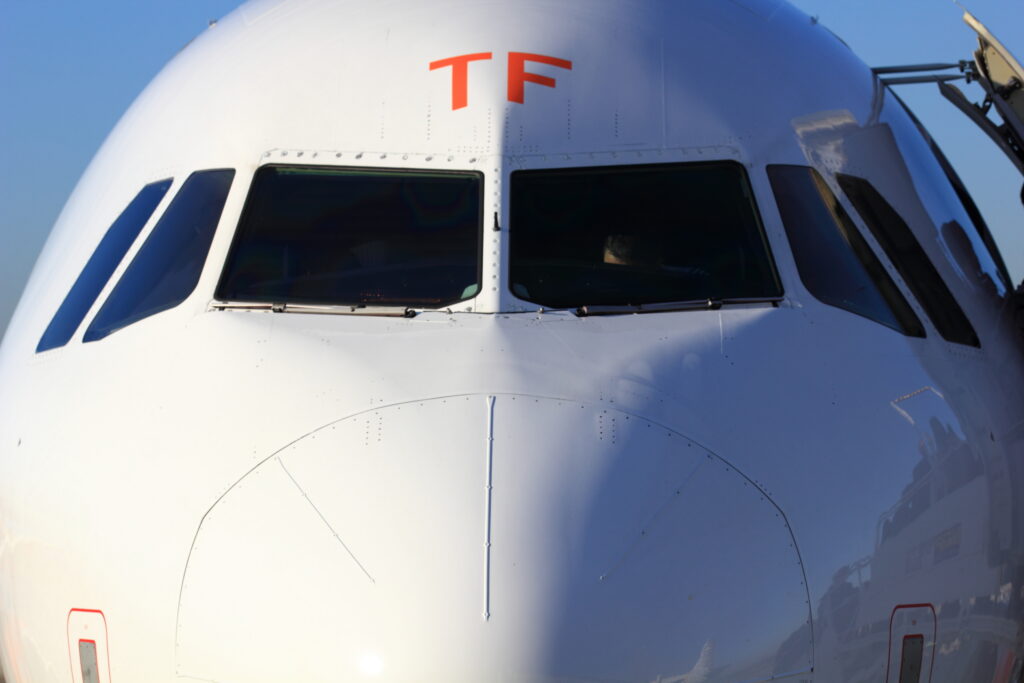
Rain protection is the set of systems that keep the pilots’ windshields clear in heavy rain, so that they can see the runway during take-off, approach and landing. At cruising speed, the airflow usually blows rain off the glass, but at low speed, close to the ground, heavy rain can make it hard to see out. Certification rules such as 14 CFR 25.773 require that pilots keep a clear enough view in heavy rain.
Windshield wipers
Most airliners have a wiper on each of the two front windshields, driven by an electric or hydraulic motor, with low and high speeds. They work like car wipers but are much stronger, because they must sweep the glass against the force of the airflow. Wipers may only be used up to a maximum speed, and pilots must not run them on a dry windshield, because that can scratch the glass and damage the blades.
Rain repellent
Some aircraft have a rain repellent system: at the press of a button, a measured amount of fluid is sprayed onto the windshield, where it forms a coating that makes rain bead up and blow away. It is used only in heavy rain, together with the wipers, and never on a dry windshield, where the fluid would smear and reduce visibility. Older repellent fluids contained substances that were later restricted for environmental reasons, and many airlines have stopped using them.
Hydrophobic coatings
Modern windshields often have a permanent hydrophobic coating that makes water bead up and run off the glass in the airflow. It reduces the need for wipers and repellent, but it wears off over time and must be renewed during maintenance. Crews still rely on the wipers in the heaviest rain at low speed, when the coating alone may not keep the glass clear.
Other methods
Some older jets used a pneumatic rain removal system, which blew hot air from the engines across the outside of the windshield to break up the water film. Windshields are also heated electrically, which keeps them free of ice and fog and makes the glass more resistant to bird strikes. On light aircraft without wipers, pilots look through the side windows or rely on the propeller’s airflow.
Frequently Asked Questions
Do airplanes have windshield wipers? Yes, nearly all airliners and many business aircraft have them.
Why don’t pilots use wipers in cruise? At high speed the airflow clears the rain, and wipers have a maximum speed.
What is rain repellent? A fluid sprayed on the windshield in heavy rain that makes water bead up and blow away.
Related terms: ice protection and flight deck.
References
- FAA Aviation Maintenance Technician Handbook – Airframe (FAA-H-8083-31), chapter on ice and rain protection
- 14 CFR 25.773, Pilot compartment view
Start the discussion
Commenting on this term: Rain Protection: Windshield Wipers, Repellent and Coatings