








Last Updated: 4 months ago
Wind shear is a sudden change in wind speed, wind direction, or both over a short distance in the atmosphere. In aviation, it is an important weather hazard because it can quickly affect an aircraft’s airspeed, lift, climb performance, and flight path.
The term may also appear as windshear or wind gradient. All of these expressions describe the same basic idea: the wind does not always flow evenly. It can change sharply from one altitude to another or from one area of airspace to another.
For pilots, this matters most during takeoff, approach, and landing. At these low altitudes, aircraft have less time and less height available to recover from a sudden loss of performance.
Wind Shear Meaning in Aviation
In aviation, wind shear describes a rapid change in airflow that an aircraft encounters while flying. This change may increase or decrease indicated airspeed almost instantly. It may also push the aircraft above or below the intended flight path.
A mild wind change may only require small control corrections. Strong shear, however, can become dangerous. If an aircraft suddenly loses headwind or meets a strong downdraft close to the ground, it may lose lift and descend faster than expected.
This is why wind shear awareness is an essential part of aviation weather training.
Vertical and Horizontal Wind Shear
Wind shear can happen in different directions. The two main types are vertical and horizontal.
Vertical wind shear occurs when wind speed or direction changes with altitude. For example, wind near the ground may come from one direction, while wind a few hundred feet above may come from another direction.
Horizontal wind shear occurs when wind changes across a horizontal distance at the same altitude. An aircraft may fly from one air mass into another and experience a sudden change in wind speed or direction.
Both types can affect aircraft performance, but low-level shear is especially important because it occurs near the runway environment.
Common Causes of Wind Shear
Several weather conditions can create sharp wind changes. Thunderstorms are one of the most important causes. Strong convective activity can produce powerful downdrafts and outflow winds.
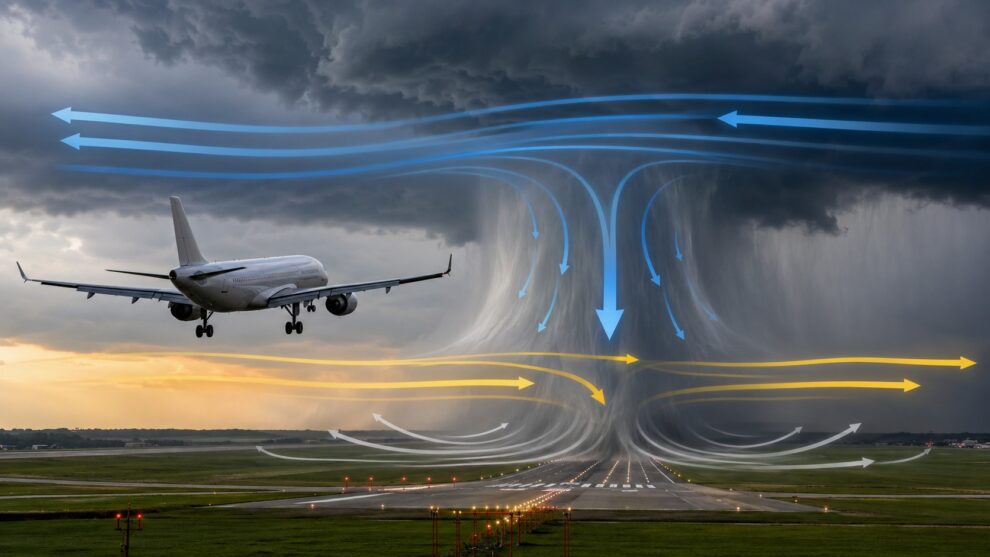
A microburst is especially hazardous. It is a small but intense downdraft that spreads outward when it reaches the ground. An aircraft flying through a microburst may first gain airspeed from a headwind, then lose airspeed rapidly when the wind shifts to a tailwind.
Frontal systems can also create shear. When two air masses meet, wind speed and direction may change quickly. Temperature inversions, mountain waves, sea breezes, and jet streams can also produce wind gradients.
How It Affects Aircraft
Wind shear can change the forces acting on an aircraft in seconds. A sudden headwind increase may cause a temporary rise in airspeed and lift. A sudden tailwind or downdraft can reduce airspeed and lift.
During approach, this can make the aircraft sink below the intended glide path. During takeoff, it can reduce climb performance just after liftoff. These situations require quick recognition and correct pilot response.
Modern aircraft may include wind shear warning systems. Airports may also use weather radar, pilot reports, and low-level wind shear alert systems to help crews identify dangerous conditions.
Wind Shear Types and Effects
| Type | What Changes | Common Situation | Aviation Risk |
|---|---|---|---|
| Vertical wind shear | Wind changes with altitude | Near fronts, inversions, thunderstorms | Airspeed and flight path changes during climb or descent |
| Horizontal wind shear | Wind changes across distance | Storm outflows or air mass boundaries | Sudden drift, speed change, or unstable approach |
| Low-level wind shear | Wind changes close to the ground | Takeoff and landing areas | Reduced recovery time and higher flight safety risk |
| Microburst-related shear | Strong downdraft and spreading surface winds | Thunderstorm activity | Rapid loss of airspeed and lift near the runway |
| Mountain wave shear | Wind disturbed by terrain | Downwind of mountains | Turbulence, altitude changes, and control challenges |
This table helps show why wind shear is not just a simple wind shift. It can appear in several forms and create different hazards depending on altitude, weather, and flight phase.
Detection and Pilot Awareness
Pilots use weather briefings, ATIS reports, terminal forecasts, onboard radar, and air traffic control information to assess the risk before flight. Pilot reports are also valuable because they describe real conditions experienced by other aircraft.
During flight, warning signs may include sudden airspeed changes, unexpected vertical speed changes, unstable pitch attitude, or rapid deviations from the intended path.
If pilots suspect significant wind shear during approach, the safest decision may be to go around. During takeoff, crews follow aircraft-specific procedures if they encounter a warning or performance loss.
Why the Term Matters
Understanding wind shear is important for anyone learning aviation weather. It explains why wind near the ground can be more dangerous than it looks from a simple surface report.
A steady wind is usually manageable. A sudden wind change, especially near the runway, can create a serious challenge. For this reason, wind shear remains one of the most important weather hazards in aviation safety.
Did you know AviationStream.com has a YouTube channel? Check out TheAeroGraphyOfficial and subscribe to watch fun, highly engaging aviation Shorts!