





Last Updated: 4 months ago
The flight deck is an important aviation term with two main meanings. In civil aviation, it usually refers to the control area at the front of a large aircraft, where pilots operate the aircraft. In naval aviation, it refers to the flat upper deck of an aircraft carrier, where aircraft take off, land, park, and receive support.
This double meaning can confuse people who are new to aviation. The correct meaning depends on context. If someone talks about airline pilots, instruments, avionics, or flight controls, they probably mean the control center inside an aircraft. If the subject involves aircraft carriers, catapults, arresting gear, or deck crews, the term refers to the ship’s aviation operating surface.
Origin of the Term
The expression comes from maritime language. Aviation borrowed many words from the world of ships, including navigation, port, starboard, cockpit, and deck. Early aircraft designers and pilots often used familiar nautical terms because both ships and aircraft move through a fluid medium: water for ships and air for aircraft.
The word “deck” originally described a level surface on a ship. As aviation developed, the phrase became useful for describing an area where flight operations take place. In large aircraft, it refers to the crew’s operating area. On aircraft carriers, it keeps its more literal meaning as a deck used for flight activity.
Control Center of an Aircraft
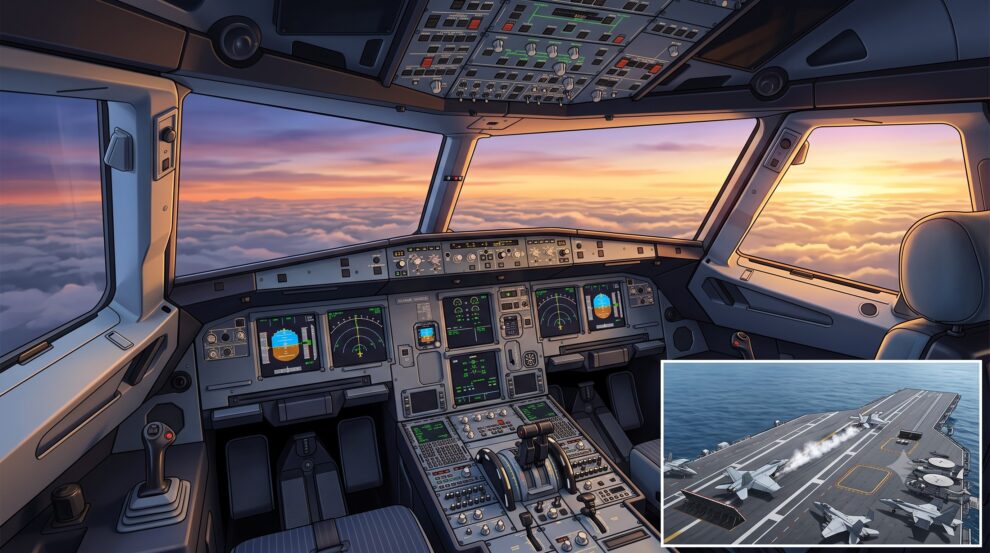
In commercial aviation, the flight deck is the area where pilots control and monitor the aircraft. It contains flight instruments, control yokes or sidesticks, throttle levers, radio panels, navigation systems, autopilot controls, warning systems, and many other avionics displays.
Modern airliners use highly advanced digital systems. Pilots monitor primary flight displays, navigation displays, engine indications, communication panels, and system pages. These tools help the crew manage the aircraft during taxi, takeoff, climb, cruise, descent, approach, and landing.
The area also includes seats for the pilots and, in some aircraft, additional observer or jump seats. Larger aircraft may have more space than smaller airplanes, which is one reason aviation professionals often prefer the term flight deck for large commercial aircraft.
Cockpit vs Flight Deck
People often use “cockpit” and “flight deck” as if they mean the same thing. In everyday speech, that is usually acceptable. In professional aviation, there is a small difference in tone and context.
| Term | Common Meaning | Typical Use |
|---|---|---|
| Cockpit | Pilot area in an aircraft | Common for small aircraft, trainers, helicopters, and fighters |
| Flight deck | Control center of a large aircraft | Common for airliners and larger transport aircraft |
| Carrier flight deck | Flat deck on an aircraft carrier | Used for naval launch, landing, parking, and servicing |
| Bridge | Command area of a ship | Maritime term, not an aircraft control area |
This distinction is not always strict. Many people still call the front control area of an airliner a cockpit. However, airlines, manufacturers, and professional crews often use “flight deck” because it sounds more formal and better describes the larger working environment of a modern transport aircraft.
Naval Aviation Meaning
In naval aviation, the same term has a different meaning. On an aircraft carrier, the flight deck is the large flat surface on top of the ship. Aircraft use this area for takeoff, landing, taxiing, parking, refueling, arming, and maintenance support.
Carrier operations are highly complex. Aircraft may launch using catapults or ski-jump ramps, depending on the carrier design. During landing, many carrier-based aircraft use arresting gear to stop within a very short distance.
The deck crew coordinates these activities in a dangerous and fast-moving environment. They must manage aircraft movement, engine blast, rotor wash, weapons, fuel, and tight spacing. In this context, the term does not describe a room inside an aircraft. It describes the shipboard surface used for flight operations.
Why Context Matters
The meaning changes completely depending on the aviation environment. A pilot saying “on the flight deck” usually means inside the aircraft control area. A naval officer saying the same phrase may mean outside on the carrier deck.
Understanding this difference helps readers interpret aviation articles, accident reports, documentaries, aircraft descriptions, and naval operations more accurately. It also prevents confusion between commercial aviation and military carrier operations.
Modern Flight Deck Technology
Modern aircraft control areas are no longer simple instrument panels. They integrate digital displays, flight management computers, autopilot systems, communication radios, weather radar, traffic awareness systems, and navigation databases.
These systems help reduce workload and improve situational awareness. Pilots still make decisions and manage the aircraft, but automation supports many routine tasks. The layout must allow the crew to see critical information quickly and act without confusion.
Human factors play a major role in design. Engineers arrange displays, switches, lights, and warnings so pilots can understand aircraft status under normal and abnormal conditions.
Why the Term Matters
The flight deck is the operational heart of many aviation systems. In an airliner, it is where the crew controls the aircraft and manages the flight. On an aircraft carrier, it is where naval aircraft launch, recover, and prepare for missions.
For aviation students, enthusiasts, and writers, the key lesson is simple: context decides the meaning. The term may describe a high-tech control center inside a commercial aircraft or a busy operating surface on a naval carrier. Both meanings are correct, and both reflect aviation’s strong connection to maritime language.
Did you know AviationStream.com has a YouTube channel? Check out TheAeroGraphyOfficial and subscribe to watch fun, highly engaging aviation Shorts!