Thrust Reverser Explained: How Jets Slow Down After Landing
A thrust reverser is a device on a jet engine that redirects the engine's airflow forwards after landing, adding braking force and reducing wear on the wheel brakes. Common types are cascade, pivoting door and clamshell reversers.
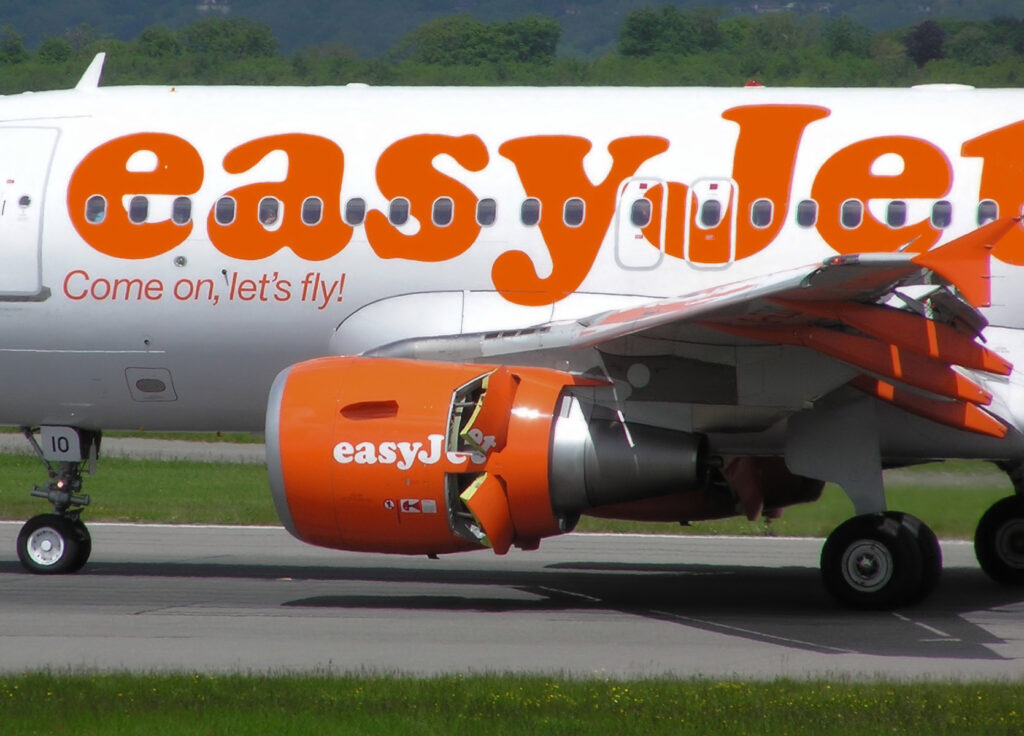
A thrust reverser is a device on a jet engine that redirects the engine’s exhaust or fan air forwards instead of backwards after landing. The forward-facing flow pushes against the aircraft’s motion and helps it slow down, together with the wheel brakes and spoilers. Turboprop aircraft get the same effect by turning their propeller blades to a reverse angle.
Types of thrust reverser
- Cascade (translating sleeve): the most common type on modern high-bypass turbofans, such as those on the Airbus A350 and Boeing 777. A section of the engine cowling slides backwards, blocker doors close off the fan duct, and the fan air escapes through rows of curved vanes, the cascades, which turn it forwards.
- Pivoting door: four doors in the fan cowling swing open and redirect the fan air outwards and forwards. Many CFM56-powered Airbus A320 family aircraft use this design, as in the photo.
- Clamshell or bucket (target): two large doors close behind the engine’s exhaust and deflect it forwards. This type was used on older engines with low bypass ratios, such as the JT8D on the Boeing 737-200, and is still found on many business jets.
How pilots use it
After touchdown, the pilots lift the reverse thrust levers, which can only move when the aircraft is on the ground. The reversers deploy and the engines spool up to give reverse thrust. As the aircraft slows, usually to around 60 knots on many airliners, the reversers are returned to idle and then stowed, so that the engines do not ingest debris blown forwards or hot exhaust.
Reversers are most valuable on wet, icy or contaminated runways, where the wheel brakes are less effective. On dry runways, many airlines use only idle reverse to save fuel and reduce noise, relying on the autobrakes. The landing distances used for certification on dry runways do not count on reverse thrust, so the reversers provide an extra margin. You can read more about these margins in our article on runway overrun prevention.
Safety
Because a reverser that deploys in flight could cause loss of control, the systems have several independent locks and sensors, and rules such as 14 CFR 25.933 require that an unwanted deployment either cannot happen or leaves the aircraft controllable.
Frequently Asked Questions
Do planes fly backwards with reverse thrust? Most airliners never do, although some military transports can reverse on the ground. Airliners are pushed back by tugs.
Why does the engine get louder after landing? Because the engines are spooled up to produce reverse thrust.
Can a plane land without thrust reversers? Yes. They are an extra braking aid, and aircraft can be dispatched with one reverser locked out under defined conditions.
References
- FAA Aviation Maintenance Technician Handbook – Powerplant (FAA-H-8083-32), chapter on thrust reversers
- 14 CFR 25.933, Reversing systems
Start the discussion
Commenting on this term: Thrust Reverser Explained: How Jets Slow Down After Landing