Composite Structure (CFRP) in Aircraft Explained
A composite structure combines strong fibres, usually carbon or glass, with a resin that holds them in place. Carbon fibre reinforced plastic now makes up about half of the structural weight of the Boeing 787 and Airbus A350.
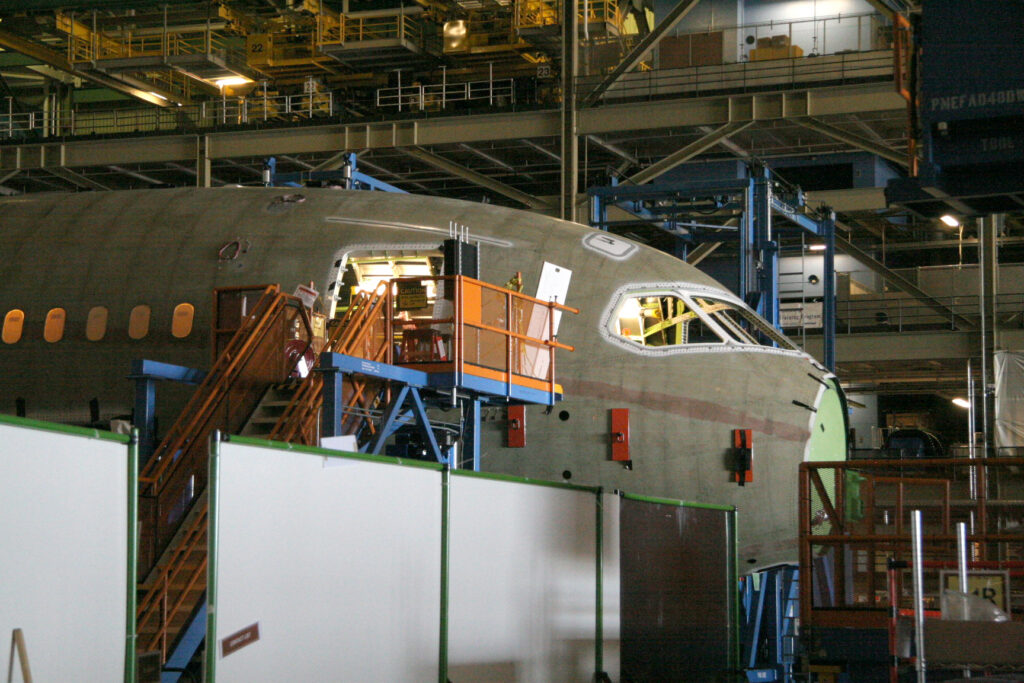
A composite structure is made of two or more materials that work together to give properties neither has on its own. In aircraft, the usual composite is a fibre-reinforced plastic: strong, stiff fibres embedded in a resin, usually epoxy, that holds them in place and spreads the load between them. The most important type today is carbon fibre reinforced plastic, or CFRP.
How composites are made
The fibres can be carbon, glass or aramid (Kevlar). They are supplied as tape or woven fabric, often already impregnated with resin, a form called prepreg. Layers, or plies, are laid in a mould with their fibres pointing in chosen directions, because a composite is strongest along its fibres. Engineers can put more plies where the loads are highest and orient them to match the load paths. The lay-up is then cured under heat and pressure, usually in a large oven-like pressure vessel called an autoclave.
Composites can also be built as sandwich panels, with thin composite skins bonded to a light honeycomb or foam core. These are very stiff for their weight and are widely used for floors, fairings and control surfaces.
Where you find composites
Glass fibre has been used in gliders and fairings since the 1950s and 1960s, and carbon fibre spread to tails and control surfaces in the 1980s. The Boeing 787 was the first large airliner with a composite fuselage and wing: about 50% of its structural weight is composite, and its fuselage is built as one-piece barrel sections. The Airbus A350-900 uses about 53% composites, with the fuselage made of large panels. Composite propeller blades, engine fan blades and helicopter rotor blades are also common.
Advantages
- High strength and stiffness for low weight
- Good resistance to fatigue, so structure can be designed for more cycles
- No corrosion of the composite itself, which allowed higher cabin humidity on the Boeing 787-8
- Fewer parts and fasteners, because large parts can be made in one piece
Challenges
Composites behave differently from metals. An impact from a tool or a vehicle can damage the inner plies while leaving only a faint mark on the surface, so-called barely visible impact damage. Inspectors therefore use ultrasonic and other non-destructive methods. Carbon fibre conducts electricity poorly compared with aluminium, so composite skins need embedded metal mesh or foil for lightning protection. Where carbon fibre touches aluminium, the aluminium can corrode, so titanium fasteners and insulating layers are used. Repairs use bonded patches with tapered (scarfed) plies and need careful control of curing.
Why it matters
Composites are central to the fuel savings of modern aircraft, but they need new skills in design, inspection and repair. The FAA sets out how composite structure is certified, including its damage tolerance, in Advisory Circular 20-107B.
Frequently Asked Questions
What is CFRP? Carbon fibre reinforced plastic: carbon fibres held in a resin, usually epoxy.
How much of the Boeing 787 is composite? About 50% of its structural weight.
Do composites corrode? The composite does not, but aluminium in contact with carbon fibre can.
References
- FAA Advisory Circular 20-107B, Composite Aircraft Structure
- FAA Aviation Maintenance Technician Handbook – Airframe (FAA-H-8083-31), chapter 7: Advanced Composite Materials

Start the discussion
Commenting on this term: Composite Structure (CFRP) in Aircraft Explained