Bleed Air Explained: How Jet Engines Supply Air to the Aircraft
Bleed air is hot, compressed air taken from the compressor stages of a turbine engine or APU. Airliners use it to pressurise and heat the cabin, protect wings and engines from ice, start engines and pressurise hydraulic reservoirs.
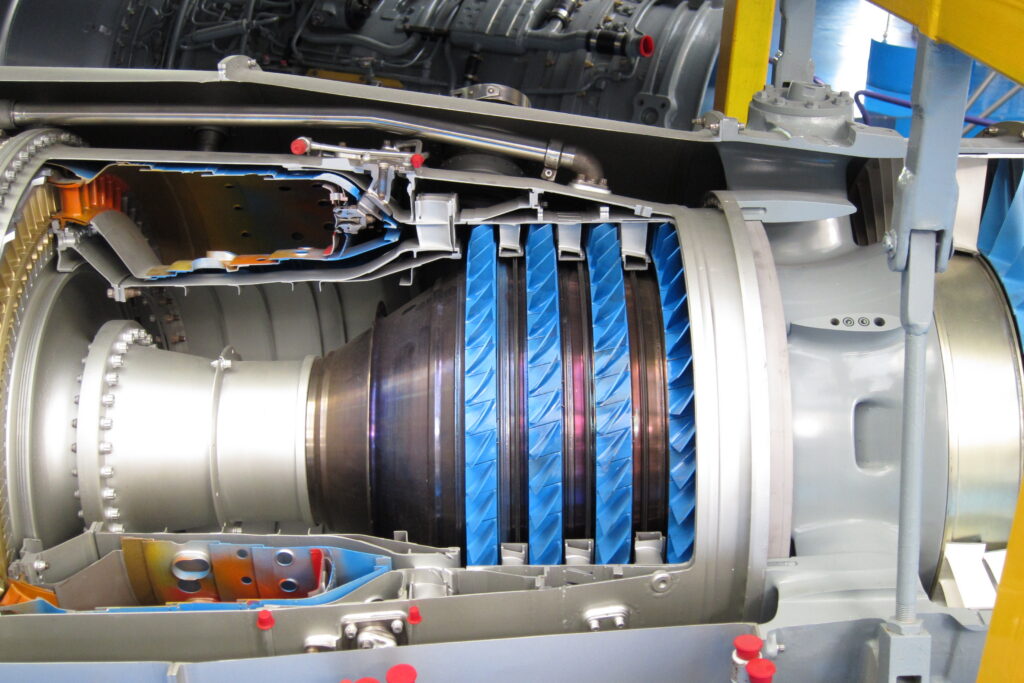
Bleed air is compressed air taken, or “bled”, from the compressor section of a gas turbine engine before it reaches the combustion chamber. Because the compressor has already squeezed and heated it, bleed air is a convenient source of hot, high-pressure air, and most airliners use it to run several systems at once: cabin pressurisation, air conditioning, wing and engine anti-ice, and engine starting.
How it works
A jet engine’s compressor raises the pressure of incoming air many times over. Ports in the compressor case let a small part of that air escape into ducts. Most engines have two bleed ports: a low-pressure (or intermediate-pressure) port used in cruise, and a high-pressure port that opens automatically when the engine is at low power, such as during descent, when the low-pressure port cannot supply enough.
Air leaving the compressor can be hotter than 400 °C, too hot for the ducts in the wing and fuselage. It first passes through a precooler, a heat exchanger cooled by air from the engine’s fan, and through valves that regulate its pressure. On a typical airliner the air leaves the engine area at roughly 200 °C and around 40 psi. The auxiliary power unit (APU) can also supply bleed air on the ground, and ground carts can connect to the same ducts.
What bleed air is used for
- Air conditioning packs: the main user. The packs cool the air and send it into the cabin, which also pressurises the fuselage.
- Wing and engine anti-ice: hot air is piped along the inside of the wing leading edge slats and around the engine intake lip to stop ice forming.
- Engine starting: bleed air from the APU, a ground cart or a running engine turns the air turbine starter of another engine.
- Pressurising reservoirs: hydraulic and potable water tanks are often kept under pressure with bleed air.
Bleed-free designs
Taking air from the compressor costs fuel, because the engine has done work on air that then produces no thrust. The Boeing 787 is the best-known airliner that does away with most of the bleed system: electrically driven compressors pressurise the cabin and electric heaters protect the wings, while only the engine intake cowls are still heated with bleed air. Boeing says this saves fuel and maintenance. Most other airliners, including the Airbus A350 and the Boeing 737, still use bleed air.
Why it matters
Bleed air keeps passengers alive and comfortable at altitude, so the system is built with redundancy: each engine supplies its own side, crossbleed valves let one engine feed both sides, and leaks of hot air are detected by sensors along the ducts, because a burst duct can damage wiring and structure. Crews must also manage bleed demand, for example by switching packs off for a high-weight take-off on some aircraft so that more thrust is available.
Frequently Asked Questions
Is cabin air bleed air? On most airliners, yes: fresh cabin air comes from bleed air that has been cooled by the packs and mixed with filtered, recirculated air.
Does the Boeing 787 use bleed air? Only for engine intake anti-ice; cabin air comes from electric compressors.
Why does bleed air cost fuel? The engine compresses the air but does not burn it or turn it into thrust, so it must burn extra fuel to make up for it.
References
- FAA Aviation Maintenance Technician Handbook – Airframe (FAA-H-8083-31), chapter 16: Cabin Environmental Control Systems
- FAA Pilot’s Handbook of Aeronautical Knowledge (FAA-H-8083-25), chapter 7 (Aircraft Systems)
Start the discussion
Commenting on this term: Bleed Air Explained: How Jet Engines Supply Air to the Aircraft