Fuel Tank Inerting: How Nitrogen Keeps Airliner Fuel Tanks Safe
Fuel tank inerting is a safety system that fills the empty space above the fuel in an aircraft's tanks with nitrogen-enriched air. With less oxygen, fuel vapour cannot ignite. It became standard on airliners after the TWA Flight 800 explosion in 1996.
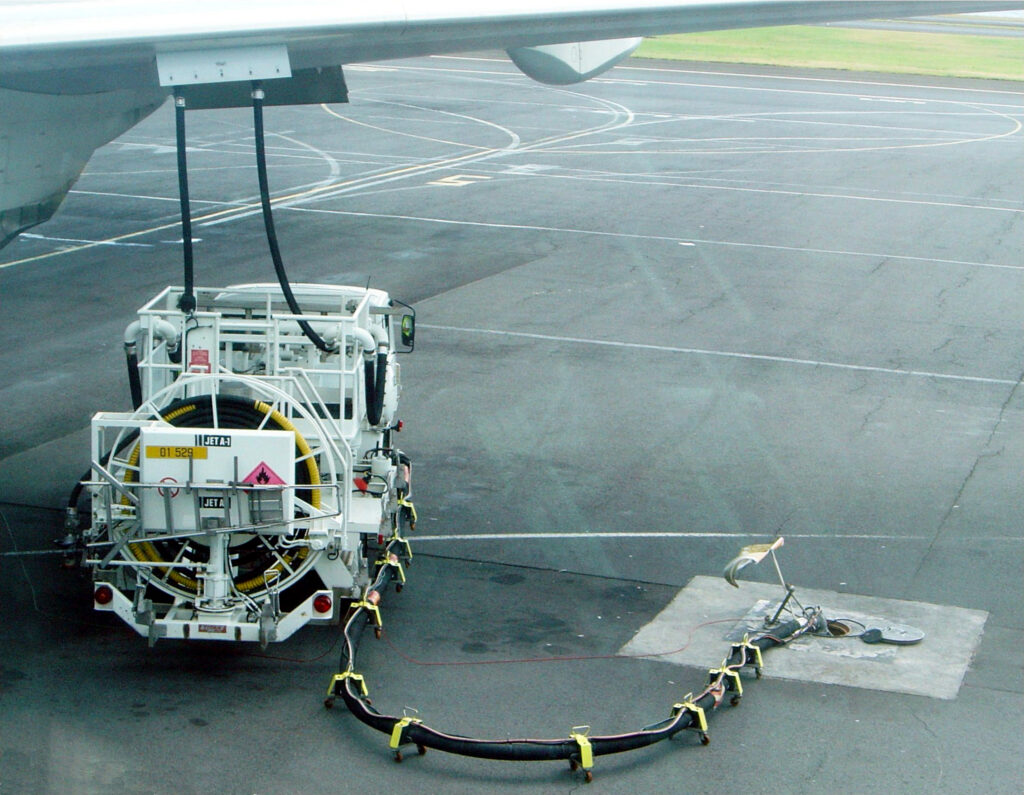
Fuel tank inerting is a safety system that reduces the amount of oxygen in the empty space above the fuel in an aircraft’s tanks, called the ullage. It does this by pumping in nitrogen-enriched air. Fuel vapour needs enough oxygen to burn, so a tank with a low oxygen concentration cannot explode even if a spark occurs inside it.
Why it was introduced
On 17 July 1996, a Boeing 747 flying as TWA Flight 800 exploded shortly after take-off from New York. The US National Transportation Safety Board (NTSB) concluded that the fuel-air vapour in the nearly empty centre wing tank had ignited, most likely because of a short circuit outside the tank that let excess voltage into it through the fuel quantity wiring. The tank had been heated by air conditioning packs located underneath it while the aircraft waited on the ground, which made the vapour more flammable.
The investigation showed that preventing every possible ignition source could not be guaranteed, so the vapour itself also had to be made safer. In 2008 the US Federal Aviation Administration (FAA) issued a rule requiring airliners to reduce fuel tank flammability, applying to new designs and, for tanks with a high flammability exposure such as heated centre tanks, to existing fleets as well.
How it works
Most airliner systems, often called a nitrogen generation system (NGS) or flammability reduction system, use air separation modules. Each module contains thousands of hollow polymer fibres:
1. Air, usually bleed air cooled to a suitable temperature, is filtered and fed into the module.
2. As it flows along the fibres, oxygen and water vapour pass through the fibre walls faster than nitrogen and are dumped overboard.
3. The remaining nitrogen-enriched air flows into the fuel tanks and displaces the oxygen-rich air above the fuel.
The FAA treats a tank on a civil airliner as inert when the average oxygen concentration in the ullage is no more than about 12% near sea level, rising at higher altitudes. Normal air contains about 21%. Military aircraft such as the C-17 and F-22 use similar on-board inert gas generating systems (OBIGGS), sometimes to a stricter limit because the aircraft may be hit by gunfire.
Where you find it
Inerting systems are fitted to the Boeing 737, 747, 767, 777 and 787 and to Airbus aircraft such as the A320 family, A330 and A350, mostly to protect the centre wing tank. The Boeing 787 feeds its system with electrically compressed air because it has no conventional bleed air system.
Why it matters
Inerting is a second, independent layer of protection alongside the design rules that keep ignition sources out of tanks: careful wiring, lightning protection and fuel pump safeguards. Together they make a repeat of TWA 800 extremely unlikely.
Frequently Asked Questions
Is nitrogen-enriched air dangerous to passengers? No. It goes only into the fuel tanks and is vented overboard, never into the cabin.
Does inerting remove all oxygen? No. It lowers the concentration below the level at which fuel vapour can burn, which is enough.
Do all fuel tanks need it? Not always. Wing tanks are cooled by the outside air and are usually less flammable than centre tanks heated by nearby equipment.
References
- 14 CFR 25.981, Fuel tank explosion prevention
- 14 CFR 26.33, Holders of type certificates: Fuel tank flammability
- NTSB Aircraft Accident Report AAR-00/03: In-flight Breakup Over the Atlantic Ocean, Trans World Airlines Flight 800
Start the discussion
Commenting on this term: Fuel Tank Inerting: How Nitrogen Keeps Airliner Fuel Tanks Safe