Wing Fence Explained: Stopping Spanwise Flow on Swept Wings
A wing fence is a thin plate running front to back across the top of a swept wing. It stops the boundary layer flowing towards the wingtips, which helps prevent the tips from stalling first and the nose from pitching up.
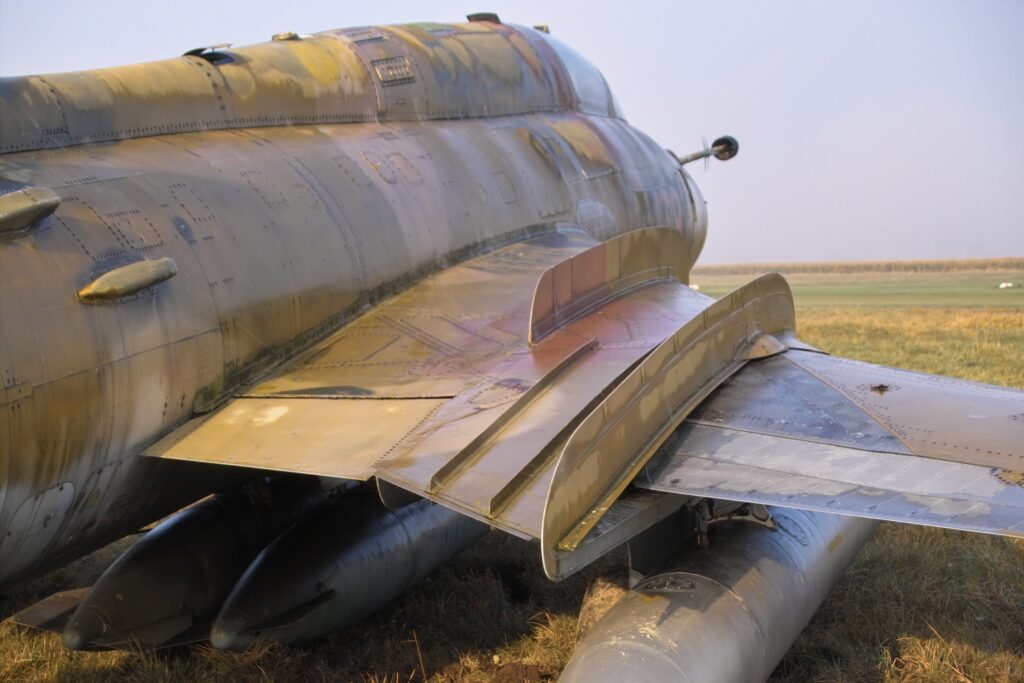
A wing fence is a thin flat plate attached to the upper surface of a wing, running from front to back in line with the airflow. It is mainly found on swept wings, where air near the surface tends to drift sideways towards the wingtips. The fence blocks this spanwise flow, helping the outer wing keep attached airflow and reducing the risk of the tips stalling first.
Why swept wings need help
On a swept wing, the airflow over the surface has a component that runs along the span, from root to tip. The slow boundary layer is pushed outward and builds up near the tips. At high angles of attack, the tips can then stall before the root. Because the tips of a swept wing are behind the centre of gravity, losing their lift makes the nose pitch up, which increases the angle of attack further. This dangerous “pitch-up” was a major problem for early jet aircraft in the 1950s.
How a wing fence works
A fence acts as a wall in the boundary layer. It stops the sideways drift at one point on the span and also creates a vortex that helps control the flow outboard. Several fences can be used on one wing. The MiG-15 had two fences on each wing, the MiG-17 three, and the Sukhoi Su-7 and Su-22 also carry large fences. Soviet airliners such as the Tupolev Tu-134 and Tu-154 used them too.
Sawtooth leading edges and vortilons
A sawtooth or dogtooth leading edge does a similar job without a separate plate. A sudden step in the leading edge creates a strong vortex that flows back over the wing like an invisible fence. The F-4 Phantom II and later versions of the Hawker Hunter have one. A notched leading edge works the same way. Some jets, such as the McDonnell Douglas DC-9 family, use vortilons: small plates under the leading edge that create a vortex at high angles of attack.
Why fences are rarer today
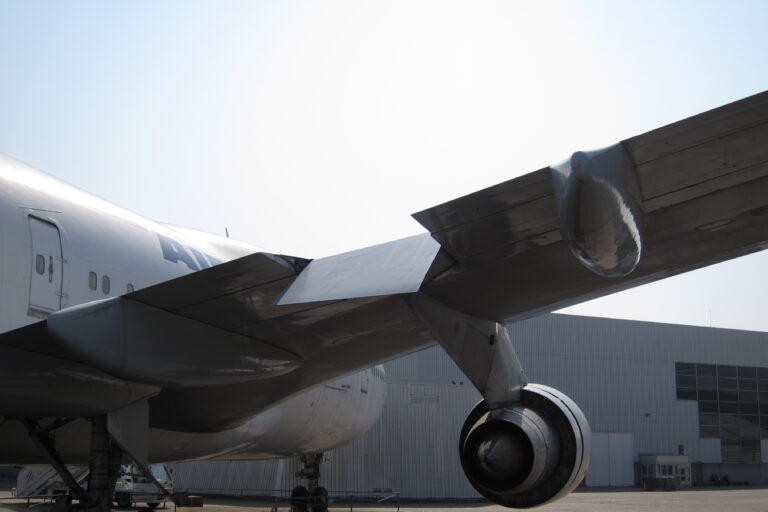
Modern airliners rely on better airfoils, wing twist, vortex generators and the engine pylons themselves, which act partly like fences. Visible wing fences now appear mainly on older designs and some military aircraft. Still, the problem they solve, spanwise flow on a swept wing, shapes every modern jet wing.
Why the term matters
Wing fences show how engineers learned to tame the swept wing, the shape that made fast jets possible. Recognising a fence or a dogtooth on an aircraft tells you something about the aerodynamic challenges its designers faced. See how wing shape affects performance in our guide to aspect ratio.
Frequently asked questions
What does a wing fence do? It blocks spanwise airflow on a swept wing and helps prevent the tips from stalling first.
What is a dogtooth leading edge? A step in the leading edge that creates a vortex acting like a fence.
Do modern airliners have wing fences? Rarely. They use other methods, though the engine pylons have a similar effect.
References
- FAA Aviation Maintenance Technician Handbook – Airframe (FAA-H-8083-31), chapter 2: Aerodynamics, Aircraft Assembly and Rigging
- NASA Glenn Research Center, Beginner’s Guide to Aeronautics: Wing geometry
- FAA Pilot’s Handbook of Aeronautical Knowledge (FAA-H-8083-25), chapter 6: Flight Controls
Start the discussion
Commenting on this term: Wing Fence Explained: Stopping Spanwise Flow on Swept Wings