Vortex Generator Explained: Small Vanes That Delay a Stall
Vortex generators are rows of small vanes on wings, tails and engine nacelles. Each one sheds a tiny vortex that mixes fast air into the slow layer next to the skin, keeping the airflow attached and delaying a stall.
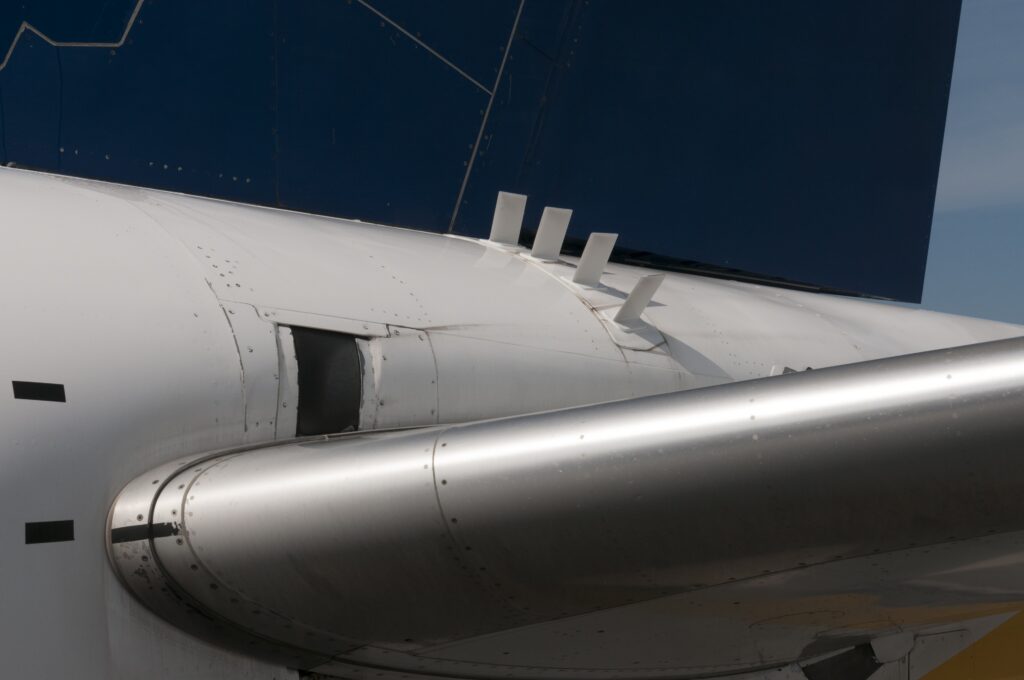
A vortex generator is a small vane, often just a few centimetres tall, fixed to the surface of a wing, tail or engine nacelle at an angle to the airflow. Each vane sheds a small swirling vortex that mixes fast-moving air from outside into the slow boundary layer next to the skin. This re-energised boundary layer stays attached longer, which delays flow separation and stall and keeps control surfaces effective.
How vortex generators work
The air touching an aircraft’s skin is slowed by friction, forming a thin boundary layer. On the upper surface of a wing, this layer must also flow towards higher pressure near the trailing edge. At high angles of attack it can run out of energy and separate from the surface, and the wing stalls. A vortex generator works like a tiny wingtip: because it sits at an angle, it creates a vortex that spins along the surface and stirs high-energy air downwards. The cost is a small amount of extra drag, which is why designers place them only where they are needed.
Where you find vortex generators
They are easy to spot on many aircraft. The Boeing 737 has a row along the upper surface of the wing, and the engine nacelles of the 737 NG and MAX carry a large strake, or chine, that sheds a vortex over the wing at high angles of attack. Many airliners also have vortex generators on the tail, in front of the rudder or elevators, to keep these surfaces effective. In general aviation, approved aftermarket kits add vortex generators to the wings and tail of light aircraft, lowering the stall speed and improving control at low speed. Similar small vanes are also used on some racing cars and wind turbine blades.
Vortex generators and stalls
By keeping the flow attached, vortex generators let a wing reach a higher angle of attack before it stalls, and they can make the stall gentler. They are also used to fix specific problems discovered during flight testing, such as poor aileron effectiveness or buffeting at high speed, without redesigning the whole wing.
Why the term matters
Vortex generators show that small details can have a big effect on how an aircraft flies. For passengers, they are those little fins visible from the window seat; for engineers, they are a precise tool for controlling the boundary layer. Read more about the forces involved in our guide to lift.
Frequently asked questions
What does a vortex generator do? It creates a small vortex that keeps the airflow attached to the surface, delaying a stall.
Do vortex generators add drag? A little, so they are placed only where they bring a clear benefit.
Can vortex generators be added to a light aircraft? Yes, through approved modification kits that change the aircraft’s certified performance figures.
References
- FAA Aviation Maintenance Technician Handbook – Airframe (FAA-H-8083-31), chapter 2: Aerodynamics, Aircraft Assembly and Rigging
- FAA Pilot’s Handbook of Aeronautical Knowledge (FAA-H-8083-25), chapter 6: Flight Controls
- NASA Glenn Research Center, Beginner’s Guide to Aeronautics: Boundary layer
Start the discussion
Commenting on this term: Vortex Generator Explained: Small Vanes That Delay a Stall