






Last Updated: 4 months ago
Ever wonder why you don’t get a parachute on a commercial flight? Initially, the answer seems simple, but it depends entirely on the specific type of aircraft you are flying. Indeed, whether a plane has aircraft parachute systems is a matter of physics and mission profile. Therefore, we will break down the real science behind these survival mechanisms.
Why Commercial Airliners Lack Parachutes
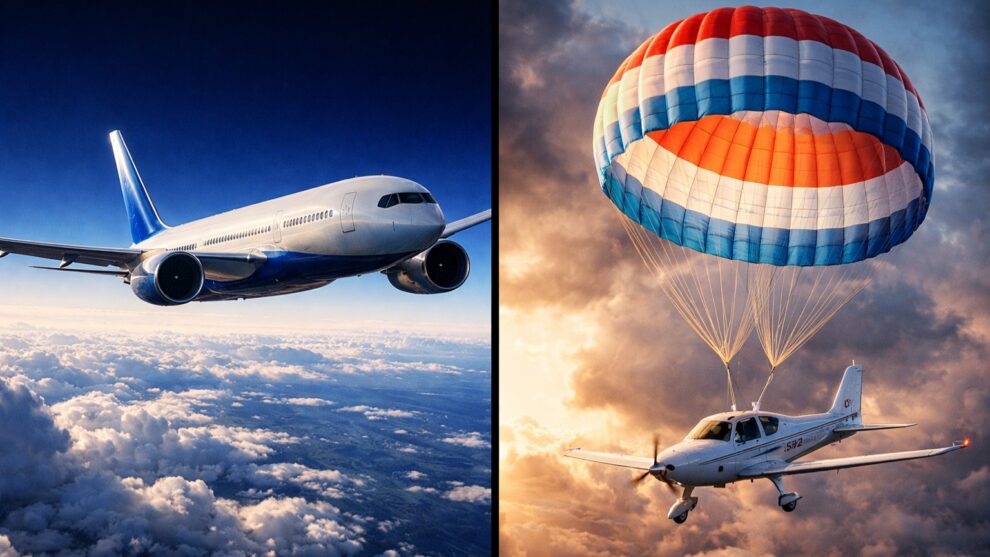
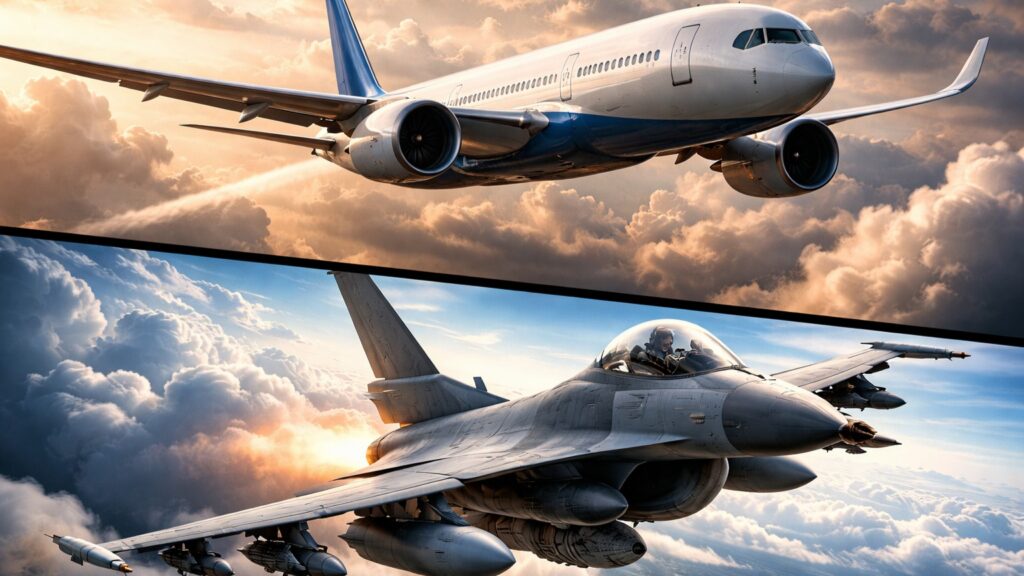
First, let’s look at commercial airliners like those from Boeing or Airbus. Specifically, you will never find a parachute for passengers on these flights. Typically, these jets cruise at 35,000 feet where the air is freezing and lacks sufficient oxygen. Consequently, a person jumping out would pass out almost instantly.
Furthermore, cabin pressurization makes the idea impossible. Basically, the immense pressure difference means you physically could not push the doors open at cruising speeds. Therefore, aircraft parachute systems for individual passengers are not a viable survival plan for commercial travel.
Fighter Jets and Explosive Ejection Seats
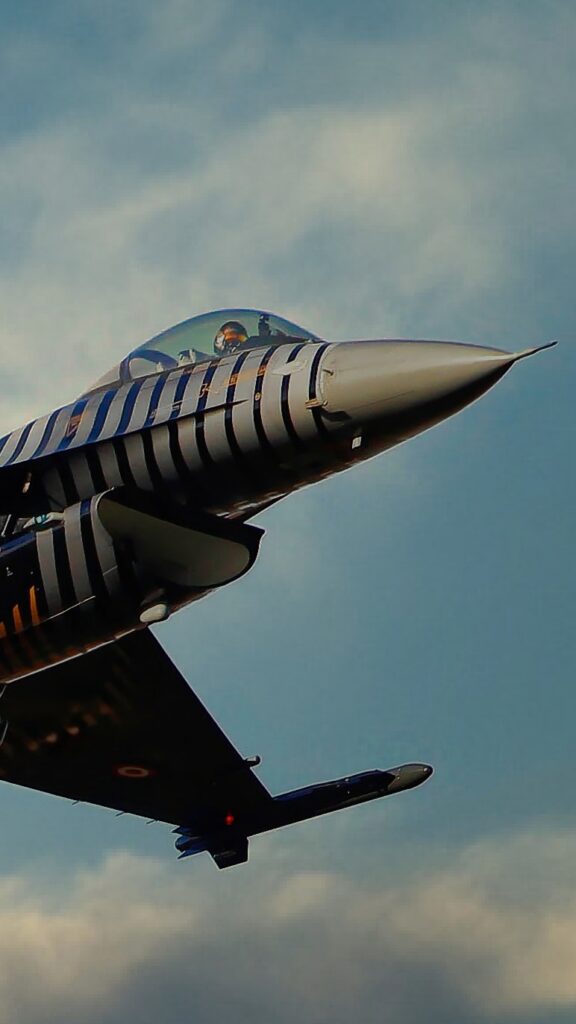
In contrast, fighter jets are a whole different beast. Specifically, they pack highly explosive ejection seats. In an emergency, a rocket blasts the pilot straight out of the cockpit in the blink of an eye. Subsequently, a parachute deploys automatically to bring the pilot down.
Admittedly, this process is incredibly violent. However, it saves lives in split seconds when a mechanical failure occurs. Ultimately, these are specialized aircraft parachute systems designed for high-performance military environments.
The Whole-Airframe Parachute: A General Aviation Miracle
But here’s the most mind-blowing part regarding modern private aviation. Specifically, many modern private planes, like the Cirrus SR22, utilize a whole-airframe parachute system. If an engine failure occurs, the pilot simply pulls a red handle.
Consequently, a rocket fires and deploys a massive canopy. Instead of the pilot jumping out, this system floats the entire aircraft safely back to the earth. Indeed, this technology represents the ultimate lifesaver for general aviation pilots and their passengers.
Conclusion: Different Physics, Different Plans
In conclusion, the presence of aircraft parachute systems is determined by altitude and aircraft type. Undeniably, while they are impractical for airline passengers, they remain essential for fighter pilots and private flyers. Ultimately, aviation safety continues to evolve through these hidden mechanics of flight.
Frequently Asked Questions (FAQs)
Why don’t commercial planes have a whole-plane parachute? Commercial jets are far too heavy. The size of a parachute needed to safely lower an 800,000-pound Boeing 777 would be impossibly large and heavy for the aircraft to carry.
Is ejecting from a fighter jet dangerous? Yes. While it is a life-saving aircraft parachute system, the force of the rocket blast is so violent that it can cause spinal injuries or other physical trauma to the pilot.
How does the Cirrus SR22 parachute work? Known as the Cirrus Airframe Parachute System (CAPS), it uses a solid-fuel rocket to deploy a large parachute from the fuselage, allowing the entire plane to descend at a survivable rate.
So, here is the ultimate question for you: Would you feel safer on a flight if you knew there was a giant parachute for the whole plane? Let us know your thoughts in the comments below!
Did you knowAviationStream.com has a YouTube channel? Check out TheAeroGraphyOfficial and subscribe to watch fun, highly engaging aviation Shorts!