










Last Updated: 4 months ago
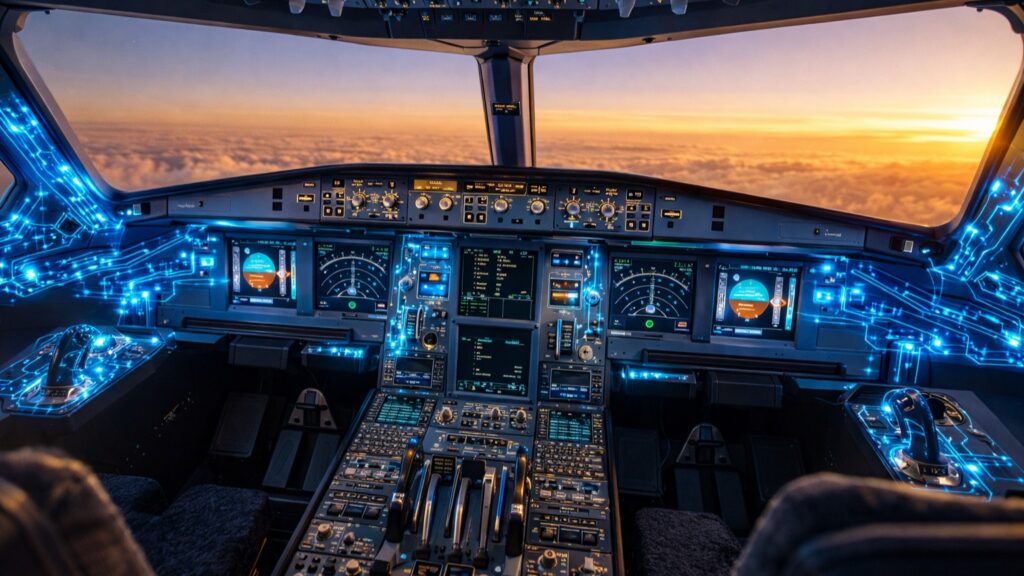
Initially, many passengers marvel at a smooth flight. Specifically, they wonder how pilots accurately steer such a massive machine through turbulent skies. However, a multi-million dollar passenger jet handles flight controls perfectly. Indeed, modern fly-by-wire technology makes this possible. Therefore, we will explore the real science behind this fascinating system that defined modern aviyonics.
From Mechanical Cables to Electronic Flight Control Signals
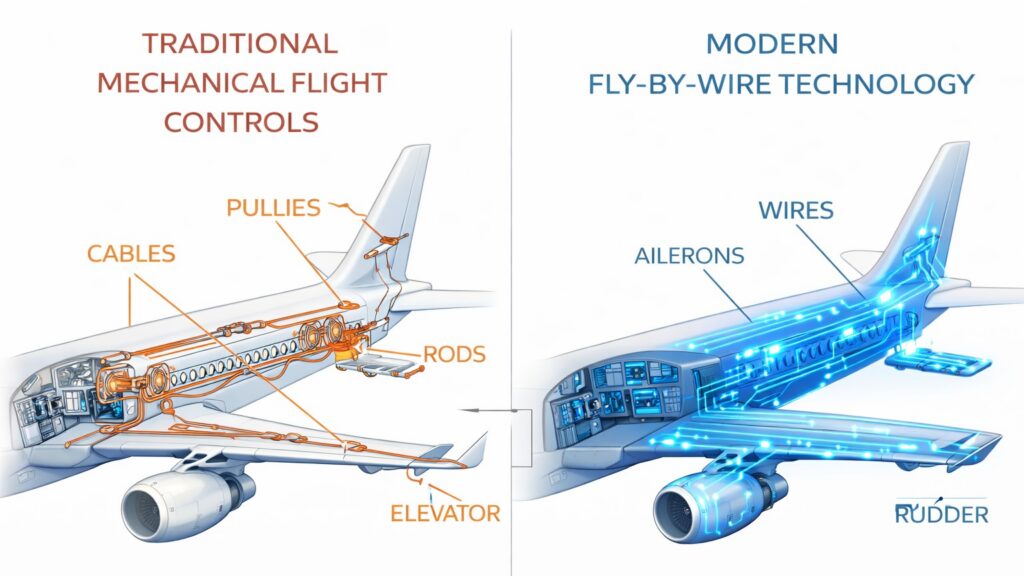
First, traditional aircraft relied on a highly complex mechanical system. Basically, engineers built older planes using heavy steel cables, pulleys, and rod connections. Consequently, moving these large surfaces acted as a massive physical burden for the pilots, especially on larger jets.
Furthermore, this modern fly-by-wire technology design utilizes a highly advanced digital network. Specifically, the pilot’s steering commands travel strictly as fast electrical signals along wires. As a result, it bypasses the need for bulky mechanical cabling completely. Ultimately, this electronic system ensures the pilots and exterior wing panels remain perfectly synchronized without physical strain.
The Role of Avionics: How Computers Send Commands to the Wings
Next, the millions of electronic data points generated by the pilot must go somewhere. Specifically, the raw steering inputs do not go directly to the exterior wings. Therefore, engineers install specialized devices called flight control computers.
Basically, you can imagine these smart processors constantly calculating the required control surface movements. Subsequently, they instantly send the exact electrical signals required to move the hydraulic actuators on the wing flaps and ailerons. Indeed, this crucial adjustment happens incredibly fast and with extreme precision, far beyond human capabilities.
Safety First: Redundancy and Flight Envelope Protection
Ultimately, the entire process operates smoothly and silently. In fact, you probably will not even realize it happened. Occasionally, passengers might notice the plane instantly correcting itself during bad weather. Nevertheless, the aircraft continues flying safely without any jerky or delayed mechanical movements.
In other words, intelligent computing is always greater than raw physical force. Furthermore, modern fly-by-wire technology includes a massive safety benefit known as flight envelope protection. Specifically, computers can prevent dangerous maneuvers that might overstress the aircraft. Undeniably, the introduction of this system on the Airbus A320 proved how brilliant aviation engineering truly is.
Frequently Asked Questions (FAQs) – Fly-By-Wire Systems
Does every modern plane use a fly-by-wire system? Yes. Statistically, almost every new commercial airliner utilizes an electronic flight control system to steer the plane safely during regular operations.
Do fly-by-wire computers prevent dangerous maneuvers? Yes. Engineers embed special protective safety limits directly into the modern aircraft software. This clever technique successfully recreates a protective digital shield that stops the plane from tipping too far.
Can an electrical glitch shut down the steering? No. The electrical signals travel exclusively along multiple backup wires and safely process through independent backup computers. This leaves the massive jet perfectly controllable even if one system fails.
So, here is the ultimate question for you: Have you ever noticed how incredibly smooth an Airbus A320 feels while turning? Let us know your experience in the comments below!
Did you knowAviationStream.com has a YouTube channel? Check out TheAeroGraphyOfficial and subscribe to watch fun, highly engaging aviation Shorts!