








Last Updated: 4 months ago
ADS-B, or Automatic Dependent Surveillance–Broadcast, is a modern aviation surveillance technology. It helps aircraft share important flight data such as position, altitude, speed, and identity.
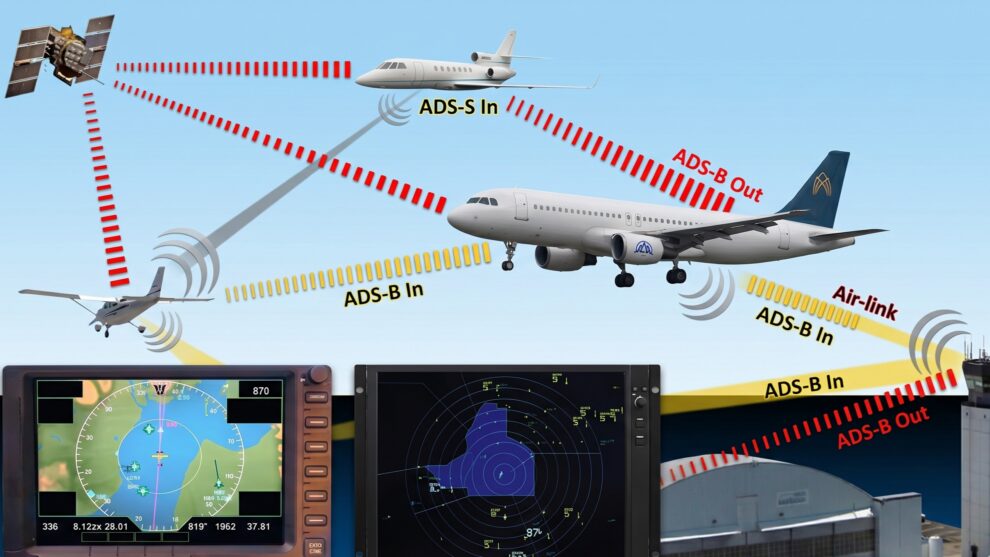
The system works automatically and does not need pilot input. It also does not wait for a radar interrogation signal. Instead, the aircraft calculates its position with satellite navigation or onboard sensors and then broadcasts that data at regular intervals.
How the System Works
The word “automatic” means the transmission happens without manual action. “Dependent” means the data depends on the aircraft’s navigation source.
Once the aircraft knows its position, it sends the information to receivers on the ground, in space, or on nearby aircraft. Air traffic controllers can then follow the aircraft with a more updated picture than many traditional surveillance methods can provide.
ADS-B Out and ADS-B In Functions
ADS-B Out sends flight information from the aircraft. This data can include position, altitude, ground speed, direction, and aircraft identification.
The In function allows equipped aircraft to receive traffic information from other aircraft or ground systems. As a result, pilots can gain better situational awareness in busy airspace.
Why It Differs from Radar
Traditional radar sends signals and waits for a return or a transponder reply. This process depends heavily on radar coverage and ground infrastructure.
ADS-B uses a different method. The aircraft broadcasts its own position data, which can make tracking more accurate in many areas. This is especially useful over oceans, remote terrain, or regions with limited radar coverage.
Benefits for Air Traffic Control
Better position reporting can help controllers manage traffic more efficiently. It may also support improved routing, reduced separation in suitable airspace, and better monitoring of aircraft movement.
For pilots, the main benefit is awareness. When the aircraft can receive nearby traffic data, the crew can build a clearer picture of what is happening around them.
ADS-B Requirements Around the World
Many aviation authorities now require ADS-B equipment in certain types of controlled airspace. The exact rules depend on the country, aircraft type, altitude, and operation.
The United States has required ADS-B Out for many aircraft in controlled airspace since January 2020. Europe, Canada, Australia, and other regions also use similar surveillance requirements in selected operations.
Future Role in Aviation
Modern aviation needs accurate and continuous aircraft tracking. This technology supports that goal by sharing data quickly and automatically.
As airspace becomes busier, ADS-B will remain an important part of surveillance, traffic awareness, and safer air traffic management.
Did you know AviationStream.com has a YouTube channel? Check out TheAeroGraphyOfficial and subscribe to watch fun, highly engaging aviation Shorts!