Metal Fatigue and the Pressurisation Cycle Explained
Metal fatigue is the growth of cracks under repeated loads that are far below the strength of the part. For a pressurised airliner, every flight inflates and relaxes the fuselage once, so its life is counted in flight cycles.
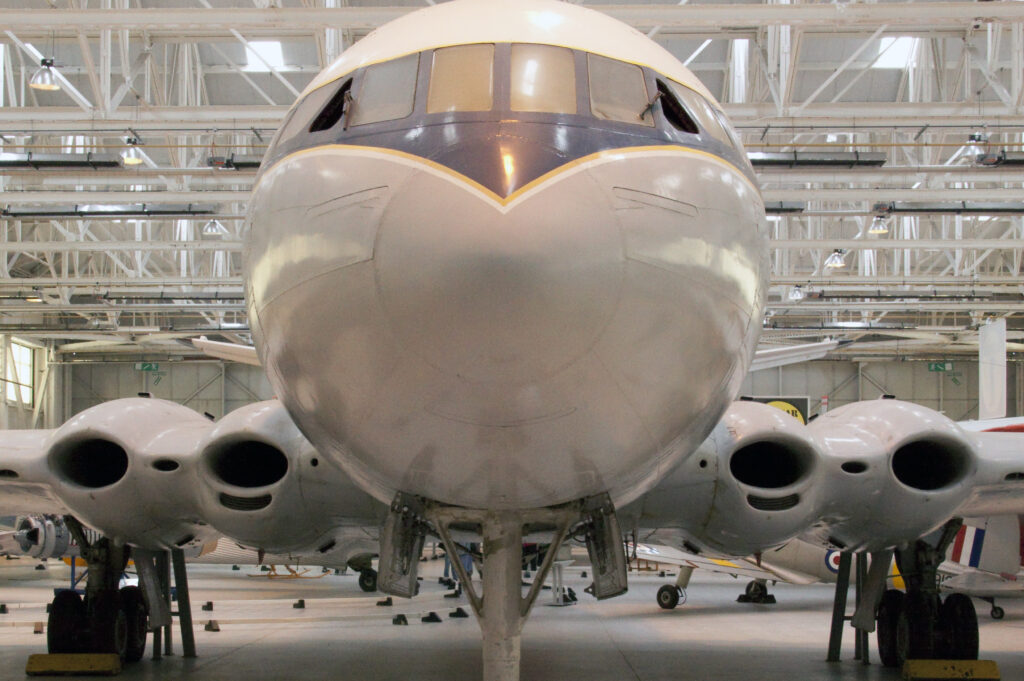
Metal fatigue is the gradual weakening of a metal part by repeated loading, even when each load is far below the load that would break it in one go. Tiny cracks start at points where stress is concentrated, such as fastener holes and sharp corners, and grow a little with every load cycle until the remaining metal can no longer carry the load. Bending a paper clip back and forth until it snaps is a simple example.
The pressurisation cycle
A pressurised aircraft is a large, thin-walled pressure vessel. At cruise altitude the cabin is kept at a pressure equal to an altitude of 6,000 to 8,000 ft, while the air outside is much thinner. The difference, around 8 to 9 psi on a typical airliner, pushes outwards on every square centimetre of the fuselage. The fuselage expands slightly on every climb and relaxes on every descent.
One climb and descent is one pressurisation cycle. This is why the fatigue life of an airliner’s fuselage is counted in flight cycles rather than flying hours. A regional aircraft flying six short sectors a day collects cycles much faster than a long-haul aircraft that makes one flight a day.
What the Comet taught
The de Havilland Comet, the first jet airliner, entered service in 1952. In 1954 two Comets broke up in flight over the Mediterranean within a few months. The British Royal Aircraft Establishment placed a complete Comet fuselage in a water tank and pressurised it again and again to simulate flights. After a few thousand simulated flights, the fuselage split open at a fatigue crack that started at the corner of an opening in the fuselage skin. The results changed aircraft design: windows and cut-outs became rounded or oval, skins and joints were redesigned to reduce stress concentrations, and full-scale fatigue testing became normal for new airliners.
Designing for fatigue today
Modern aircraft are designed with three approaches: safe-life parts that are replaced before cracks can form, fail-safe structures with backup load paths, and damage-tolerant structures inspected at intervals based on how fast a crack can grow. Rules such as 14 CFR 25.571 require this evaluation. Manufacturers run full-scale fatigue tests that simulate many times the aircraft’s planned life. Composite fuselages, such as the Boeing 787’s, resist fatigue better than aluminium, which allowed a lower cabin altitude of 6,000 ft.
Why it matters
Fatigue sets the useful life of an airframe and drives much of an airline’s heavy maintenance. The inspections, repairs and life limits in the maintenance programme are there to make sure a fatigue crack is found long before it becomes dangerous.
Frequently Asked Questions
What causes metal fatigue in aircraft? Repeated loads from pressurisation, gusts, manoeuvres and landings.
What is a pressurisation cycle? One flight’s climb and descent, which expands and relaxes the fuselage once.
Why do airliners have rounded windows? Rounded corners reduce the stress concentrations where fatigue cracks start.
References
- 14 CFR 25.571, Damage-tolerance and fatigue evaluation of structure
- 14 CFR 25.365, Pressurized compartment loads
- FAA Aviation Maintenance Technician Handbook – Airframe (FAA-H-8083-31), chapter 1: Aircraft Structures
Start the discussion
Commenting on this term: Metal Fatigue and the Pressurisation Cycle Explained