Cabin Pressurisation and the Outflow Valve Explained
Cabin pressurisation keeps the air pressure inside an aircraft high enough to breathe at cruising altitude. Air is pumped in by the packs, and an outflow valve lets just enough out to hold the selected cabin altitude.
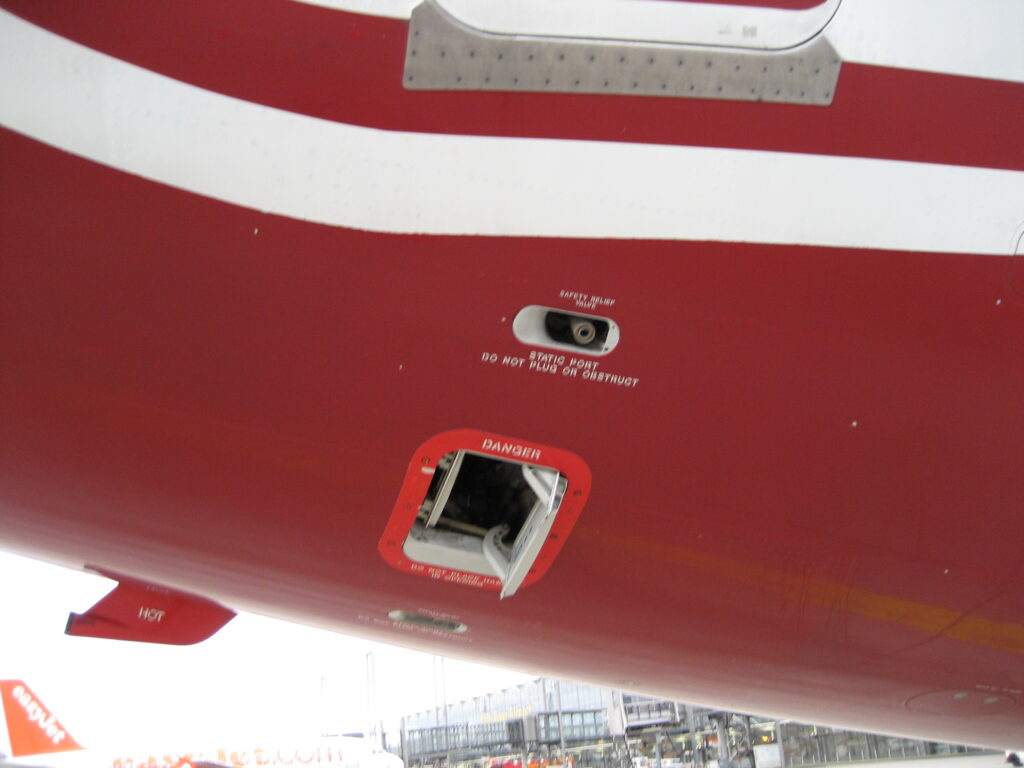
Cabin pressurisation is the system that keeps the air pressure inside an aircraft’s cabin much higher than the pressure outside, so that passengers and crew can breathe normally at cruising altitudes where the outside air is too thin to support life. In an airliner, air is pumped into the sealed fuselage continuously, and an outflow valve lets it out at a controlled rate.
How it works
The pressure vessel of an airliner runs from the nose to the rear pressure bulkhead. Air enters it from the air conditioning packs, supplied either by engine bleed air or, on the Boeing 787, by electric compressors. Because air is always flowing in, the pressure inside is set by how much air is allowed to leave.
That is the job of the outflow valve, usually a motor-driven door in the lower rear fuselage. A cabin pressure controller opens and closes it automatically. Before departure the crew enters or checks the destination’s elevation, and the controller then schedules a gentle climb in cabin altitude during the aircraft’s climb, holds it in cruise and brings it back down to the landing airport’s pressure during descent. If the automatic system fails, the crew can drive the valve manually.
The pressure differential
The difference between cabin pressure and outside pressure is called the differential pressure. Airliners are typically designed for a maximum of around 8 to 9 psi. At 40,000 ft this keeps the cabin at an equivalent altitude of about 6,000 to 8,000 ft. US certification rules (14 CFR 25.841) require a cabin pressure altitude of no more than 8,000 ft at the aircraft’s maximum operating altitude in normal conditions.
Safety valves
Pressurised aircraft also have:
- Positive pressure relief valves, which open if the differential becomes too high, protecting the structure.
- Negative pressure relief valves, which let air in if outside pressure becomes higher than cabin pressure, for example during a rapid descent.
- A dump function, which opens the outflow valve fully, for example after landing or to clear smoke.
Each pressurisation cycle stretches the fuselage skin slightly, which is why designers must account for metal fatigue and the pressurisation cycle over the aircraft’s life.
Why it matters
Without pressurisation, people at 35,000 ft would lose useful consciousness in well under a minute. Pressurisation problems are rare, but crews train for them constantly: a slow leak or a valve fault shows up as a rising cabin altitude, and a sudden decompression requires oxygen masks and an emergency descent.
Frequently Asked Questions
Where is the outflow valve on an airliner? Usually on the lower rear fuselage; on a Boeing 737 it sits on the lower right side of the rear fuselage, marked with a “Danger” placard.
Why do my ears pop on a flight? Because the cabin pressure changes during climb and descent, even though it changes much less than the outside pressure.
What is a normal cabin altitude? Usually between about 6,000 and 8,000 ft in cruise.
References
- 14 CFR 25.841, Pressurized cabins
- FAA Aviation Maintenance Technician Handbook – Airframe (FAA-H-8083-31), chapter 16: Cabin Environmental Control Systems (pressurization)
- FAA Pilot’s Handbook of Aeronautical Knowledge (FAA-H-8083-25), chapter 7 (Aircraft Systems)
Start the discussion
Commenting on this term: Cabin Pressurisation and the Outflow Valve Explained