Fail-Safe and Damage-Tolerant Structure Explained
Aircraft structure is designed so that fatigue cracks are found before they become dangerous. Safe-life, fail-safe and damage-tolerance design are the three approaches, and modern airliners rely mainly on damage tolerance.
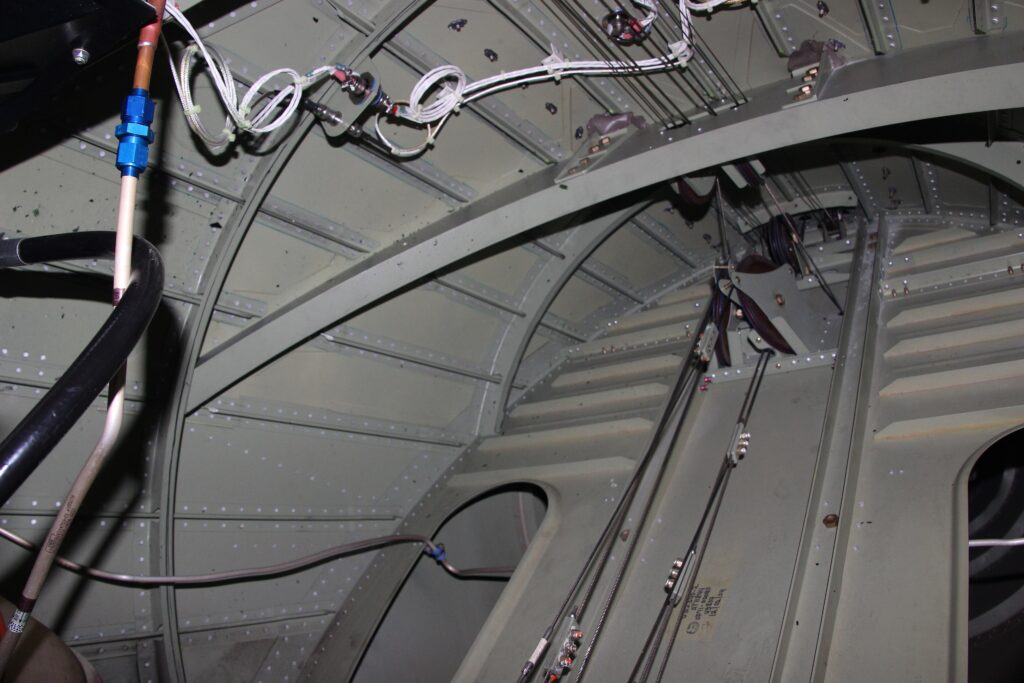
Damage tolerance is the ability of an aircraft structure to keep carrying the required loads even though it contains a crack or other damage, until that damage is found and repaired at a scheduled inspection. It is one of three design philosophies used to stop metal fatigue from causing a structural failure. The other two are safe-life and fail-safe design.
Safe-life
A safe-life part is designed and tested to last a fixed number of flights or hours without a crack forming, with a large safety margin. When that life is reached, the part is replaced, whatever its condition. Safe-life is used where cracks are hard to find or where there is no backup load path. Landing gear and many helicopter rotor parts are typical safe-life items.
Fail-safe
A fail-safe structure has more than one load path, so that if one member breaks, the others carry the load until the failure is found. Examples include wing spars made of two parts, multiple bolts at an attachment, and tear straps in the fuselage skin that stop a crack from running too far. Fail-safe design became common after the de Havilland Comet accidents of 1954 showed how quickly a fatigue crack could destroy a pressurised fuselage.
Damage tolerance
Damage-tolerance design goes one step further. It assumes that cracks may already exist from manufacture or service and asks two questions: how fast will a crack grow, and how much load can the structure still carry when it is present? Engineers use crack-growth analysis and tests to set inspection intervals, so that a crack will be found, with several chances to see it, before it reaches a critical size. The structure must keep a specified residual strength, close to the loads met in normal service, with the damage present.
In the United States, 14 CFR 25.571 requires transport aircraft structure to be evaluated for damage tolerance; EASA has the same requirement in CS 25.571. After the 1988 Aloha Airlines accident, in which part of the upper fuselage of an old Boeing 737 failed after many cracks at rivet holes joined up, regulators added rules on widespread fatigue damage and a limit of validity, the number of flights up to which the maintenance programme is proven to keep the structure safe.
Where you find it
Every modern airliner, from the A320 to the 787, is designed mainly to damage-tolerance principles, with safe-life parts where they are still needed. The results appear in the maintenance programme as structural inspections, each tied to a number of flight cycles.
Why it matters
These design methods are why airliners can fly safely for decades. They depend on inspections being done on time and done well: a damage-tolerant structure is only safe if someone finds the crack.
Safe-life in practice
The landing gear is the classic safe-life assembly: its main parts carry a life limit in landings, and they are removed and overhauled or scrapped when the limit is reached, even if they look perfect. Engine discs are treated the same way, because a disc failure cannot be contained by a backup load path.
Frequently Asked Questions
What is the difference between fail-safe and safe-life? Safe-life parts are replaced at a fixed life; fail-safe structures have backup load paths.
What does damage tolerance mean? The structure can carry the required loads with a crack present until an inspection finds it.
Which aircraft parts are safe-life? Typically landing gear and many helicopter rotor components.
References
- 14 CFR 25.571, Damage-tolerance and fatigue evaluation of structure
- EASA Easy Access Rules for Large Aeroplanes (CS-25), CS 25.571
- FAA Aviation Maintenance Technician Handbook – Airframe (FAA-H-8083-31), chapter 1: Aircraft Structures
Start the discussion
Commenting on this term: Fail-Safe and Damage-Tolerant Structure Explained