Slat Explained: Leading-Edge Slats and Krueger Flaps
Slats are movable sections of the wing's leading edge. When they extend, they open a narrow slot that lets air flow smoothly over the wing at high angles of attack, lowering the stall speed for take-off and landing.
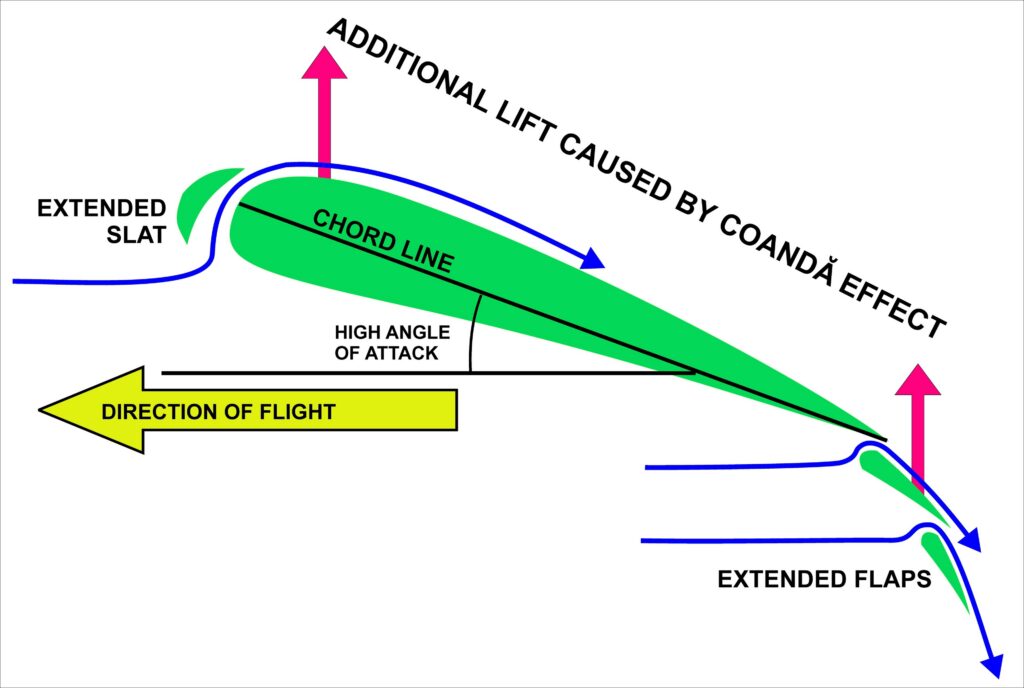
A slat is a movable section of a wing’s leading edge that extends forward and downward for take-off and landing. When it is extended, a narrow gap, the slot, opens between the slat and the wing. Air from the high-pressure lower surface flows through this slot and over the top of the wing, keeping the flow attached at higher angles of attack and lowering the stall speed.
How slats work
At high angles of attack, the air flowing over the upper surface of a wing loses energy and eventually separates from it, which is the stall. The slot behind an extended slat feeds fast-moving air into the boundary layer on the upper surface, giving it new energy. The wing can then reach a higher angle of attack and a higher maximum lift before it stalls. Together with trailing-edge flaps, slats let large jets take off and land at speeds that would otherwise need much longer runways.
Automatic and powered slats
The slotted wing was developed around 1918–1920 by Frederick Handley Page in Britain and Gustav Lachmann in Germany. Early slats, such as those on the Messerschmitt Bf 109, were automatic: they were held in by the airflow at high speed and slid out by themselves at high angles of attack. On modern airliners, slats are driven by hydraulic or electric motors and controlled with the flap lever, so that both move in a set sequence. Systems watch for asymmetry, because one slat stuck while the others extend would make the aircraft roll.
Krueger flaps
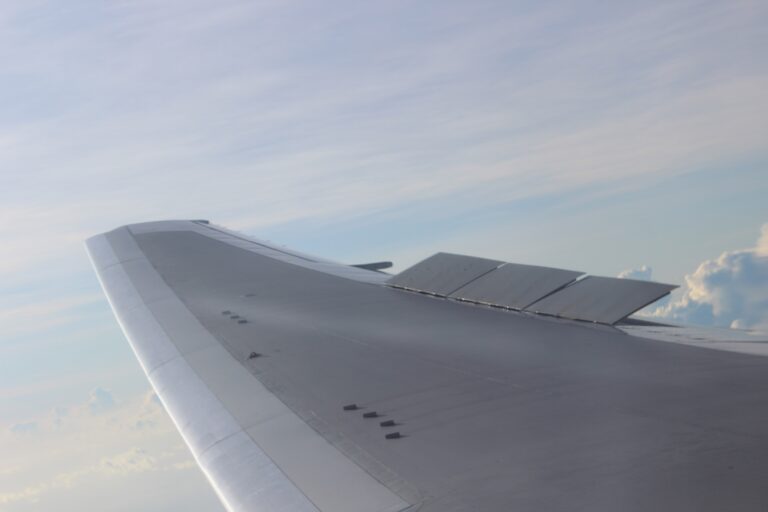
A Krueger flap is a different leading-edge device. Instead of the leading edge moving forward, a panel hinges out from the underside of the leading edge and swings forward. The Boeing 737 uses Krueger flaps on the inboard wing and slats outboard. The Boeing 747 has Krueger flaps along the whole leading edge, many of them with a variable-camber design, and the 787 also has a Krueger flap inboard of its engines.
Where you find slats
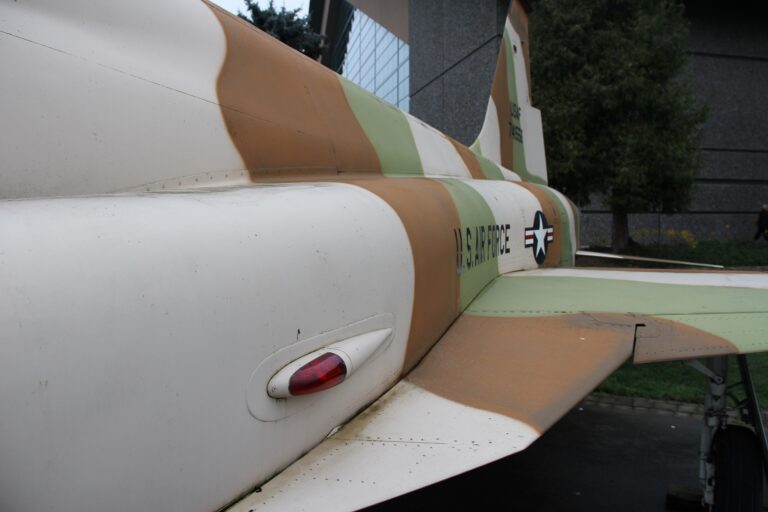
Almost all jet airliners have them, including the Airbus A320, A350 and the Boeing 777. Some fighters, such as the F-16, have leading-edge flaps that change automatically with speed and angle of attack. Light aircraft rarely use slats, though STOL aircraft such as the Fieseler Storch and some bush planes have fixed slots.
Frequently asked questions
What is the difference between a slat and a flap? Slats are on the leading edge and raise the stall angle; flaps are on the trailing edge and increase lift and drag.
Why do slats leave a gap? The gap, or slot, lets high-energy air flow over the wing and keeps the flow attached.
What is a Krueger flap? A leading-edge panel that swings out from under the wing instead of sliding forward.
References
- FAA Pilot’s Handbook of Aeronautical Knowledge (FAA-H-8083-25), chapter 6: Flight Controls
- FAA Aviation Maintenance Technician Handbook – Airframe (FAA-H-8083-31), chapter 2: Aerodynamics, Aircraft Assembly and Rigging
- NASA Glenn Research Center, Beginner’s Guide to Aeronautics: Airplane parts and function
Start the discussion
Commenting on this term: Slat Explained: Leading-Edge Slats and Krueger Flaps