Oleo Strut Explained: The Shock Absorber in Aircraft Landing Gear
An oleo strut is the oleo-pneumatic shock absorber used in most aircraft landing gear. It uses compressed nitrogen as a spring and hydraulic fluid forced through an orifice to absorb the energy of landing.

An oleo strut is the shock absorber used in the landing gear of most aircraft, from light aircraft to the largest airliners. Its full name is oleo-pneumatic strut: “oleo” from the oil inside it and “pneumatic” from the compressed gas. It absorbs the energy of landing and taxiing so that it is not passed into the airframe and the passengers.
How it works
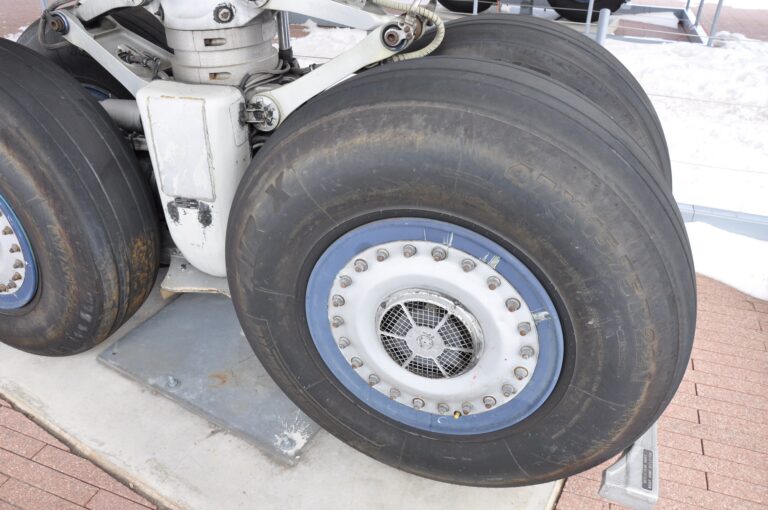
An oleo strut is made of two tubes that slide into each other: an outer cylinder fixed to the aircraft and an inner piston, often polished chrome, that carries the wheels. Inside are two working substances:
- Compressed nitrogen (or dry air) acts as the spring. It supports the aircraft’s weight on the ground and pushes the strut back out after it has been compressed.
- Hydraulic fluid provides the damping. When the strut compresses on touchdown, the fluid is forced through a small hole, or orifice, between two chambers. Pushing fluid through the orifice converts the energy of the impact into heat.
Many struts have a tapered metering pin that passes through the orifice, so the size of the opening changes as the strut compresses. This gives soft damping at the start of the stroke and firmer damping as it closes, smoothing out the landing. On the way back out, a separate restriction slows the rebound so the aircraft does not bounce.
Torque links and other parts
Because the piston is free to rotate inside the cylinder, a pair of hinged arms called torque links, or scissor links, connects the two tubes. They keep the wheels pointing straight ahead while still letting the strut slide in and out. Nose gear struts also carry the nosewheel steering mechanism and often a centring cam that straightens the wheel before the gear retracts.
Servicing
Technicians check the strut’s extension, the length of exposed chrome, against a chart that relates it to the aircraft’s weight. Too little extension usually means the nitrogen charge is low; fluid leaking past the seals is another common fault. Servicing involves releasing the gas, filling with fluid to the correct level and recharging with nitrogen to the specified pressure. A strut with too little gas can bottom out on landing and transmit damaging loads into the structure, which is why it is part of every walk-round inspection.
Where you find it
Almost every retractable-gear aircraft uses oleo struts, from the Piper Arrow to the Airbus A380. Some light aircraft use simpler alternatives, such as the spring-steel legs of many Cessna singles or the rubber bungee cords of the Piper Cub.
Why it matters
Landing loads are among the largest an aircraft experiences, and a good shock absorber protects the structure from metal fatigue as well as making landings comfortable. A correctly serviced strut is also essential for steering, braking and the correct attitude on the ground.
Frequently Asked Questions
What is inside an oleo strut? Compressed nitrogen and hydraulic fluid.
What are torque links? Hinged arms that stop the strut’s piston from rotating, keeping the wheels aligned.
Why is nitrogen used instead of air? Dry nitrogen does not contain moisture or oxygen, so it does not cause corrosion and is not a fire risk.
References
- FAA Aviation Maintenance Technician Handbook – Airframe (FAA-H-8083-31), chapter 13: Aircraft Landing Gear Systems (shock struts)
- 14 CFR 25.723, Shock absorption tests
- FAA Pilot’s Handbook of Aeronautical Knowledge (FAA-H-8083-25), chapter 7 (Aircraft Systems)

Start the discussion
Commenting on this term: Oleo Strut Explained: The Shock Absorber in Aircraft Landing Gear