Elevon, Ruddervator and Flaperon: Combined Control Surfaces
Some aircraft combine two jobs in one control surface. Elevons work as elevator and aileron, ruddervators as rudder and elevator, and flaperons as flap and aileron.
An elevon is a control surface that does the work of both an elevator and an aileron. Moving both elevons up or down changes pitch; moving them in opposite directions rolls the aircraft. Ruddervators and flaperons follow the same idea: one surface, two jobs, with the pilot’s inputs mixed mechanically or by a computer.
Elevons
Elevons are found on aircraft that have no separate horizontal tail, such as delta-wing and flying-wing designs. Concorde had elevons along the trailing edge of its delta wing, and the Northrop B-2 uses elevons as part of its flying-wing control system. When the pilot pulls back, both elevons rise and the nose goes up. When the pilot rolls to the left, the left elevon rises and the right one goes down. In between, the movements are added together.
Ruddervators
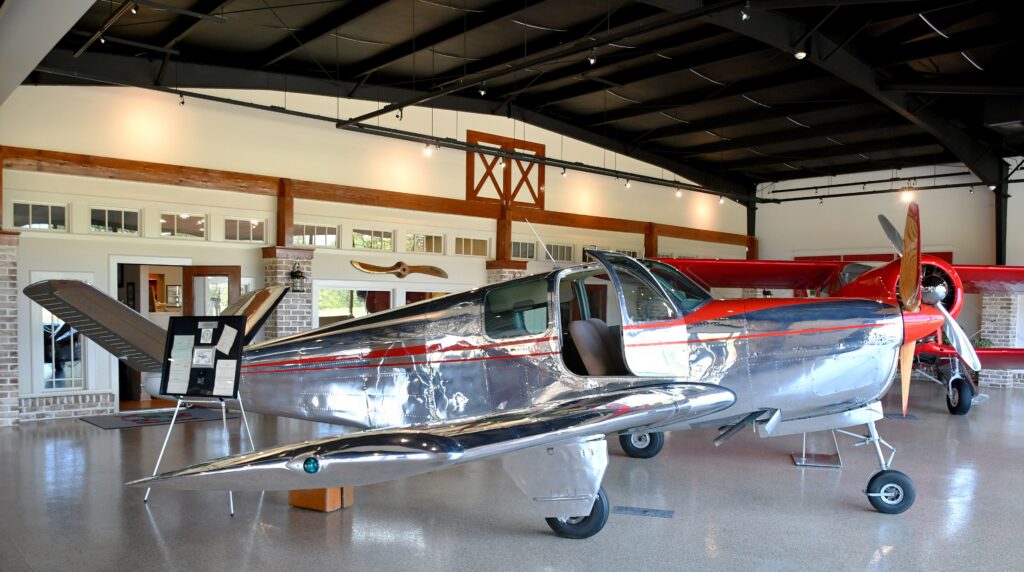
A ruddervator is used on a V-tail, where two angled surfaces replace the separate fin and horizontal stabilizer. The best-known example is the classic Beechcraft Bonanza. When both ruddervators move up together, they act like an elevator and raise the nose. When they move in opposite directions, the sideways component of their force yaws the aircraft like a rudder. A V-tail can save weight and drag, but the control system is more complex.
Flaperons
A flaperon combines a flap and an aileron. Both surfaces can droop together to increase lift for take-off and landing, while still moving differentially for roll control. Many light aircraft and microlights use flaperons, and fly-by-wire airliners such as the Boeing 777 and 787 have inboard flaperons that serve both functions at high speed.
Why it matters
Combining surfaces saves weight, parts and drag, and it makes unusual layouts like flying wings possible. The price is complexity: the control system must mix pitch, roll and yaw inputs correctly, and a single surface may run out of travel if it is asked to do two things at once. On modern aircraft, flight control computers handle this mixing.
How the inputs are mixed
On older aircraft, the mixing is done mechanically with bell cranks and push rods that add the pitch and roll inputs together. On modern aircraft, the flight control computers calculate the position of each surface from the pilot’s commands, which also lets them limit the deflection so that a surface is never asked to do more than it can. Small drones use the same principle in their control software.
Frequently Asked Questions
What is the difference between an elevon and an aileron? An aileron only controls roll; an elevon controls both roll and pitch.
Which aircraft use ruddervators? V-tail designs such as the Beechcraft Bonanza and many drones.
What does a flaperon do? It works as a flap and an aileron in one surface.
References
- FAA Pilot’s Handbook of Aeronautical Knowledge (FAA-H-8083-25), chapters 5 (Aerodynamics of Flight) and 6 (Flight Controls)
- FAA Aviation Maintenance Technician Handbook – Airframe (FAA-H-8083-31), chapter 2: Aerodynamics, Aircraft Assembly and Rigging
Start the discussion
Commenting on this term: Elevon, Ruddervator and Flaperon: Combined Control Surfaces