Anti-Skid and Autobrake Systems Explained
Anti-skid is a braking system that stops an aircraft's wheels from locking and skidding. Autobrake applies the brakes automatically on landing or a rejected take-off, at a deceleration rate the pilots select.
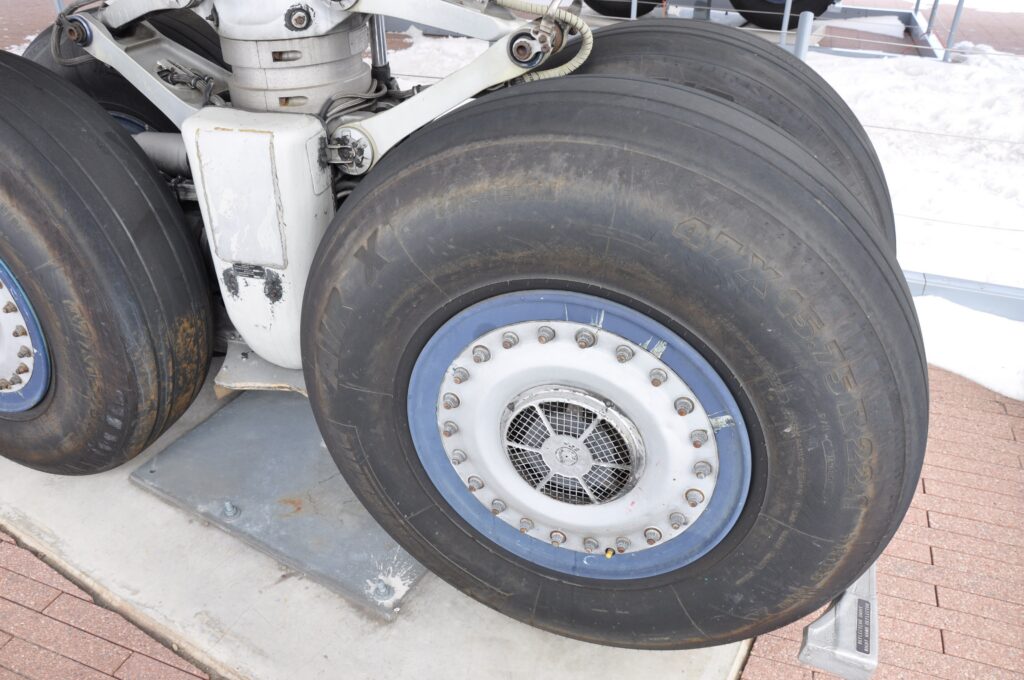
Anti-skid is a system that stops an aircraft’s wheels from locking when the brakes are applied, so that the tyres keep rolling at the point of maximum grip. Autobrake is a separate function that applies the brakes automatically after touchdown or during a rejected take-off, at a deceleration rate the crew has selected. Together they let a heavy airliner stop quickly and in a straight line without bursting its tyres.
How anti-skid works
Each braked wheel has a speed sensor, called a transducer. The anti-skid computer compares each wheel’s speed with the aircraft’s speed over the ground. If a wheel starts to slow much faster than the aircraft, a sign that it is about to skid, the computer briefly releases brake pressure to that wheel through a control valve, then reapplies it. This can happen many times a second. The system works much like anti-lock brakes on a car, and in fact aviation came first: the Dunlop Maxaret anti-skid unit was in use on aircraft in the 1950s.
Anti-skid systems usually include two extra protections:
- Locked wheel protection, which releases the brakes if one wheel turns much slower than its paired wheel.
- Touchdown protection, which stops the brakes from being applied before the wheels have spun up after landing, even if the pilot is pressing the pedals.
How autobrake works
Before landing, the crew selects an autobrake setting based on the runway length and conditions, for example LO or MED on an Airbus A320, or 1, 2, 3 or MAX on many Boeing types. After touchdown, once the wheels spin up and the spoilers deploy, the system applies the brakes to achieve that deceleration. Pressing the brake pedals or moving the thrust levers disarms it.
For take-off, the RTO (rejected take-off) setting on Boeing aircraft, or MAX on the A320, arms maximum braking. If the crew closes the thrust levers above a set speed during the take-off run, full braking is applied immediately. Newer systems go further: Airbus’s brake-to-vacate function on the A380 and A350 brakes to reach a chosen runway exit at taxi speed.
Why it matters
A locked wheel can wear through a tyre in seconds and cause a blowout, and a skidding tyre has less grip than a rolling one. Anti-skid gives the shortest possible stops on wet or icy runways, which affects the runway length an aircraft needs and the weight it can carry. Autobrake gives smooth, consistent braking and reacts faster than a person in a rejected take-off, when every second counts. It also reduces the risk of a runway excursion, one of the most common types of accident. Read how pilots calculate take-off speeds in our guide to V-speeds.
Frequently Asked Questions
Is aircraft anti-skid the same as ABS on a car? The principle is the same, and aircraft systems came first.
When is autobrake used? Many airlines use it on most landings and arm the RTO (or MAX) setting for take-off, but when and how it is used depends on the aircraft type and the operator’s procedures.
Can pilots brake manually with autobrake on? Yes. Pressing the pedals disconnects the autobrake and gives manual braking, still with anti-skid protection.
References
- FAA Aviation Maintenance Technician Handbook – Airframe (FAA-H-8083-31), chapter 13: Aircraft Landing Gear Systems (brakes and anti-skid)
- 14 CFR 25.735, Brakes and braking systems
Start the discussion
Commenting on this term: Anti-Skid and Autobrake Systems Explained