Pitot-Static System and Static Ports Explained
The pitot-static system measures the air pressures that an aircraft's airspeed indicator, altimeter and vertical speed indicator need. Pitot tubes measure total pressure; static ports on the side of the fuselage measure the still air pressure.
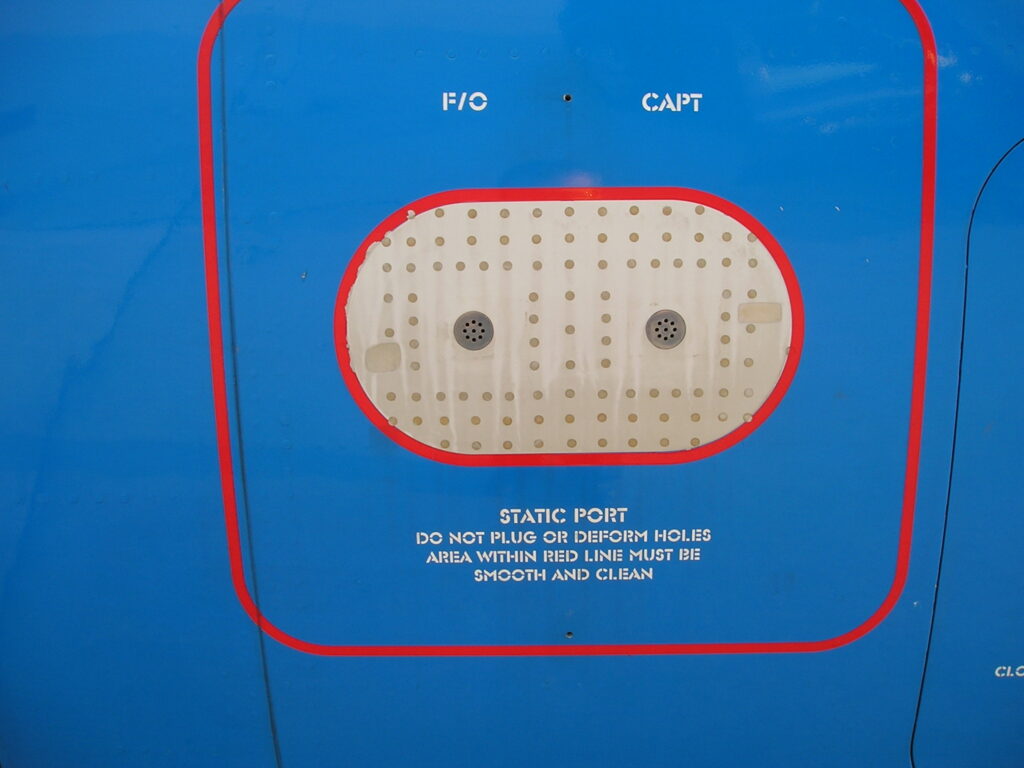
The pitot-static system is the set of probes, ports and tubing that measures the air pressures an aircraft needs to know its speed and altitude. A pitot tube facing into the airflow measures total pressure, while static ports, small flush holes on the side of the fuselage, measure the pressure of the undisturbed air around the aircraft. Three basic instruments use these pressures: the airspeed indicator, the altimeter and the vertical speed indicator.
Static ports
A static port is a small opening, often a group of tiny holes in a flat plate, set flush with the skin of the fuselage where the airflow runs smoothly along the surface. Because the hole faces sideways, it senses the ambient pressure of the air without the extra pressure caused by the aircraft’s motion. Ports are usually placed on both sides of the fuselage and connected together, so that a sideslip, which raises pressure on one side and lowers it on the other, does not upset the reading. Warnings painted around the ports remind ground crews never to damage, plug or paint over them.
How the instruments use the pressures
- Altimeter: uses static pressure only. Pressure falls as altitude increases, so the instrument converts static pressure into altitude, corrected for the pressure setting the pilot sets.
- Vertical speed indicator: uses static pressure only, measuring how fast it changes to show the rate of climb or descent.
- Airspeed indicator: uses both. The difference between total pressure from the pitot tube and static pressure is the dynamic pressure, which depends on airspeed.
Blockages and errors
If a static port is blocked, by ice or by tape left on after washing or painting, the altimeter freezes at one altitude and the airspeed indicator gives wrong readings that change with altitude. In 1996 the static ports of a Boeing 757 flying as Aeroperú Flight 603 had been left covered with tape after cleaning, and the crew received confusing and contradictory warnings before the aircraft hit the sea at night. Light aircraft therefore often have an alternate static source inside the cabin that the pilot can select. Airliners have several independent sets of probes and ports, heated to prevent icing.
Where you find it
Every aircraft with conventional flight instruments has a pitot-static system. On airliners, the pressures go to air data computers that feed the flight displays, autopilot and other systems, with separate standby instruments as a back-up.
Frequently Asked Questions
Why are static ports on the side of the aircraft? So that they sense the still air pressure, not the pressure of the air rushing towards the aircraft.
What happens if the static port is blocked? The altimeter and vertical speed indicator stop responding, and the airspeed indicator becomes unreliable.
What is an alternate static source? A back-up static port, usually inside the cabin, that the pilot can select if the main ports become blocked.
References
- FAA Pilot’s Handbook of Aeronautical Knowledge (FAA-H-8083-25), chapter 8 (Flight Instruments: pitot-static flight instruments)
- FAA Aviation Maintenance Technician Handbook – Airframe (FAA-H-8083-31), chapter 10: Aircraft Instrument Systems


Start the discussion
Commenting on this term: Pitot-Static System and Static Ports Explained