Aircraft Fuel System: Tanks, Boost Pumps and Crossfeed Explained
An airliner's fuel system stores fuel in the wings and centre tank and delivers it to the engines with electric boost pumps. A crossfeed valve lets any tank feed any engine, so fuel can be balanced if one side uses more.
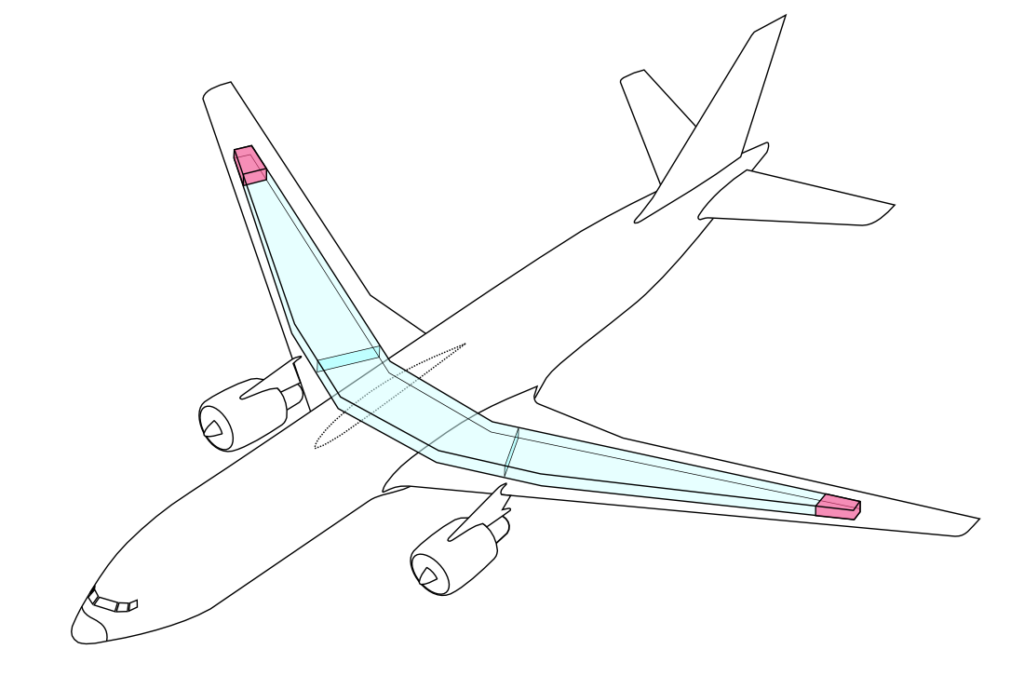
The aircraft fuel system stores fuel and delivers it to the engines at the right pressure and flow in every phase of flight. On an airliner it includes the fuel tanks, electric boost pumps, valves, pipes, a crossfeed system, quantity gauges and the refuelling equipment.
Tanks
Most fuel is carried inside the wings. The wing box itself, sealed with special compounds, forms integral tanks between the front and rear spars. A typical airliner has a left and a right main tank and a centre tank in the wing section that passes through the fuselage. Small surge tanks near the wingtips catch fuel that sloshes outwards and vent the tanks to the outside air. Some long-range aircraft also carry fuel in the horizontal tail, which helps to adjust the centre of gravity in cruise. Keeping fuel in the wings also reduces stress on the wing roots in flight.
Boost pumps
Each tank usually has two electric boost pumps, so that one can fail without interrupting supply. They push fuel through the feed lines to the engines, where an engine-driven pump raises the pressure further before the fuel is metered and burned. If both boost pumps on a side fail, many jet engines can still draw fuel by suction, although this works less well at high altitude.
On many aircraft the centre tank pumps produce higher pressure than the wing tank pumps, so fuel from the centre tank is used first while the wings stay full, which is better for the structure.
Crossfeed
A crossfeed valve connects the left and right sides of the system. If one engine uses more fuel than the other, or after an engine failure, the crew can open the crossfeed and switch off pumps on one side so that both engines draw from the fuller tank and the aircraft stays balanced. Fuel imbalance limits are set in the flight manual, and an unexpected imbalance can be a sign of a fuel leak.
Quantity and refuelling
Fuel quantity is measured by capacitance probes inside the tanks, which sense the height of the fuel, combined with its density. Airliners are refuelled under pressure through a single point under the wing, and the system closes valves automatically when each tank is full. Empty spaces in some tanks are protected by fuel tank inerting, and many wide-body jets can also jettison fuel in an emergency.
Frequently Asked Questions
Where is the fuel on a plane? Mostly inside the wings, plus a centre tank between the wings and, on some aircraft, a tank in the tail.
Why have two pumps in each tank? For redundancy, so a single pump failure does not stop the fuel supply.
What does crossfeed mean? Opening a valve so that fuel from one side’s tanks can feed the engine on the other side.
References
- FAA Aviation Maintenance Technician Handbook – Airframe (FAA-H-8083-31), chapter on aircraft fuel systems
- 14 CFR 25.951, Fuel system: general
- 14 CFR 25.953, Fuel system independence
Start the discussion
Commenting on this term: Aircraft Fuel System: Tanks, Boost Pumps and Crossfeed Explained