EFIS Explained: The Electronic Flight Instrument System
An electronic flight instrument system (EFIS) replaces the traditional mechanical dials in a cockpit with screens. The primary flight display shows attitude, speed and altitude, and the navigation display shows the route, weather and traffic.
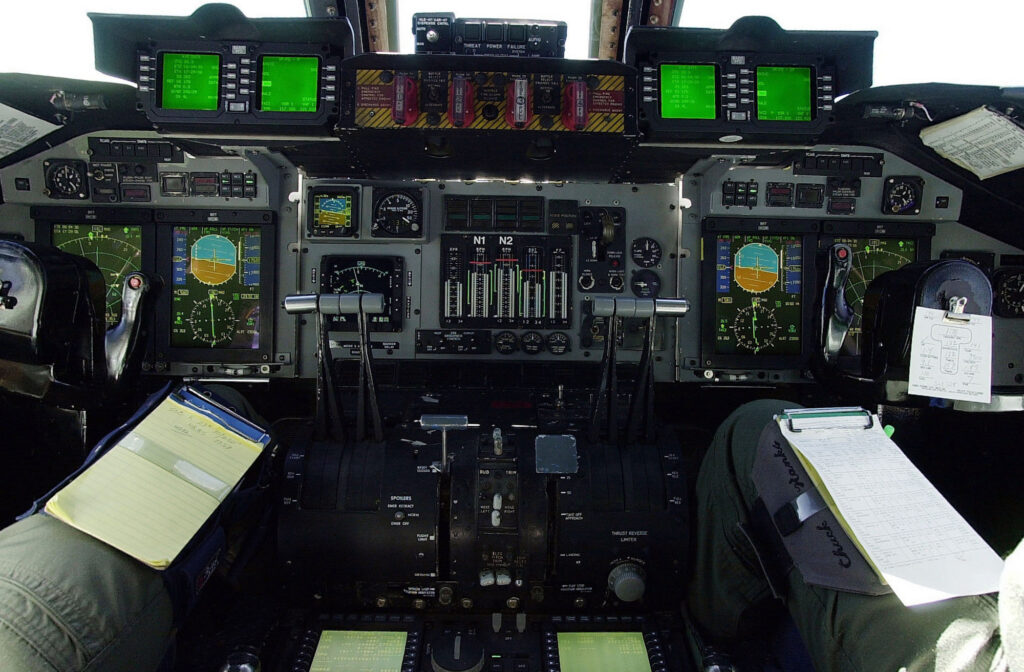
An electronic flight instrument system (EFIS) is a cockpit display system that shows flight and navigation information on screens instead of separate mechanical dials. It is the heart of what pilots call a “glass cockpit”. A typical EFIS has two main screens in front of each pilot: a primary flight display (PFD) and a navigation display (ND).
The primary flight display
The PFD brings together the six basic flight instruments of older cockpits in one picture:
- an attitude indicator in the centre, with the artificial horizon and flight director bars;
- an airspeed tape on the left and an altitude tape on the right, both moving behind a fixed pointer;
- a vertical speed scale beside the altitude tape and a heading scale at the bottom;
- flight mode annunciations at the top, showing what the autopilot and autothrottle are doing.
The tapes also show useful markers, such as speed limits, the selected altitude and trends that predict where the speed will be in a few seconds.
The navigation display
The ND shows a moving map of the aircraft’s route, with waypoints, airports and navigation aids. Pilots can choose different modes, such as a full compass rose or a forward-looking arc. Weather radar returns, traffic from the TCAS and terrain from the EGPWS can be overlaid on the same display.
How it developed
The Boeing 767 and 757, which entered service in 1982 and 1983, were among the first airliners with EFIS, using cathode-ray tube screens for the attitude and horizontal situation displays. The Airbus A320 of 1988 put six screens across the panel, including two for engine and system information. Today flat-panel LCD screens are standard, and systems such as the Garmin G1000 have brought glass cockpits to light aircraft like the Cessna 172. The information comes from the air data computers and inertial reference units, navigation receivers and other systems, and display computers draw the symbols.
Why it matters
EFIS reduces the pilot’s workload: instead of scanning many separate dials, the pilot sees the most important information in one place, with colours and alerts highlighting what needs attention. It also makes it easy to update the displays with new functions, such as synthetic vision. Because a display or computer can fail, glass cockpits keep standby instruments and let the crew switch a display to another screen or source.
Frequently Asked Questions
What is the difference between a PFD and an ND? The PFD shows how the aircraft is flying (attitude, speed, altitude); the ND shows where it is going.
What is a glass cockpit? A cockpit in which most instruments are shown on electronic screens, usually through an EFIS.
What happens if a screen fails? The crew can move its information to another screen and use the standby instruments.
References
- FAA Pilot’s Handbook of Aeronautical Knowledge (FAA-H-8083-25), chapter 8 (Flight Instruments: electronic flight instrumentation)
- FAA Advanced Avionics Handbook (FAA-H-8083-6)


Start the discussion
Commenting on this term: EFIS Explained: The Electronic Flight Instrument System