Stall Strip Explained: Making the Wing Root Stall First
A stall strip is a small triangular strip fixed to the inboard leading edge of a wing. At high angles of attack it trips the airflow there first, so the stall starts near the fuselage and the ailerons near the tips stay effective.
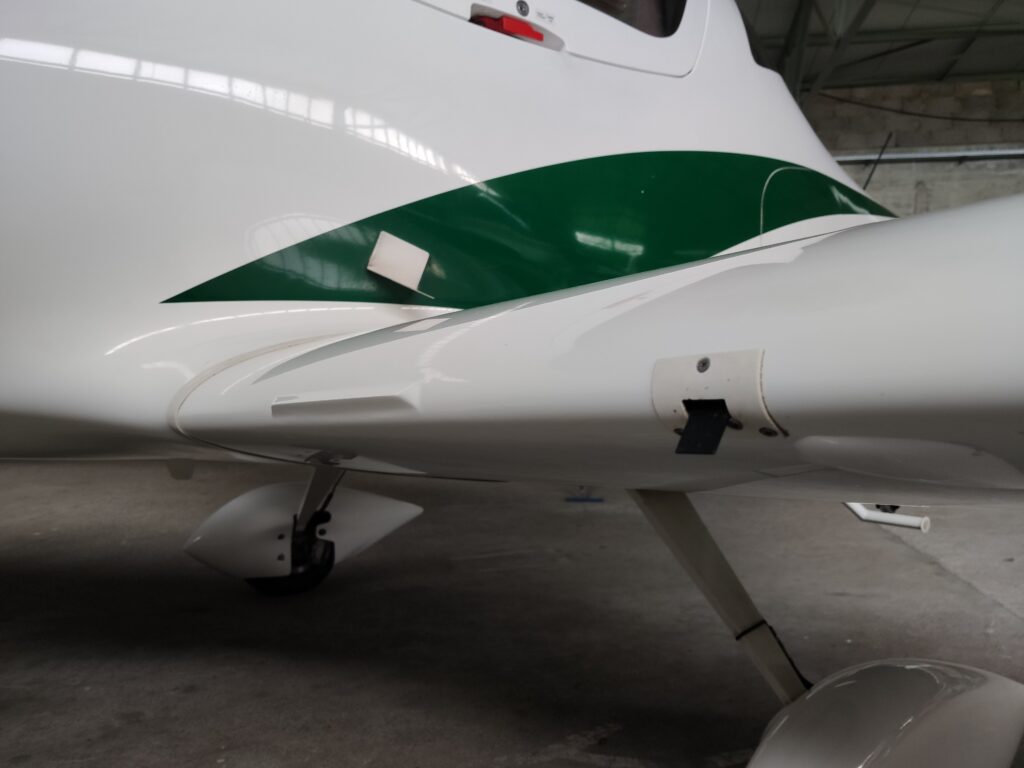
A stall strip, sometimes called a stall wedge, is a small strip with a sharp, triangular cross-section fixed to the leading edge of a wing, usually near the root. At normal angles of attack it has little effect. At high angles of attack its sharp edge disturbs the airflow, so the inboard part of the wing stalls first while the outer part, with the ailerons, keeps flying.
Why the wing should stall from the root
When a wing stalls, the best place for the stall to begin is near the fuselage. The pilot then feels buffeting from the disturbed air flowing over the tail, which acts as a natural warning, and the ailerons near the tips still have attached airflow, so the aircraft can be kept level. If the tips stalled first, one wing could drop suddenly and the aircraft could roll into a spin, with the ailerons unable to stop it. Designers use several tools to get a root-first stall: wing twist called washout, a change of airfoil along the span, slots, and stall strips.
How a stall strip works
The strip sharpens the leading edge locally. As the angle of attack increases, the airflow cannot follow the sharp edge and separates there earlier than over the smooth leading edge further out. This triggers the stall in a controlled spot. The strip’s exact position and length are often set during flight testing, and on some aircraft they are adjusted for each individual airframe so that both wings stall evenly. For this reason the maintenance manual gives precise dimensions, and a missing or moved strip can change the aircraft’s stall behaviour.
Where you find stall strips
They are common on light aircraft, including the Piper PA-28 Cherokee family and many other light aircraft, and on larger types such as the Canadair CL-215 water bomber. Pilots checking an aircraft before flight are taught to inspect them, because they are easy to damage.
Why the term matters
The stall strip is a small part with a big safety role: it gives the pilot clear warning and keeps the stall predictable. It is a good example of how designers shape not only how a wing flies, but also how it stops flying. Learn how pilots practise recovering from stalls in our guide to lift and angle of attack.
Frequently asked questions
What is the purpose of a stall strip? To make the inboard part of the wing stall first, so that the stall is gentle and the ailerons stay effective.
Where is a stall strip mounted? On the leading edge, usually on the inboard part of each wing.
Can a pilot fly without a stall strip? Only if the aircraft’s approved documents allow it; a missing strip can change the stall characteristics and must be fixed.
References
- FAA Airplane Flying Handbook (FAA-H-8083-3), chapter on slow flight, stalls and spins
- FAA Pilot’s Handbook of Aeronautical Knowledge (FAA-H-8083-25), chapter 6: Flight Controls
- FAA Aviation Maintenance Technician Handbook – Airframe (FAA-H-8083-31), chapter 2: Aerodynamics, Aircraft Assembly and Rigging

Start the discussion
Commenting on this term: Stall Strip Explained: Making the Wing Root Stall First