







Last Updated: 4 months ago
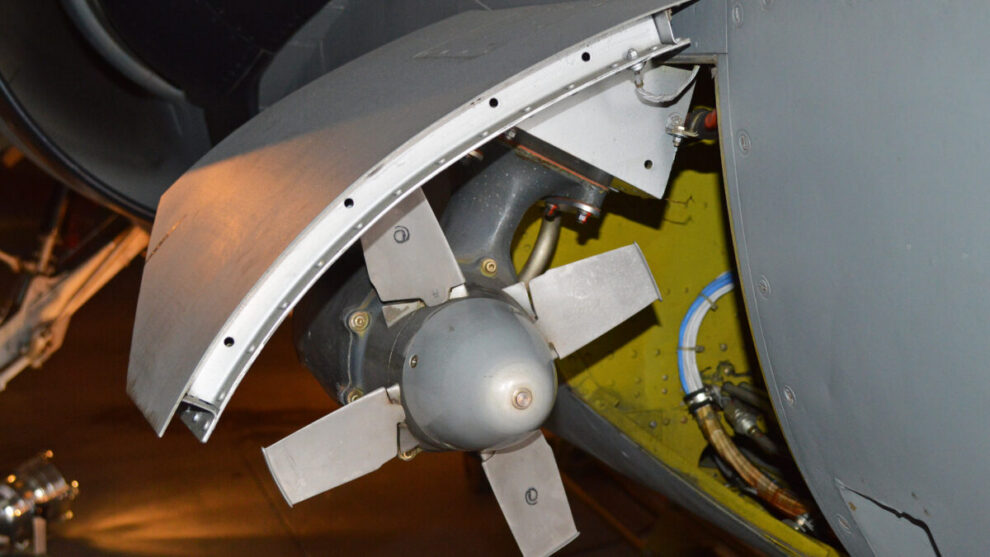
A ram air turbine, often shortened to RAT, is a small deployable turbine installed on some aircraft to provide emergency power. It uses the airflow passing around the aircraft to spin a turbine. That rotation can drive an electrical generator, a hydraulic pump, or both, depending on the aircraft design.
The system normally stays hidden inside the aircraft structure. However, if the aircraft loses normal electrical or hydraulic power, the ram air turbine can deploy into the airstream. Once extended, the moving air spins the blades and helps supply power to essential systems.
Although it may look like a small propeller, the RAT does not propel the aircraft. Instead, it acts as an emergency backup power source.
Ram Air Turbine Meaning in Aviation
In aviation, a ram air turbine is part of an aircraft’s emergency power system. The phrase “ram air” refers to the airflow created by the aircraft’s forward movement. As the aircraft moves through the air, the turbine uses that airflow as an energy source.
Some aircraft manufacturers or operators may use the term air-driven generator, or ADG, for a similar system. The exact name and function depend on the aircraft type.
The main purpose remains the same: provide limited but critical power when normal systems are unavailable.
How a RAT Works
A RAT works by converting airflow energy into mechanical rotation. When the turbine deploys, air pushes against its blades. The blades spin, and this rotation drives a connected generator or hydraulic pump.
If the system drives a generator, it can supply electrical power to essential buses, flight instruments, radios, or control systems. If it drives a hydraulic pump, it can help provide pressure for flight controls or other critical hydraulic functions.
Because the system depends on airflow, aircraft speed matters. Higher airspeed usually allows the turbine to produce more useful power. At very low speeds, output may be limited.
Main RAT Functions
| Function | What the RAT Provides | Why It Matters |
|---|---|---|
| Electrical backup | Emergency generator power | Supports essential instruments, radios, and control systems |
| Hydraulic backup | Emergency hydraulic pressure | Helps maintain flight control capability on some aircraft |
| Essential system support | Limited power during abnormal conditions | Keeps critical systems available after major failures |
| Independent energy source | Uses airflow instead of engine power | Provides backup even when main power sources are lost |
| Emergency redundancy | Additional protection layer | Improves aircraft safety and system resilience |
This table shows why the ram air turbine is not a normal operating system. It is a backup device designed for serious abnormal situations.
When It Deploys
A ram air turbine may deploy automatically or manually, depending on the aircraft. Automatic deployment can occur after a major electrical failure, hydraulic failure, or loss of main engine-driven power sources.
Pilots may also have a cockpit control to deploy the system when required by emergency procedures. Once deployed, the turbine usually remains extended for the rest of the flight.
The exact deployment logic varies by aircraft type. Therefore, pilots and maintenance teams always follow the specific aircraft flight manual and maintenance documentation.
RAT vs APU
A RAT and an auxiliary power unit, or APU, both support aircraft power needs, but they are very different systems.
An APU is a small onboard engine that usually burns fuel. It can provide electrical power and bleed air, especially on the ground. In contrast, a ram air turbine uses the outside airflow during flight and does not need fuel to spin.
The APU is useful for normal ground operations and engine start support. The RAT is mainly an emergency backup system for abnormal in-flight situations.
RAT vs Main Engine Generators
During normal flight, aircraft usually receive electrical and hydraulic power from engine-driven systems. Main engine generators supply electricity, while engine-driven pumps supply hydraulic pressure.
If these normal sources fail, the aircraft may lose important power supplies. In that case, the RAT can provide a limited emergency source. It does not replace all normal aircraft power, but it can support the systems needed to keep the aircraft controllable and help the crew manage the situation.
Why the System Matters
Modern aircraft rely heavily on electrical and hydraulic systems. Flight instruments, avionics, communication equipment, flight control systems, and warning systems all need reliable power.
Because of this, aircraft designers build layers of redundancy into the power system. Batteries, engine generators, APUs, hydraulic accumulators, and ram air turbines may all play different backup roles.
The RAT is especially valuable because it uses the aircraft’s motion through the air. As long as the aircraft has enough forward speed, the deployed turbine can generate useful emergency power.
Why This Term Matters
Understanding the ram air turbine helps explain how aircraft remain controllable during rare but serious power-loss events. It is a small component, but it can support essential systems when normal power sources are unavailable.
For aviation students, pilots, mechanics, engineers, and enthusiasts, the RAT is an important example of aircraft redundancy. It shows how modern aircraft use backup systems to improve safety, reliability, and emergency capability.
Did you know AviationStream.com has a YouTube channel? Check out TheAeroGraphyOfficial and subscribe to watch fun, highly engaging aviation Shorts!