





Last Updated: 5 days ago
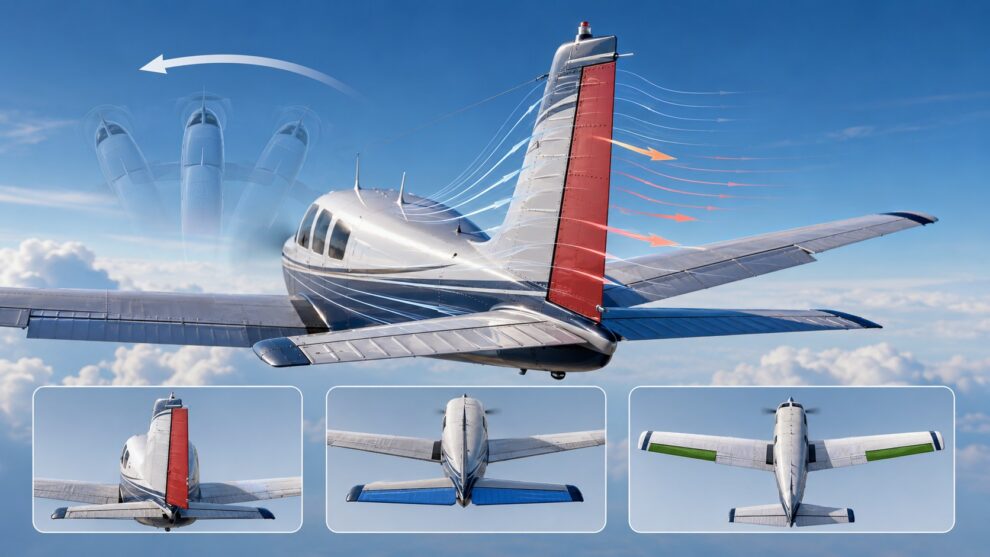
A rudder is a primary flight control surface used to control yaw. On an aircraft, it is usually mounted on the trailing edge of the vertical stabilizer, which is the upright tail fin at the rear of the fuselage. When the pilot presses the left or right pedal, this surface moves and changes the airflow around the tail. As a result, the aircraft nose moves left or right around its vertical axis.
Although many people think this control “turns” the airplane, that is not fully correct. In normal flight, pilots mainly use the ailerons to bank the aircraft and begin a turn. The vertical tail control helps manage yaw, keep the turn coordinated, and reduce unwanted side-to-side motion.
Origin and General Meaning
The word rudder comes from older nautical language. Long before aviation existed, boats and ships used rudders to steer through water. A basic marine version was a flat surface placed at the stern of a vessel. By redirecting water flow, it helped the vessel change direction.
When aircraft designers began building flying machines, they borrowed many terms from maritime engineering. Words such as cockpit, navigation, port, starboard, and rudder all reflect this connection. In aviation, the same basic idea applies, but the fluid medium is air instead of water.
So, in the broadest sense, this component redirects a fluid flow to create a turning or yawing effect. In aviation, it redirects airflow around the tail.
How It Works Rudder on an Aircraft
The aircraft rudder moves left or right when the pilot uses the foot pedals. If the pilot presses the left pedal, the surface deflects left. This changes the aerodynamic force on the vertical tail and pushes the tail in the opposite direction. The nose then yaws left.
The same principle works in the other direction. Pressing the right pedal creates a yawing motion to the right.
This control does not work alone. It works together with the vertical stabilizer, ailerons, elevator, and overall aircraft design. Its effectiveness depends on airspeed, surface size, airflow over the tail, and the aircraft’s configuration.
At very low speeds, it may feel less effective because less air flows across the tail. At higher speeds, smaller pedal inputs can create stronger yawing forces.
Why Pilots Use It
Pilots use this control surface for several important reasons.
One major use is to counter adverse yaw. When an aircraft banks with ailerons, the wing with more lift can also create more drag. This may pull the nose slightly away from the direction of the turn. Pedal input helps keep the aircraft coordinated.
Another important use involves P-factor and propeller effects. In single-engine propeller aircraft, engine power can create yawing tendencies, especially during takeoff and climb. Pilots often use right pedal input to maintain directional control.
It also plays a key role during crosswind takeoffs and landings. In these conditions, the aircraft may need specific control inputs to stay aligned with the runway. Proper pedal use helps the pilot keep the nose tracking correctly.
Rudder Compared with Other Flight Controls
| Control Surface | Main Axis Controlled | Pilot Input | Main Function |
|---|---|---|---|
| Rudder | Yaw | Foot pedals | Moves the nose left or right |
| Ailerons | Roll | Control wheel or stick | Banks the aircraft left or right |
| Elevator | Pitch | Control wheel or stick | Raises or lowers the nose |
| Trim tabs | Reduces control pressure | Trim wheel, switch, or lever | Helps maintain a selected attitude |
| Flaps | Lift and drag | Flap lever or switch | Improves low-speed performance |
This table shows why the rudder is only one part of the flight control system. It supports directional control, but it does not replace the ailerons or elevator.
Role in Coordinated Flight
A coordinated turn happens when roll and yaw work together smoothly. If the aircraft yaws too much or too little during a turn, passengers may feel a sideways force. Pilots monitor this with the slip-skid indicator, sometimes called the “ball.”
When the ball moves away from center, the pilot can use pedal input to correct the imbalance. This is why flight instructors often teach the phrase “step on the ball.” It helps students remember which pedal to press.
Good coordination improves comfort, control, and efficiency. It also matters during slow flight, stalls, crosswind operations, and some emergency procedures.
Difference Between Rudder and Vertical Stabilizer
The vertical stabilizer is the fixed upright fin at the tail. It helps keep the aircraft directionally stable, much like the feathers on an arrow.
The rudder is the movable part attached to that fin. The stabilizer provides stability, while the movable surface provides control. Together, they help manage yaw and keep the aircraft aligned with the desired flight path.
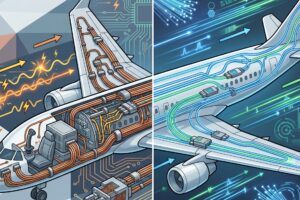
On some aircraft, this system may use cables, pushrods, hydraulic actuators, or fly-by-wire technology. Small training aircraft often use direct mechanical linkages. Larger aircraft may use hydraulic or electronic control systems.
Why This Term Matters
Understanding the rudder helps explain how aircraft remain stable and controllable in flight. It is not simply a steering surface, and it is not the main tool for turning an airplane. Its real job is yaw control, coordination, and directional balance.
From small training airplanes to large commercial jets, this flight control surface plays an essential role. It helps pilots manage adverse yaw, propeller effects, crosswinds, and coordinated turns. For anyone learning aviation terminology, it is one of the most important control surfaces to understand.
Did you know AviationStream.com has a YouTube channel? Check out TheAeroGraphyOfficial and subscribe to watch fun, highly engaging aviation Shorts!