Aircraft Hydraulic System Explained: Pumps, PTU and Accumulators
An aircraft hydraulic system uses fluid under high pressure, usually 3,000 psi, to move flight controls, landing gear, flaps and brakes. Airliners have two or three independent systems for redundancy.
An aircraft hydraulic system uses fluid under high pressure to transmit power to the parts of an aircraft that need large forces: flight control surfaces, landing gear, flaps, brakes, nosewheel steering and thrust reversers. Because liquids barely compress, a small pump can move heavy surfaces quickly and precisely through thin pipes.
How it works
A typical airliner system works at 3,000 psi; the Airbus A380 and Boeing 787 use 5,000 psi, which allows smaller, lighter pipes and actuators. Each system has:
- A reservoir, which stores the fluid and is often pressurised with bleed air so that the pumps are always fed.
- Pumps, which pressurise the fluid.
- Filters, valves and pipes, which clean and route the fluid.
- Actuators, the cylinders that move the surfaces.
- Accumulators, containers with a nitrogen-charged chamber that store pressurised fluid, smooth out pressure surges and keep critical services such as the parking brake working when the pumps are off.
Types of pump
- Engine-driven pumps (EDP): the main source of pressure, driven through the engine’s gearbox.
- Electric motor pumps: used as a back-up or to pressurise systems on the ground.
- Air-driven pumps: powered by bleed air on some Boeing types.
- Ram air turbine: a small propeller that drops into the airflow in an emergency; see our entry on the RAT.
- Power transfer unit (PTU): a hydraulic motor and pump on a common shaft that transfers power from one system to another without mixing the fluids. On the Airbus A320 its distinctive barking sound, heard during taxi on one engine, is familiar to many passengers.
Redundancy
Airliners have two or three independent systems so that a single failure is very unlikely to leave the aircraft uncontrollable. The A320 family’s systems are named green, blue and yellow; the Boeing 737 has systems A and B plus a standby system; and the Boeing 777 and 787 have left, centre and right systems. Critical surfaces are powered by more than one system.
Hydraulic fluid
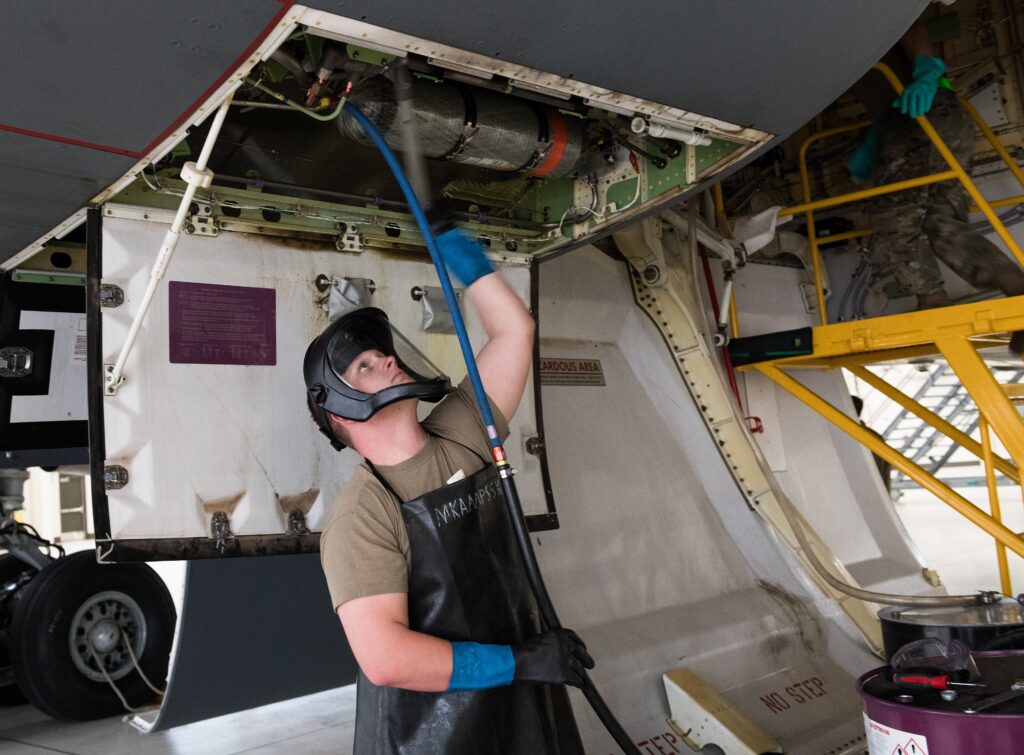
Most airliners use phosphate-ester fluids, often known by the brand name Skydrol, which resist fire but irritate skin and eyes, so technicians wear gloves and face protection when servicing them. Light aircraft and many military aircraft use red mineral-based fluid. The two types must never be mixed, because they destroy each other’s seals.
Why it matters
Losing all hydraulic power is one of the most serious failures an airliner can suffer, because most of its controls depend on it. Designers therefore separate the systems physically and power critical surfaces from more than one system. Physical separation and redundancy reduce the risk of losing every system to one event, but they do not make it impossible: in the United Airlines Flight 232 accident in 1989, debris from an uncontained engine failure severed the lines of all three hydraulic systems on a DC-10. Crews train to fly with one or two systems failed.
Frequently Asked Questions
What pressure do aircraft hydraulic systems use? Usually 3,000 psi; the A380 and 787 use 5,000 psi.
What is a PTU? A power transfer unit, which uses one hydraulic system to pressurise another without the fluids mixing.
What is Skydrol? A brand of fire-resistant phosphate-ester hydraulic fluid used in most airliners.
References
- FAA Aviation Maintenance Technician Handbook – Airframe (FAA-H-8083-31), chapter 12: Hydraulic and Pneumatic Power Systems
- 14 CFR 25.1435, Hydraulic systems
- FAA Pilot’s Handbook of Aeronautical Knowledge (FAA-H-8083-25), chapter 7 (Aircraft Systems)
Start the discussion
Commenting on this term: Aircraft Hydraulic System Explained: Pumps, PTU and Accumulators