Trim Tab Explained: Trim, Balance, Anti-Balance and Servo Tabs
Trim tabs are small hinged surfaces on the trailing edge of the elevator, rudder or ailerons. They use the airflow to hold the main control surface in place, so the pilot does not have to keep pushing or pulling.
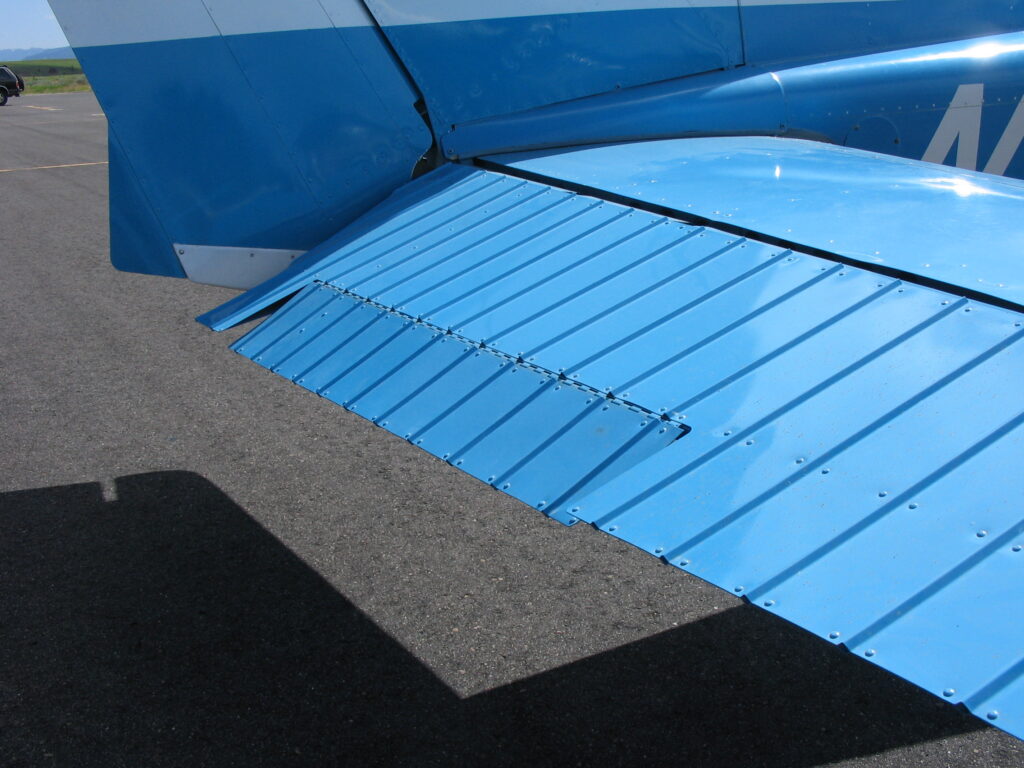
A trim tab is a small hinged surface on the trailing edge of a primary flight control surface, such as the elevator, rudder or aileron. By deflecting the tab, the pilot uses the airflow to hold the main surface in a chosen position, so that the aircraft flies in the desired attitude without the pilot having to push or pull on the controls. Trimming is one of the first skills student pilots learn.
How a trim tab works
A tab works like a tiny control surface for the control surface. When an elevator trim tab moves down, the air pushes the tab up, and this pushes the trailing edge of the elevator up as well. The elevator stays in its new position without any force on the control wheel. The tab moves in the opposite direction to the surface it holds. In a Cessna 172, for example, the pilot sets the elevator trim tab with a wheel between the seats; after a change in power or speed, a few turns of the wheel make the aircraft fly hands-off again.
Types of tabs
Designers use several kinds of tabs:
- Trim tab: adjusted by the pilot from the cockpit to remove a steady control force.
- Fixed tab: a bendable metal strip on the trailing edge, set on the ground so that the aircraft flies straight in cruise.
- Balance tab: linked to the fixed structure so that it automatically moves opposite to the control surface, helping the pilot move it and reducing control forces.
- Anti-balance or anti-servo tab: moves in the same direction as the surface, making the controls heavier. It is used on stabilators, which would otherwise be too sensitive.
- Servo tab: the pilot’s controls move only the tab, and the tab’s aerodynamic force moves the main surface. It was used on large aircraft before hydraulic power controls became common.
- Spring tab: a servo tab with a spring, so that it helps only when the control forces become high, typically at high speed.
Trim on large aircraft
Airliners mostly trim in pitch by moving the whole horizontal stabilizer, because a tab on such a large surface would cause too much drag. They still have rudder and aileron trim, usually done by moving the surfaces’ neutral position with an actuator. Aircraft with manual controls, such as many turboprops, still use tabs.
Why the term matters
A well-trimmed aircraft is easier and safer to fly, because the pilot can concentrate on navigation and communication rather than holding a constant force. The trim tab is also a good example of using a small aerodynamic force to control a large one. See how it fits on the elevator and the rudder.
Frequently asked questions
What does a trim tab do? It holds a control surface in position so that the pilot does not have to apply a constant force.
Why does the trim tab move the opposite way? Its aerodynamic force pushes the trailing edge of the main surface the other way.
Do airliners have trim tabs? Few do; most trim in pitch by moving the whole horizontal stabilizer.
References
- FAA Pilot’s Handbook of Aeronautical Knowledge (FAA-H-8083-25), chapter 6: Flight Controls
- FAA Aviation Maintenance Technician Handbook – Airframe (FAA-H-8083-31), chapter 2: Aerodynamics, Aircraft Assembly and Rigging
- FAA Airplane Flying Handbook (FAA-H-8083-3), chapter on basic flight maneuvers (trim control)
Start the discussion
Commenting on this term: Trim Tab Explained: Trim, Balance, Anti-Balance and Servo Tabs