EGPWS and TAWS: Terrain Warning Systems Explained
EGPWS (Enhanced Ground Proximity Warning System) is a terrain awareness and warning system (TAWS) that alerts pilots when the aircraft is in danger of flying into the ground. It adds a worldwide terrain database and a forward-looking alert to the older GPWS.
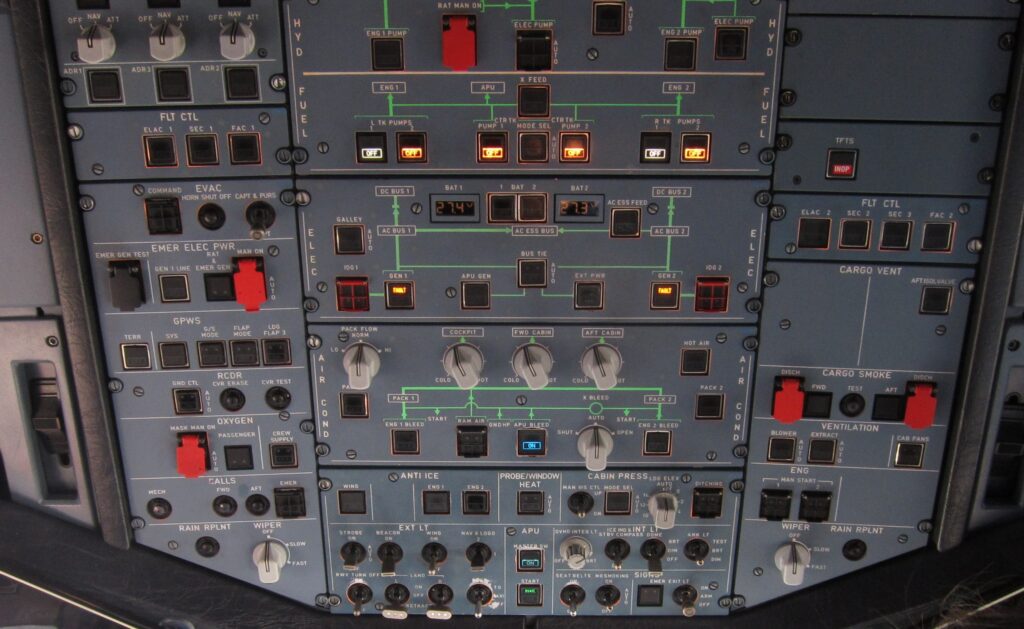
The EGPWS, or Enhanced Ground Proximity Warning System, is a safety system that warns pilots when their aircraft is in danger of flying into the ground, water or an obstacle, an accident type called controlled flight into terrain (CFIT). It is the best-known example of a terrain awareness and warning system (TAWS), the general term used in regulations. EGPWS builds on the older GPWS by adding a worldwide terrain database and a look-ahead function.
The original GPWS
Ground proximity warning systems appeared in the early 1970s, after a series of accidents in which serviceable airliners were flown into terrain. GPWS uses the radio altimeter, which measures height above the ground directly below, together with air data, the landing gear and flap positions, and the glideslope. It has several modes, including:
- excessive descent rate (“Sink rate”, “Pull up”);
- excessive closure rate with rising terrain (“Terrain, terrain”);
- altitude loss after take-off (“Don’t sink”);
- flying too low when not in the landing configuration (“Too low, gear”, “Too low, flaps”);
- going too far below the instrument landing system glideslope (“Glideslope”).
Many systems also give altitude callouts on approach, bank-angle warnings and windshear alerts.
The limitation of GPWS is that it looks straight down. A steep mountain ahead may give very little warning.
What the enhanced system adds
EGPWS, developed in the 1990s, compares the aircraft’s GPS position and track with a stored database of terrain, obstacles and runways. It can therefore warn about terrain ahead well before the radio altimeter could detect it, with alerts such as “Caution, terrain” and “Terrain ahead, pull up”. It also draws the surrounding terrain in colours on the EFIS navigation display, and a “terrain clearance floor” warns if the aircraft descends too low near an airport.
Requirements
In 2000 the US Federal Aviation Administration required TAWS on turbine-powered US-registered aircraft with six or more passenger seats, with compliance by March 2005 (14 CFR 91.223, 121.354 and 135.154). ICAO standards require similar equipment on airliners worldwide.
Why it matters
CFIT was once one of the largest causes of fatal airline accidents. The spread of EGPWS from the late 1990s has made such accidents much rarer in aircraft that carry it. When a “Pull up” warning sounds, pilots respond immediately with an escape manoeuvre: maximum thrust and a steep climb at the limit of the stall warning, without stopping to analyse the cause.
Frequently Asked Questions
What is the difference between GPWS and EGPWS? GPWS uses the radio altimeter and looks down; EGPWS adds a terrain database and looks ahead.
What is TAWS? The regulatory name for terrain awareness and warning systems; EGPWS is one type.
Can pilots ignore a terrain warning? In cloud or at night, no; the procedure is an immediate escape manoeuvre.
References
- 14 CFR 121.354, Terrain awareness and warning system
- 14 CFR 91.223, Terrain awareness and warning system
- FAA Pilot’s Handbook of Aeronautical Knowledge (FAA-H-8083-25), chapter 8 (Flight Instruments) and the FAA Advanced Avionics Handbook (FAA-H-8083-6)


Start the discussion
Commenting on this term: EGPWS and TAWS: Terrain Warning Systems Explained