Canard Explained: The Foreplane in Front of the Wing
A canard is a small horizontal surface in front of the main wing. It does the job of a conventional tailplane, but pushes the nose up with lift instead of holding the tail down.
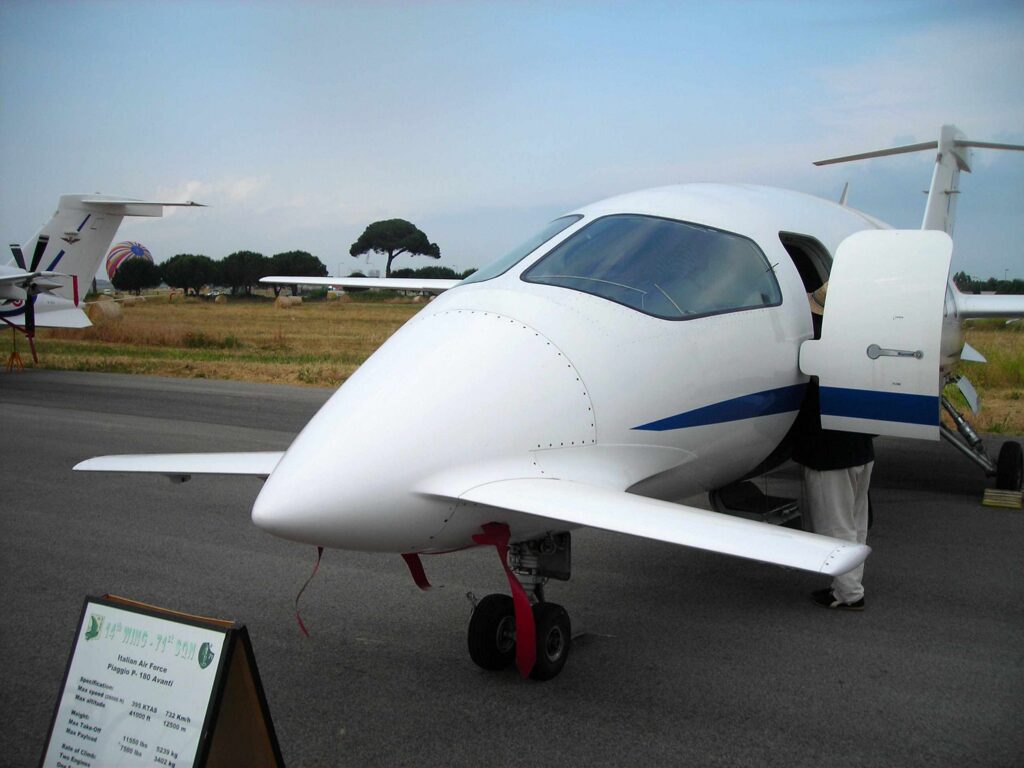
A canard is a small horizontal wing, or foreplane, mounted ahead of an aircraft’s main wing. It takes over some or all of the work of a conventional horizontal tail: it keeps the aircraft balanced in pitch and, if it is movable, lets the pilot raise or lower the nose. The word is French for “duck”, after the long-necked look of early canard aircraft.
How a canard works
On a conventional aircraft, the centre of gravity is ahead of the wing’s centre of lift, and the horizontal stabilizer at the back pushes the tail down to keep the nose from dropping. That download costs lift and adds drag. A canard sits at the front and produces an upward force instead, so in theory both the wing and the canard lift the aircraft.
A canard can be fixed, with a hinged elevator on its trailing edge, or it can move as a whole. Designers usually make the canard stall before the main wing. When the canard stalls, the nose drops and the angle of attack falls before the main wing can stall, which gives a natural form of stall protection.
Where you find canards
Light aircraft such as the Rutan VariEze and Long-EZ use a canard in place of a tail. The Piaggio P.180 Avanti business turboprop has a small fixed canard in addition to a conventional tail, a layout called a three-surface design. Many modern fighters, including the Eurofighter Typhoon, Dassault Rafale and Saab Gripen, have movable canards close to the cockpit. On these unstable designs, the flight control computers move the canards constantly to keep the aircraft under control and to improve agility.
Why it matters
A canard can reduce trim drag and help prevent deep stalls, but it has drawbacks. The canard’s downwash disturbs the airflow over the main wing, and because the canard must stall first, the main wing cannot use its full maximum lift. This makes powerful flaps harder to use, which is one reason canards are rare on airliners.
Canard or tail?
The choice between a canard and a conventional tail is a trade-off. A canard can make an aircraft shorter and more efficient in cruise, and it resists deep stalls. A conventional tail is more forgiving with large flaps and with a wide range of centre-of-gravity positions, which is why it remains the standard for airliners and most light aircraft. Compare the canard with an all-moving stabilator.
Frequently Asked Questions
What is the purpose of a canard? It controls or trims the aircraft in pitch from in front of the wing.
Why do fighter jets have canards? Movable canards improve agility and work with fly-by-wire controls on unstable designs.
Do airliners use canards? Almost never; conventional tails work better with large flaps.
References
- FAA Pilot’s Handbook of Aeronautical Knowledge (FAA-H-8083-25), chapters 5 (Aerodynamics of Flight) and 6 (Flight Controls)
- NASA Glenn Research Center, Beginner’s Guide to Aeronautics: Airplane parts
Start the discussion
Commenting on this term: Canard Explained: The Foreplane in Front of the Wing