Aircraft Lights Explained: Navigation, Beacon, Strobe and Landing Lights
Aircraft carry several kinds of external lights: red, green and white navigation lights that show which way an aircraft is heading, flashing beacons and strobes that make it easier to see, and landing, taxi and logo lights.
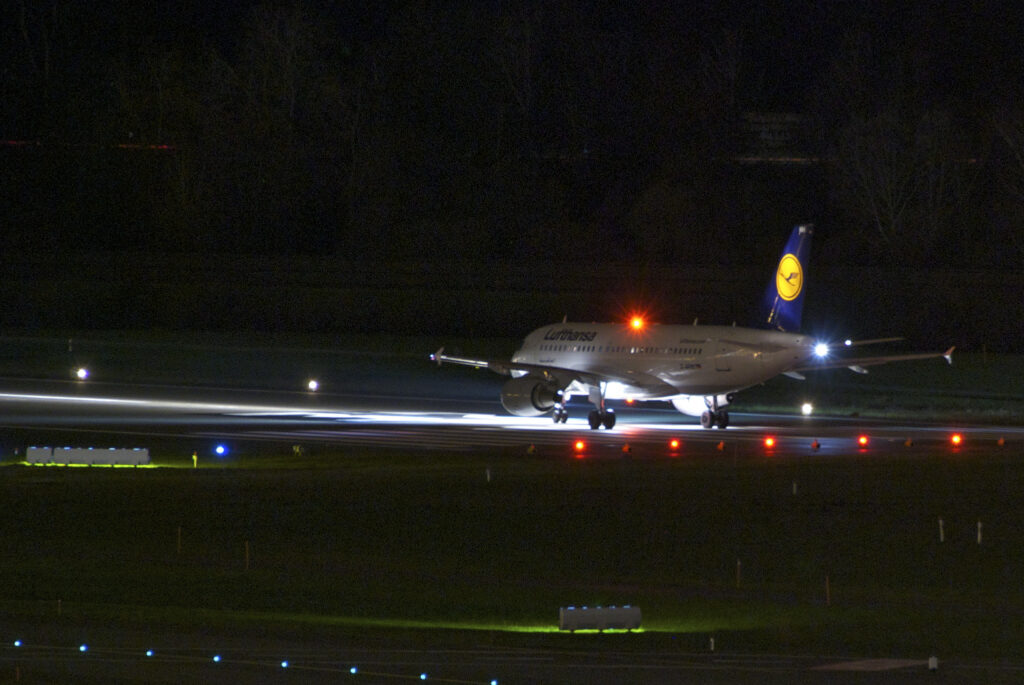
Aircraft lights are the external lights that make an aircraft visible to others and help the pilots see on the ground. They follow international rules, so that a pilot who sees another aircraft at night can tell where it is and which way it is going.
Navigation (position) lights
Every aircraft flying at night carries three position lights: red on the left wingtip, green on the right wingtip and white at the tail. The same colours are used on ships. If you see red on the right and green on the left, the aircraft is coming towards you; if you see only the white light, it is flying away. In the United States, 14 CFR 91.209 requires them from sunset to sunrise.
Anti-collision lights
- Beacon: a flashing red light on top of and below the fuselage. Airline crews switch it on just before the engines start or the aircraft is pushed back, as a warning to ground staff that the aircraft is about to move.
- Strobes: very bright white flashing lights on the wingtips and tail. Pilots usually switch them on when entering the runway for take-off and leave them on in flight.
The rules require anti-collision lights whenever the aircraft is operating, but pilots may switch strobes off when they could dazzle other pilots or in cloud, where their reflection can be distracting.
Lights for seeing
- Landing lights: powerful lights in the wing roots, under the fuselage or on the landing gear, used for take-off and landing. Many pilots also switch them on below 10,000 feet to be more visible.
- Taxi and runway turnoff lights: light up the taxiway ahead and to the sides when turning.
- Wing inspection lights: point at the wing leading edge and engine intake so the crew can check for ice at night.
- Logo lights: light up the airline’s logo on the tail, mainly to make the aircraft easier to see on the ground.
Today almost all new aircraft use LED lights, which last longer and use less power than older bulbs.
Frequently Asked Questions
Why is the left light red and the right light green? It is an international convention shared with ships, so that anyone can tell an aircraft’s direction from the colours they see.
Why do airliners keep the lights on in daylight? Landing lights and strobes make the aircraft much easier to spot, which reduces the risk of collisions and bird strikes.
What does the red flashing light mean before push-back? That the engines are about to start or the aircraft is about to move, so ground staff must keep clear.
Related terms: TCAS and winglet.
References
- 14 CFR 91.209, Aircraft lights
- 14 CFR 25.1385, Position light system installation
- FAA Aeronautical Information Manual 4-3-23: Use of Aircraft Lights
Start the discussion
Commenting on this term: Aircraft Lights Explained: Navigation, Beacon, Strobe and Landing Lights