Integrated Modular Avionics (IMA): Shared Computers in Modern Jets
Integrated modular avionics (IMA) replaces dozens of separate avionics boxes with a few shared computing modules, each running several aircraft functions in protected partitions. It is used on the Airbus A380 and A350 and the Boeing 787.
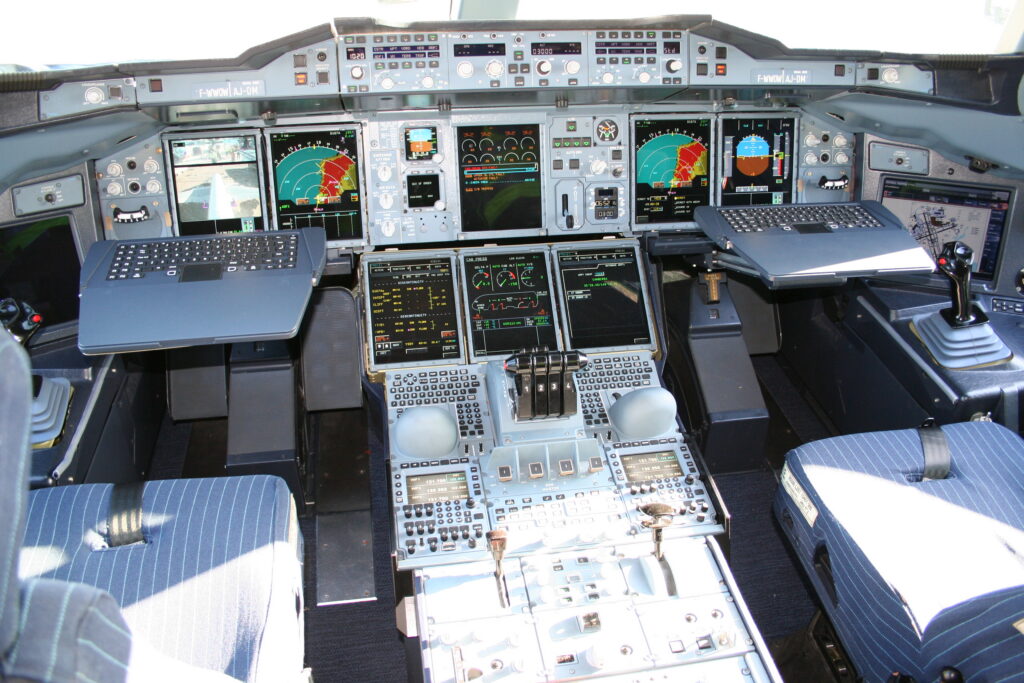
Integrated modular avionics (IMA) is an avionics architecture in which many aircraft functions run as software on a small number of shared, standardised computers, instead of each function having its own dedicated box. It is used on modern airliners such as the Airbus A380, the Airbus A350 and the Boeing 787.
The old way: federated avionics
In a traditional, or federated, design, every system has its own line-replaceable unit (LRU): one computer for the fuel system, another for the air conditioning, another for the brakes, each with its own processor, power supply, wiring and spare parts. A large airliner could carry more than a hundred such boxes, which adds weight, takes up space and makes changes expensive.
How IMA works
With IMA, a few powerful modules in the avionics bay share the work. Each module runs several applications, for example fuel management, cabin pressure control and parts of the cockpit displays. To make this safe, a special operating system divides each processor into strictly separated partitions with their own fixed share of memory and processing time, so a fault in one function cannot disturb another. This approach is described in industry standards such as ARINC 653.
The modules exchange data over a fast, redundant aircraft network, usually an avionics version of Ethernet (AFDX, ARINC 664). Sensors and actuators connect through remote data concentrators spread around the aircraft, which reduces wiring.
Where you find it
- Airbus A380 and A350: core processing and input/output modules host many aircraft system functions.
- Boeing 787: a Common Core System, built by GE Aviation, provides shared computing and the aircraft network for dozens of functions.
- Business jets and military aircraft use similar designs.
Why it matters
IMA saves weight, power and space and reduces the number of different spare parts. Because the modules are standardised, the same type of unit can often be fitted in several positions, so airlines need fewer different spares at their stations. New functions can often be added as software rather than new hardware. The challenge is certification: the authorities must be sure that functions of different importance, such as cabin lighting and engine control data, can never interfere with each other. FAA Advisory Circular 20-170 sets out how IMA systems are developed and approved.
Frequently Asked Questions
Does IMA mean one computer flies the plane? No. There are several modules with backups, and critical functions such as fly-by-wire flight control often keep their own dedicated computers.
What is AFDX? A redundant, deterministic version of Ethernet used to connect avionics on aircraft like the A380 and A350.
Is IMA the same as a glass cockpit? No. The EFIS displays are what pilots see; IMA is the computing behind many systems.
References
- FAA Advisory Circular 20-170: Integrated Modular Avionics Development, Verification, Integration and Approval
- FAA Aviation Maintenance Technician Handbook – Airframe (FAA-H-8083-31), chapter on aircraft instrument systems
Start the discussion
Commenting on this term: Integrated Modular Avionics (IMA): Shared Computers in Modern Jets