








Last Updated: 4 months ago
Quick Definition
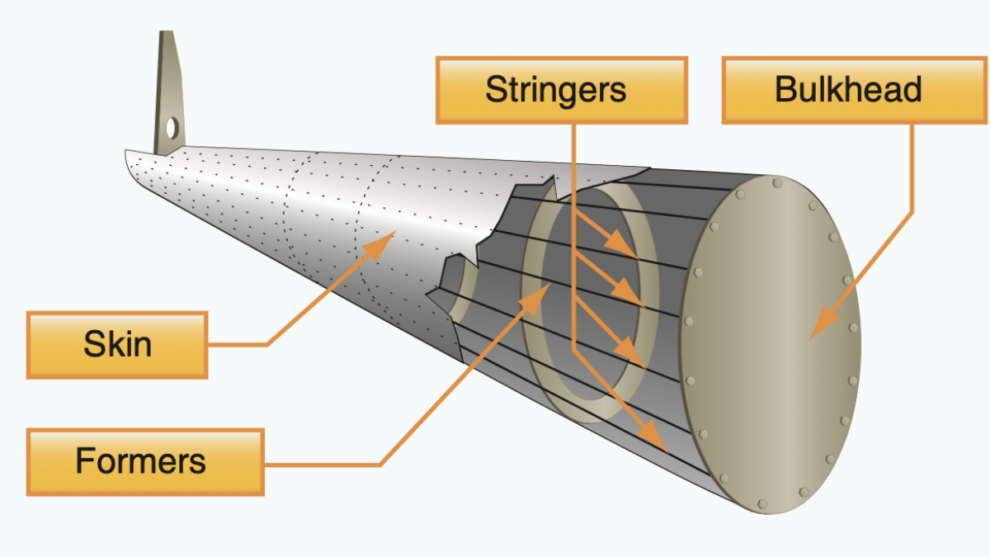
In aviation, In aviation, a bulkhead is a structural partition within an aircraft fuselage. This internal wall divides the cabin into distinct sections and provides critical structural rigidity. Consequently, it prevents the airframe from twisting or bending under heavy aerodynamic loads. Furthermore, specialized variations act as pressure seals or firewalls to protect passengers and crew during flight.
How Does a Bulkhead Work?
From an engineering perspective, this structure functions as a primary load-bearing element. During flight, the fuselage experiences severe bending, torsion, and cabin pressurization stresses. Therefore, the partition absorbs these internal forces and distributes them evenly across the outer skin. Additionally, it prevents localized structural failures by dividing the cabin into reinforced compartments.
Pressure bulkheads act as sealed structural boundaries that contain cabin pressure. When the aircraft climbs to high altitudes, the environmental control system pumps air into the cabin. As a result, the internal pressure pushes outwards against the aircraft structure. Meanwhile, the partition utilizes a dome or flat reinforced shape to contain this high-pressure atmosphere. Engineers seal these structures with specialized compounds to prevent air leaks into unpressurized zones, such as the tail cone or radome.
Major Components
| Component | Function | Importance |
|---|---|---|
| Web | Serves as the primary flat or domed surface area | Contains cabin pressure or segregates internal compartments |
| Stiffeners | Reinforce the web vertically and horizontally | Prevent the metal or composite surface from buckling |
| Flanges | Connect the partition to the primary fuselage frame | Transfer aerodynamic loads directly to the outer skin |
| Pressure Seals | Block airflow around wiring and control cables | Maintain a safe atmospheric environment at high altitudes |
Types of Bulkhead
| Type | Characteristics | Common Use |
|---|---|---|
| Aft Pressure | Dome-shaped structure located at the rear of the cabin | Seals the pressurized passenger area from the unpressurized tail |
| Firewall | Constructed from heat-resistant materials like titanium, titaninum alloy, steel or fire-resistant composites | Isolates the engine compartment from the main airframe |
| Structural | Rigid vertical wall with extensive internal stiffening | Divides cargo bays and provides general torsional stiffness |
| Forward Pressure | Flat or slightly curved wall near the aircraft nose | Protects the pressurized cockpit from the unpressurized radome |
Why Is the Bulkhead Important in Aviation?
This structural component directly dictates the safety and integrity of modern transport aircraft. First, it ensures that passengers can breathe comfortably at cruising altitudes of 35,000 feet. Without a secure pressure boundary, the environmental control system could not maintain a life-sustaining cabin altitude. Without pressurization, aircraft would need to operate at much lower altitudes or perform emergency descents following a decompression event.
Furthermore, these partitions actively prevent the spread of internal hazards. For example, a firewall isolates extreme engine heat and potential fuel fires from reaching the passenger cabin. Additionally, structural cargo variants prevent shifting freight from penetrating the flight deck during rapid deceleration or a rough landing.
Regulatory bodies like the FAA and EASA mandate strict fatigue testing for these specific components. A structural failure of the aft pressure boundary can cause catastrophic explosive decompression. Therefore, aviation mechanics conduct routine non-destructive inspections to detect microscopic cracks, metal fatigue, or corrosion.
Interesting Facts
- The aft pressure bulkhead on commercial airliners often utilizes a dome shape because it distributes stress more efficiently than a flat surface.
- The tragic loss of Japan Airlines Flight 123 in 1985 resulted directly from an improperly repaired aft pressure bulkhead.
- Military aircraft utilize specialized crash bulkheads to protect the pilot from forward-shifting internal components during a ground impact.
- Aerospace engineers increasingly build these structures from lightweight carbon fiber reinforced polymers (CFRP) instead of traditional aluminum to save weight.
Frequently Asked Questions (FAQ)
What is a bulkhead on an airplane? It is a vertical dividing wall within the aircraft fuselage that adds structural strength and separates different internal functional zones.
How does a pressure bulkhead work? It acts as a structurally reinforced, sealed boundary that traps conditioned air inside the cabin. As a result, it maintains a breathable and comfortable environment at high altitudes.
Why is the bulkhead important for safety? It provides critical torsional rigidity to the entire fuselage, contains fires in specific zones, and prevents fatal depressurization events.
What materials do engineers use to build a bulkhead? Manufacturers traditionally use high-strength aluminum alloys. However, modern aircraft like the Boeing 787 and Airbus A350 utilize advanced carbon composite materials to increase efficiency.
Key Takeaways
- A bulkhead is a vertical structural partition that divides and reinforces an aircraft fuselage.
- These internal components absorb aerodynamic stress and prevent the airframe from twisting or bending.
- Pressure variants maintain a breathable cabin atmosphere by sealing off unpressurized sections of the aircraft.
- Firewalls utilize heavy-duty titanium or steel to protect the cabin from engine heat and flames.
- Strict routine maintenance inspections are mandatory to prevent fatigue-related structural failures.